Off-Grid Property in Aysen: Power, Water, Septic and Internet for Rural Land
TL;DR Most rural land in Aysen comes with a beautiful view and zero services. Electricity is run by Edelaysen on isolated grids that do not touch the national system, and the Ministry of Energy counted 1,058 homes in the region with no electricity at all. If the line does not reach you, a mid-size solar kit with lithium storage is the realistic answer. Water comes from a rural committee (APR), a well, or a stream, and the 2022 water code reform lets a household draw water for subsistence without a formal right, as long as you tell the DGA. Septic systems need written health authorisation and a 100 m buffer from any well. Internet is the easy part: Starlink has been licensed since 2021 and a new fibre project will reach 33 rural localities. Budget the utilities before you fall in love with the lake.
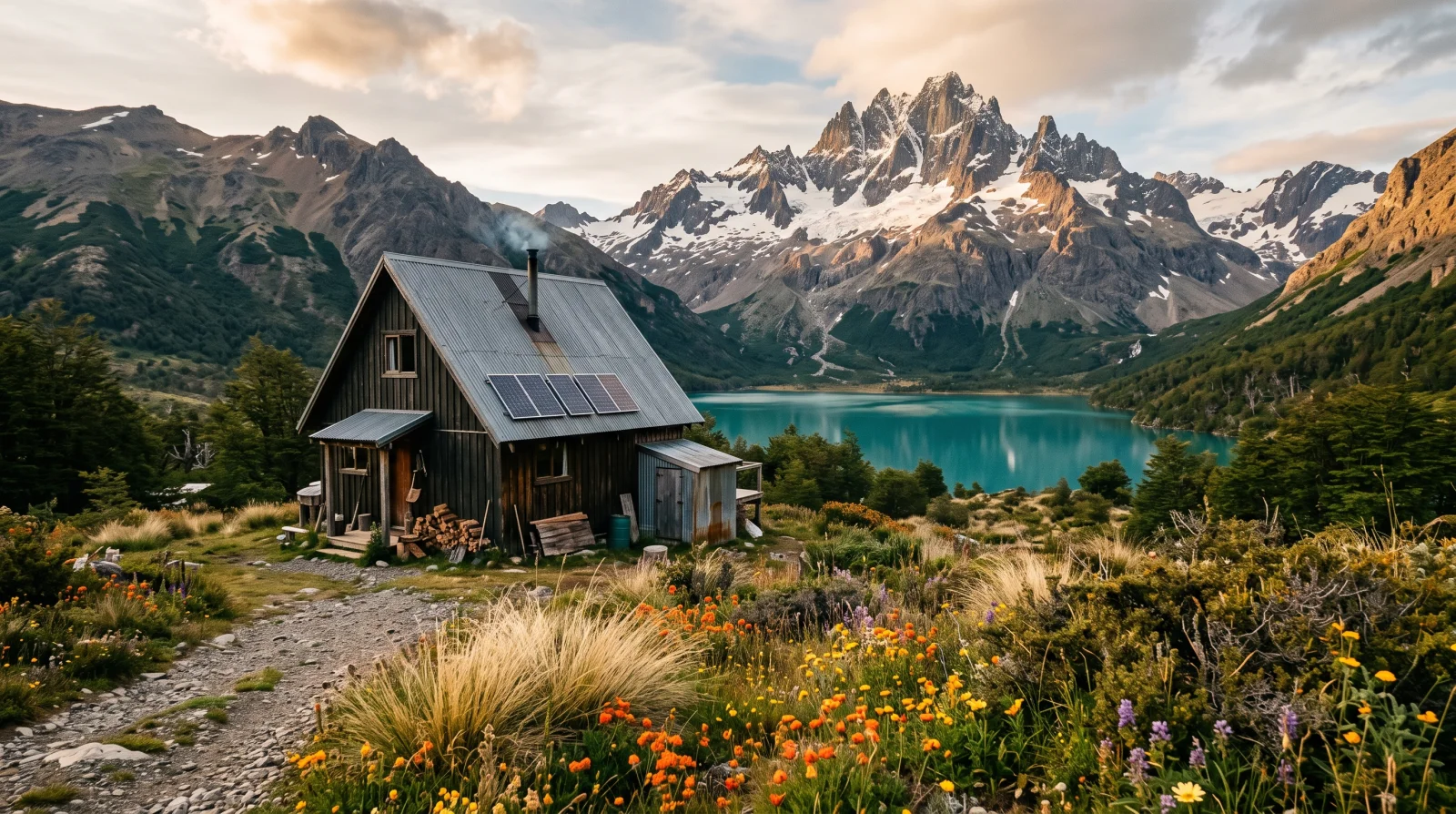 A solar-powered cabin is the default setup for remote parcels. Browse land for sale in the Aysen Region.
Why “off-grid” is the normal condition in Aysen, not the exception
Aysen is enormous and almost empty. The region covers 108,494 km2 with a density of 0.93 people per km2, and the 2024 census counted 100,745 residents, making it the only Chilean region that lost population since 2017. More than half of those people live in Coyhaique. Everyone else is scattered along a highway that is still only 58% paved.
Utilities follow people. When you buy a parcel 20 km from the nearest village, there is a decent chance the power line stops at the neighbour’s gate, the “water” is a stream with a hose in it, and the septic system is a hole someone dug in 1998. None of this is a deal breaker. It is simply a cost line that many buyers, especially foreign buyers used to plugging things in, forget to put in the spreadsheet.
This guide walks through the four utilities in the order that hurts your wallet most: power, water, septic, internet. It pairs with our guides on building a house in Patagonia and buying a farm in Chilean Patagonia as a foreigner, which cover the construction and legal side.
Key Insight: In Aysen, “no services” is a pricing signal, not a warning label. Parcels without power and water sell at a discount that often exceeds what a solar kit, a well and a septic system cost to install.
Electricity: an island grid with a lot of gaps
Who runs the grid
The regional utility is Edelaysen, part of Grupo Saesa. It is unusual because it both generates and distributes power, and because its network is not connected to Chile’s national system. Edelaysen operates three medium-size systems and five isolated systems serving more than 39,000 customers. The isolated ones (Puerto Cisnes, Puerto Aguirre, Villa O’Higgins, Villa Amengual and Santa Barbara among them) are tiny local grids that historically ran on diesel.
According to the Ministry of Energy, the three medium systems have about 60 MW of installed capacity from hydro, diesel and wind. The same page makes a point that matters for anyone planning a rural home: more than half of residential energy use in Aysen is firewood, and electricity is only around 5%. Patagonians do not heat with electricity, and neither should you unless you enjoy paying for it.
The good news is that the mix is getting cleaner. Edelaysen reports generating 140 GWh a year, of which 99 GWh come from renewable sources, and it is expanding the Alto Baguales wind farm near Coyhaique. The first of five new 3 MW turbines was mounted in April 2026, with full operation expected between late 2026 and the first quarter of 2027.
How many homes have no power
The Ministry of Energy’s vulnerability map is the best official count. It found 1,058 homes in Aysen with no electricity, 11.8% of all rural homes in the region, plus another 531 with partial supply. By comuna, Coyhaique led with 420 unconnected homes, followed by Aysen (129), Cisnes (115), Cochrane (100), Rio Ibanez (98), Chile Chico (92) and Lago Verde (74). If you are shopping around Cerro Castillo, Puerto Rio Tranquilo or the valleys behind Coyhaique, assume you may be one of those homes.
Getting connected: the “empalme”
If a distribution line passes within sight of the parcel, ask Edelaysen for a connection quote before you sign anything. The utility publishes its regulated tariffs for associated services, but the real cost of a rural connection depends on how many poles and metres of cable the company needs to add, and that is quoted case by case. Sellers love to say “the light is right there.” Get the quote in writing.
Whatever you install inside the house must be declared to the electrical regulator. The TE1 declaration is filed online by a licensed installer, costs nothing, and gets a response within 10 business days. Without a TE1 you cannot get a meter, and later you cannot get a building reception from the municipality.
Solar and net billing
If you do connect to the grid, you can still put panels on the roof and sell the surplus. Law 21.118 allows residential generators of up to 300 kW per property to inject power and receive credits. The Ministry of Energy notes the reform raised the cap from 100 kW to 300 kW and allowed community installations. In practice most rural homes will size a system to cover their own consumption and treat the credits as a bonus.
Numbers That Matter: The government’s own standard for a rural self-generation system is 24-hour supply at 220 V covering 85 kWh per month per household. That is roughly a fridge, LED lights, a laptop, a water pump and a phone charger. Not a heat pump, not an electric stove.
Going fully off-grid: solar, batteries and the honest maths
Is there enough sun?
Surprisingly, yes, at least on the eastern side. Regional investment agency InvestAysen reports that solar radiation reaches up to 4.5 kWh/m2 per day in the eastern steppe, and a 2.99 MW solar park at El Blanco, south of Coyhaique, is the southernmost in the world. The western fjords and the Puyuhuapi corridor are a different story: cloud, rain and short winter days cut output hard. Before buying, drop your coordinates into the Ministry of Energy’s Explorador Solar and look at the June figure, not the annual average.
What a system costs
Prices move with the exchange rate, but a Chilean retailer’s 2026 price list gives an order of magnitude: a 3 kW off-grid kit around CLP 1.5 million, 5 kW around CLP 1.9 million, 10 kW around CLP 2.9 million, and a 5.12 kWh lithium battery between CLP 750,000 and 1.2 million. Add installation, cabling, a proper battery shed and a backup generator, and a comfortable household system lands somewhere between a used pickup and a new one. Compare that with the cost of extending a power line several kilometres, and you understand why the public sector now prefers solar for the last homes. The national rural electrification methodology explicitly funds self-generation wherever a grid extension would cost more than the reference cost per home.
Subsidies you may qualify for
Two programmes are worth knowing. If your parcel has any agricultural use, INDAP’s on-farm irrigation programme covers up to 95% of gross cost with annual caps of CLP 12 million for individuals and CLP 20 million for companies, and it explicitly includes solar pumping. The Ministry of Energy also runs a fund for community organisations (not individuals) that finances photovoltaic systems up to 10 kWp, which matters if you and your neighbours form a committee.
Heating is a separate budget
Panels will not heat a Patagonian house in July. Almost everyone burns wood or pellets. The consumer agency’s May 2026 survey found a 15 kg bag of pellets from CLP 4,690 in Coyhaique, a 50 kg sack of firewood at CLP 8,000, and a cubic metre of split firewood at CLP 40,000. If your parcel is inside the Coyhaique saturated zone, remember that firewood sold there must have moisture below 25%, and the updated decontamination plan proposes 20,000 heater replacements and mandatory alternative heating in new homes. Outside the zone, a good stove and a woodlot on your own land is the traditional, and cheapest, answer. The cost of living in Coyhaique post has more on heating bills.
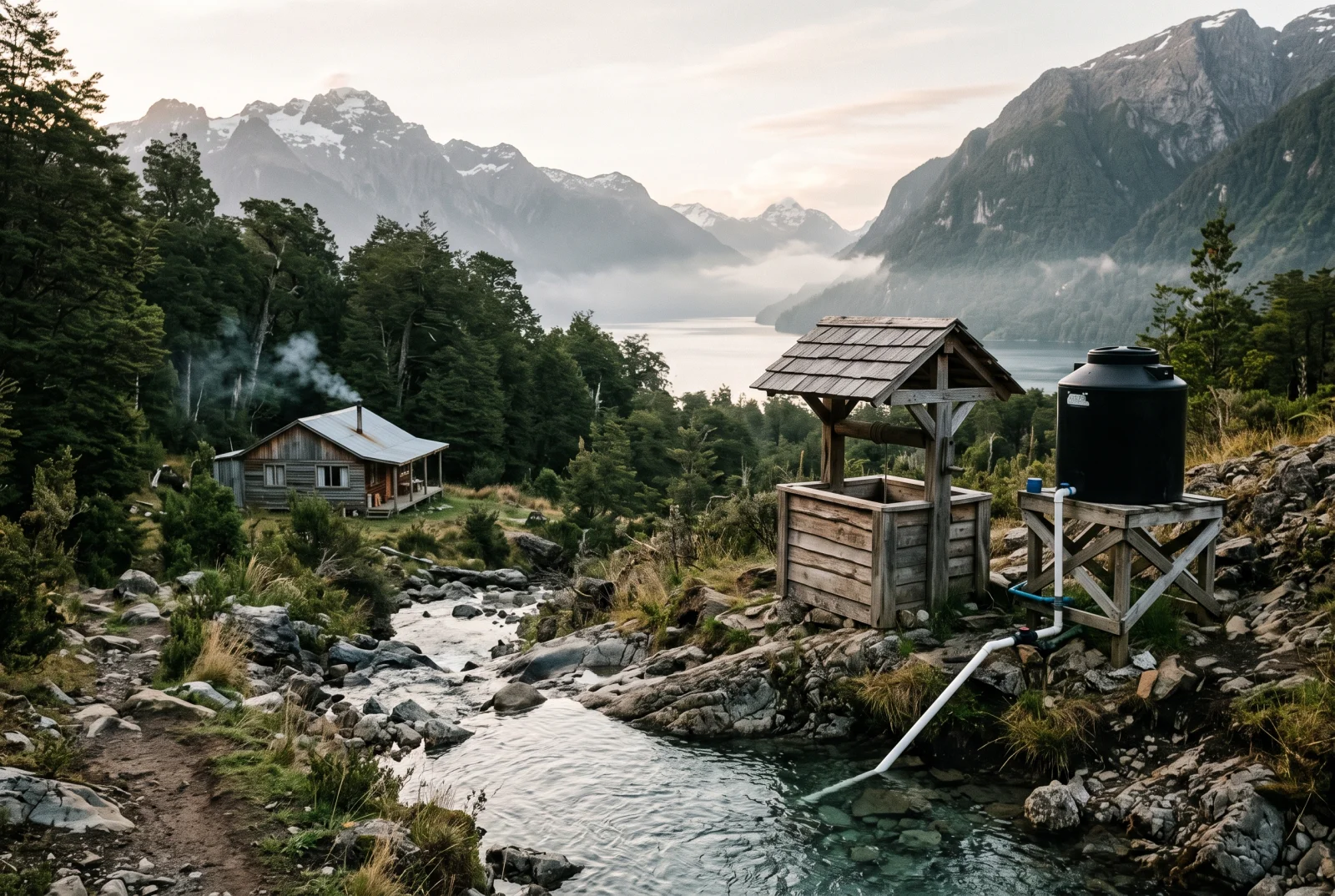 A well, a tank and gravity. Read our guide to water rights when buying property in Chile.
Water: committees, wells and the 2022 reform
Option one: join a rural water committee (APR / SSR)
Chile’s rural drinking water is delivered by community committees and cooperatives, now regulated by Law 20.998 on Rural Sanitation Services. The MOP grants each existing organisation an indefinite licence, reviewed every five years, with tariffs supervised by the sanitation regulator. Aysen has 43 rural sanitation services supplying more than 24,000 people.
If a committee serves the sector, joining is usually the cheapest and most reliable option. Ask the seller for the committee’s name, whether the parcel already has a connection, and whether the committee has capacity for new members. Some do not, and a committee that has hit its water-right ceiling cannot legally add you.
Option two: your own well or stream intake
This is where the 2022 reform of the Water Code (Law 21.435) changed life for small rural owners. It created the category of “domestic subsistence use”, defined as the water a person or family extracts themselves for drinking, hygiene, watering their animals and growing essential produce, and it states that this use always prevails. The amended article 56 allows subsistence wells to extract up to a volume set by the DGA for each basin, and it requires that the rural sanitation authority inform the DGA of the existence and location of those wells. Translation: you can dig a modest household well without a formal water right, but it must be reported, and you cannot sell the water or irrigate a commercial orchard with it.
If you want more than subsistence volume, you apply for a groundwater right. The application itself is free, but you pay for publication in the Official Gazette, three radio broadcasts, the DGA site visit and the registration at the Conservador, and admissibility alone takes about 30 business days. You also need a 24-hour pump test and proof of land title. Our water rights guide covers surface rights on rivers and lakes, which are a different beast.
Important: A hose in the stream is not a water right. If the seller says “the water comes with the land”, ask whether there is an inscribed right at the Conservador, a subsistence well reported to the DGA, or nothing. Two of those three are fine. The third is a negotiation.
Making it drinkable
Whether the source is a well or a stream, the health authority wants proof it is safe. A private drinking water or sewage installation needs a sanitary authorisation from the regional SEREMI de Salud, and the application must include a physical-chemical and bacteriological analysis of the raw water less than one year old; the procedure costs between CLP 56,200 and 905,900 depending on the project. A UV filter and a sediment filter cover most Patagonian sources, but test first. Glacial water looks pristine and can still carry livestock bacteria from upstream.
Rainwater is a legitimate supplement. The 2022 reform expressly treats rainwater recharge works as natural recharge that needs no DGA report, and a large metal roof in the western fjords can fill tanks faster than a well.
Septic: the 100-year-old rule that still applies
Chile’s rules for private sewage date from Decree 236 of 1926, and they are still in force. The decree requires written authorisation from the health authority before any private sewage system is built or operated. It also sets the distances everyone forgets: no absorption pit or latrine may be installed within 100 metres of any well, spring or drinking-water source, and a septic tank must be sized to hold 24 hours of flow plus two years of sludge.
For treated septic systems with proper drain fields, the SUBDERE sanitation manual used by municipalities sets a design condition of at least 20 metres from any drinking-water source. That difference between 20 m and 100 m is why the layout of a small parcel matters so much: on a half-hectare lot with a well, the septic field and the well can end up fighting for the same corner.
Costs are moderate. A Chilean contractor marketplace reports septic installations ranging from CLP 250,000 to 9 million, with an average around CLP 1.6 million. The high end is for engineered systems on clay or waterlogged soil, which is common near the fjords. Ask for a percolation test before you buy the tank.
Local Tip: In Aysen, soil is the variable. Glacial gravel drains beautifully. Peaty ground near Puyuhuapi or Caleta Tortel does not. The same tank that works in Coyhaique Alto can flood a drain field on the coast, so ask the neighbours what they installed and whether it froze.
Internet: the problem that got solved
Starlink
This is the one utility that went from “impossible” to “solved” in five years. Subtel authorised Starlink’s commercial service in Chile in October 2021, and today it is the default connection for remote homes from Villa O’Higgins to La Junta. A Chilean reseller lists Residential Lite from CLP 37,000 per month and full Residential from CLP 50,000, and Movistar sells the standard kit from CLP 336,990. Check the Starlink site for the live price in your area, since plans change. The catch is power: the dish draws a steady load, so it needs to be in your solar budget.
Fibre is closer than you think
The Fibra Optica Austral backbone reached Aysen in January 2022, with 586 km of cable, including 220 km under Lago General Carrera, linking 14 localities and 70,000 people. Subtel’s project page lists the route. In August 2026 the “last mile” project was awarded to the operator Mundo, with a CLP 7,684 million subsidy to connect 33 rural localities and 7,802 homes across Coyhaique, Aysen, Cisnes, Guaitecas, Chile Chico and Tortel, with plans up to 1 Gbps at CLP 11,989 per month. The same announcement admitted that rural fixed connectivity in the region currently sits at 39%. If your parcel is near one of the listed localities, fibre may arrive before your house does.
For a town-by-town look at speeds and coworking, see the remote work in Patagonia guide.
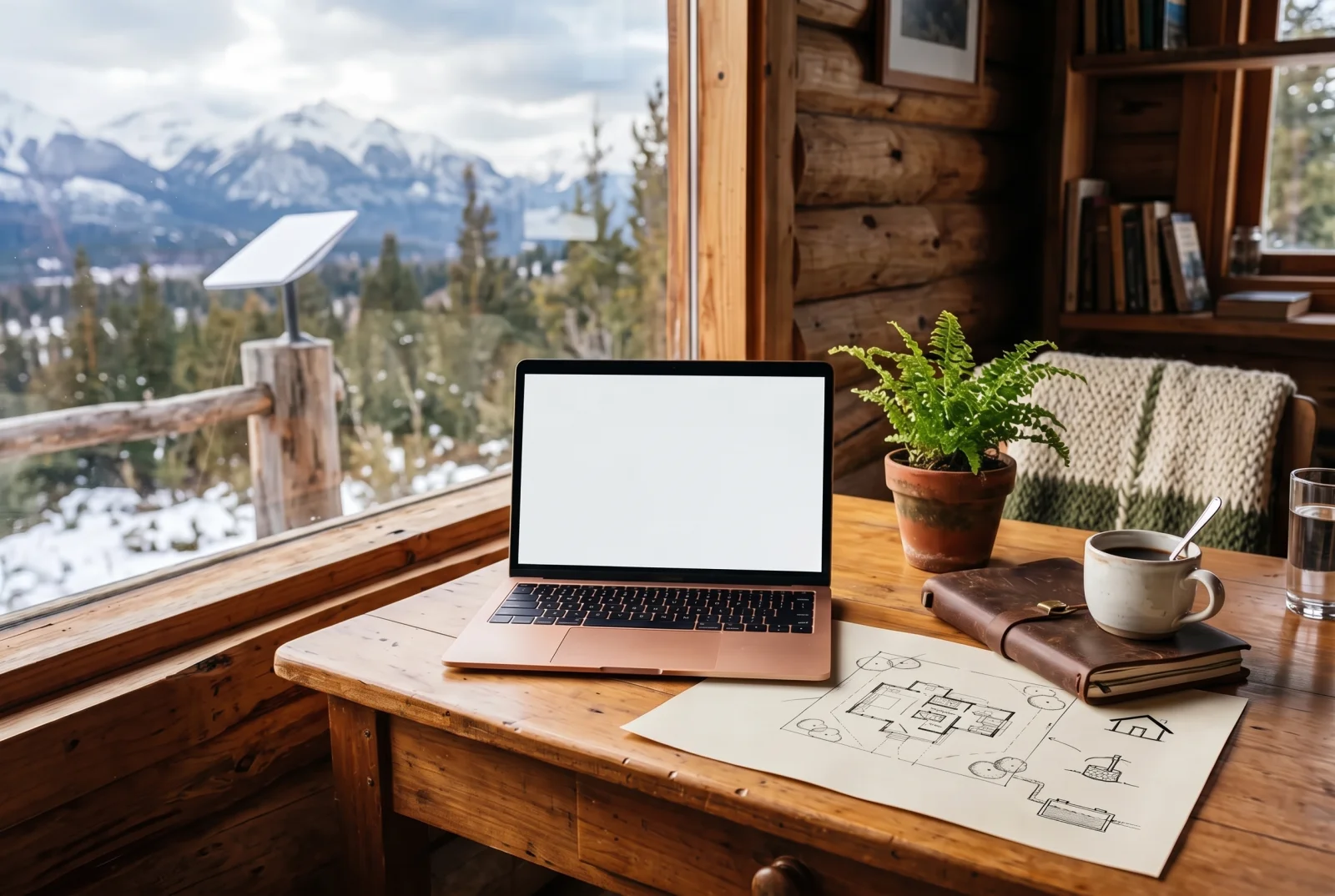 Plan power, water and septic on paper before pouring concrete. See our rural parcel due diligence guide.
A due-diligence checklist for off-grid parcels
Before you make an offer on any rural lot or farm in Aysen, get answers to these in writing:
- Power: Distance in metres to the nearest Edelaysen line, and a written connection quote if under 1 km. If further, a solar installer’s quote sized for 85 kWh per month minimum.
- Water: Name of the APR committee if any, its capacity for new members, or the status of the well (inscribed right, reported subsistence well, or nothing). One recent water analysis.
- Septic: Existing sanitary authorisation, distance from the well, soil type and a percolation test result.
- Internet: Starlink obstruction check from the house site (the app does this), and whether the sector is on the Última Milla list.
- Heating: Access to a woodlot or a firewood supplier, and whether the parcel falls inside the Coyhaique saturated zone.
- Access: Whether the road is passable in winter, and whether the easement to reach it is inscribed. See subdividing rural land under DL 3516 for why access and subdivision go together.
Pro Tip: Put the utilities budget in the offer. Sellers of raw land in Aysen are used to buyers who negotiate the price down by the cost of the empalme, the well and the septic. A written quote from Edelaysen or a solar installer is the most persuasive negotiating document you can carry.
The bottom line
Off-grid living in Aysen is not a lifestyle experiment. For roughly one in nine rural homes it is the existing condition, and the public sector has quietly decided that solar, not poles, will connect the last of them. The rules are older than most buyers (1926 for septic) and newer than most lawyers realise (2022 for wells). The internet problem is gone. What remains is arithmetic: a parcel with no services, a solar kit, a well, a tank and a septic field usually costs less in total than a serviced lot near town, and it comes with a lot more lake.
If you want help pricing a specific parcel, or you are selling land and want the services documented properly, get in touch.
Frequently Asked Questions
Do I need a Chilean RUT to sign up for Starlink or join a water committee?
Starlink accepts foreign cards and does not require a RUT to order the kit, but a Chilean address is needed for delivery and the service address. Rural water committees are membership organisations governed by their own statutes, and most will ask for your RUT and proof of ownership of the parcel, so obtain your RUT early. Our foreign-buyer guides explain how.
Can I run a vacation rental on a fully off-grid property?
Yes, and many cabins along the Carretera Austral do exactly that. The practical constraints are guest expectations around hot water, heating and internet, and the sanitary authorisation for your water and septic system, which the health authority can inspect for a commercial rental. Our Airbnb guide for Aysen covers the registration side.
What happens to my subsistence well if the DGA later restricts the aquifer?
Domestic subsistence use is the only category that the 2022 reform declares always prevails, even in restricted zones. A reported household well is far safer than an unreported one, because the DGA can only protect a use it knows about. Keep the confirmation of the report with your title documents.
Is a composting toilet legal in rural Chile?
There is no specific national standard for composting toilets. They are approved case by case by the regional health authority as part of the sanitary authorisation for the dwelling. Bring the manufacturer’s technical sheet and a plan for handling the compost to the SEREMI de Salud before you build.
Can I use a diesel generator as my only power source?
Nothing prohibits it, but the municipality will still require a TE1 declaration for the interior installation before granting a building reception, and fuel delivery to remote parcels is expensive and weather-dependent. Most owners use a generator only as backup for a solar system.
Will a bank finance the solar and water installations as part of a mortgage?
Chilean mortgages finance the property, not loose equipment. If the solar system, well and septic are built as part of a construction loan and reflected in the permit and reception, they form part of the appraised value. Installations added later are normally paid in cash or with consumer credit.
Does an off-grid house pay less property tax?
The fiscal appraisal that drives property tax is based on land value and the built surface and quality, not on whether the house is connected to the grid. Many rural parcels in Aysen fall below the exemption threshold anyway. Our annual property tax guide has the details.
Interested in buying land in Patagonia?
We connect buyers with the best opportunities in Chile's Aysen Region. Tell us what you're looking for and we'll help you find it.
No commitment. Your information is kept confidential.

Written by
Nicolas GorroñoFounder & Editor
Founder of Patagonia Properties. Grew up in Coyhaique, lived in Australia, and is now back in Patagonia full-time. SEO and digital marketing specialist.
LinkedIn