Publish a listing that sells
The more complete the information you publish, the more interest your property attracts and the more enquiries you get. This guide walks through how to build that listing, step by step. Listing on Patagonia Properties is free.
What makes a listing get enquiries?
A listing gets enquiries when it answers the buyer's questions before they have to ask them. Clear photos, exact surfaces, honest condition and a price you can explain: that is the whole job.
Most listings that reach the portal fail the same way, and it is not for lack of time: three dark photos, a generic title and two lines of description. Someone looking at that has nothing to decide with, so they move on to the next listing. It is not that the property is uninteresting, it is that there is not enough there to be interested in.
The logic is simple: every detail you add is one more reason for someone to write to you, and one less doubt pushing them away. A buyer who has already seen the kitchen, knows the size of the plot and understands how the house is heated arrives at the contact form convinced rather than curious.
The four sections that follow cover what matters most, in order: the photos, the title and description, the price, and verification. There is a checklist at the end to run through before you publish.
What photos does your listing need?
You need 8 to 12 horizontal photos, shot in daylight with the house tidy. The facade goes first, because it is the only image that appears in search results.
You do not need a professional camera. A recent phone, a clear morning and half an hour of tidying up beforehand will do nearly all the work. What you do need is judgement: look at each photo before uploading it and ask whether it shows the property or the mess that happened to be next to it.
The cover photo
This is the only photo that shows up in search results. If it does not land in that first second, nobody opens the rest of the listing.
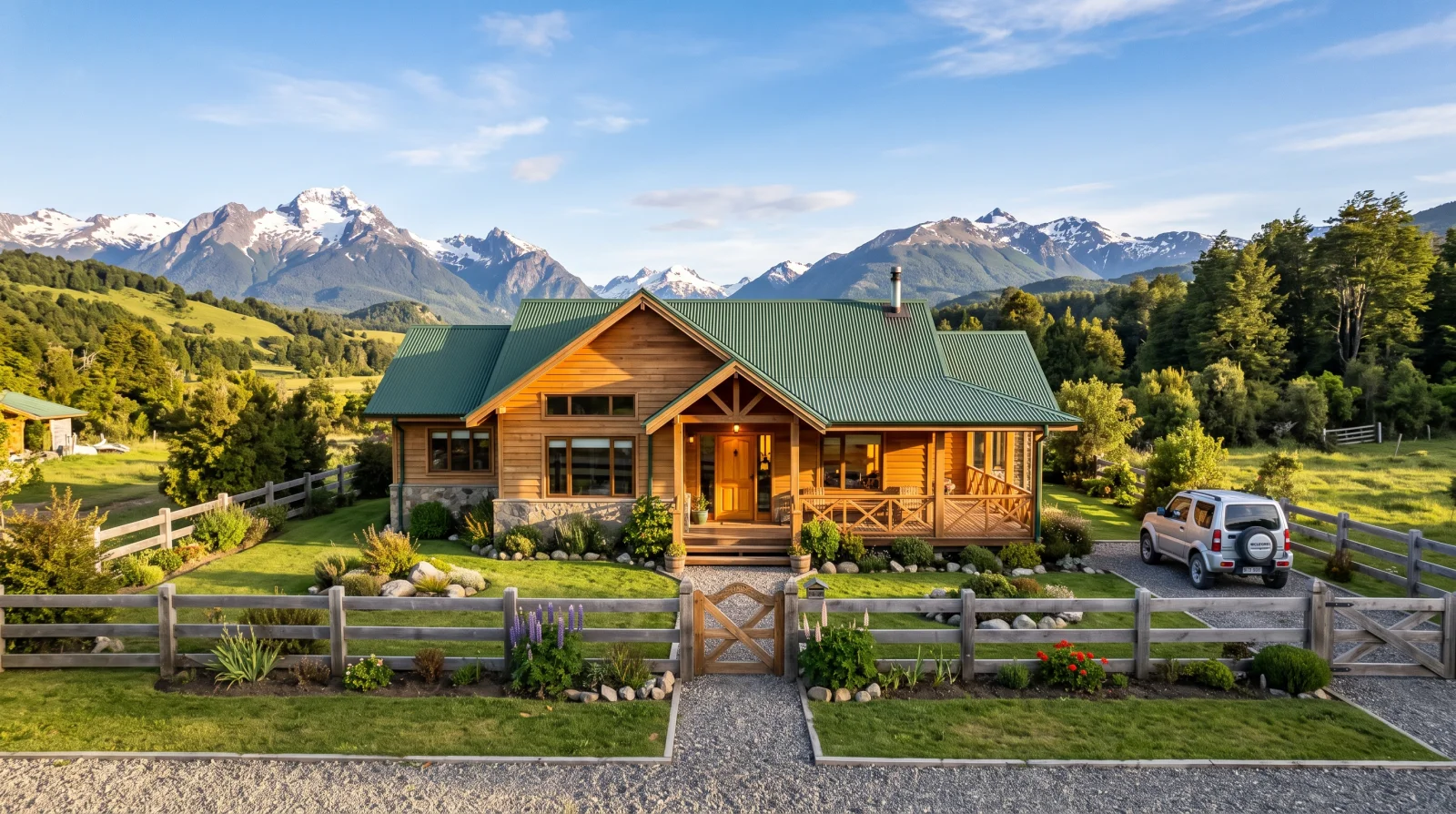 Do this
 Afternoon light, house centred, surroundings clear.
- Golden late-day light brings out the shape and the colour of the timber.
- The house is centred and fits completely inside the frame.
- The garden is cut and there are no cars or clutter in front.
- The mountains behind it tell buyers where the property actually is.
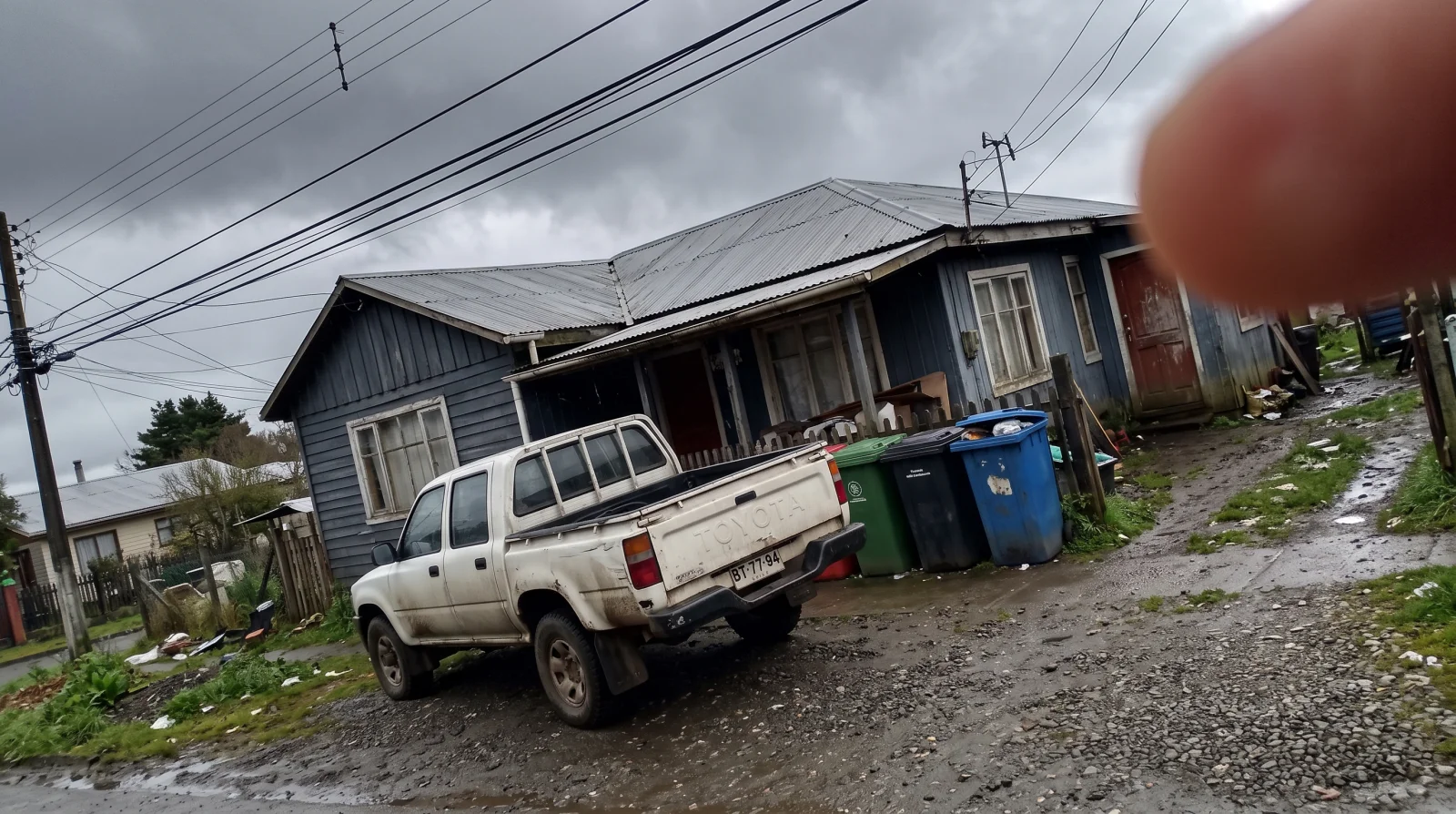 Not this
 Grey day, a truck blocking the house, and the frame is tilted.
- The parked pickup truck hides half the facade.
- A finger creeps into the corner of the lens.
- The horizon is tilted, so the house looks like it is falling over.
- The rubbish bins ended up in the foreground.
The interior photos
This is where a buyer decides whether the property is worth a visit. What they are looking for is space, light and order, in that order.
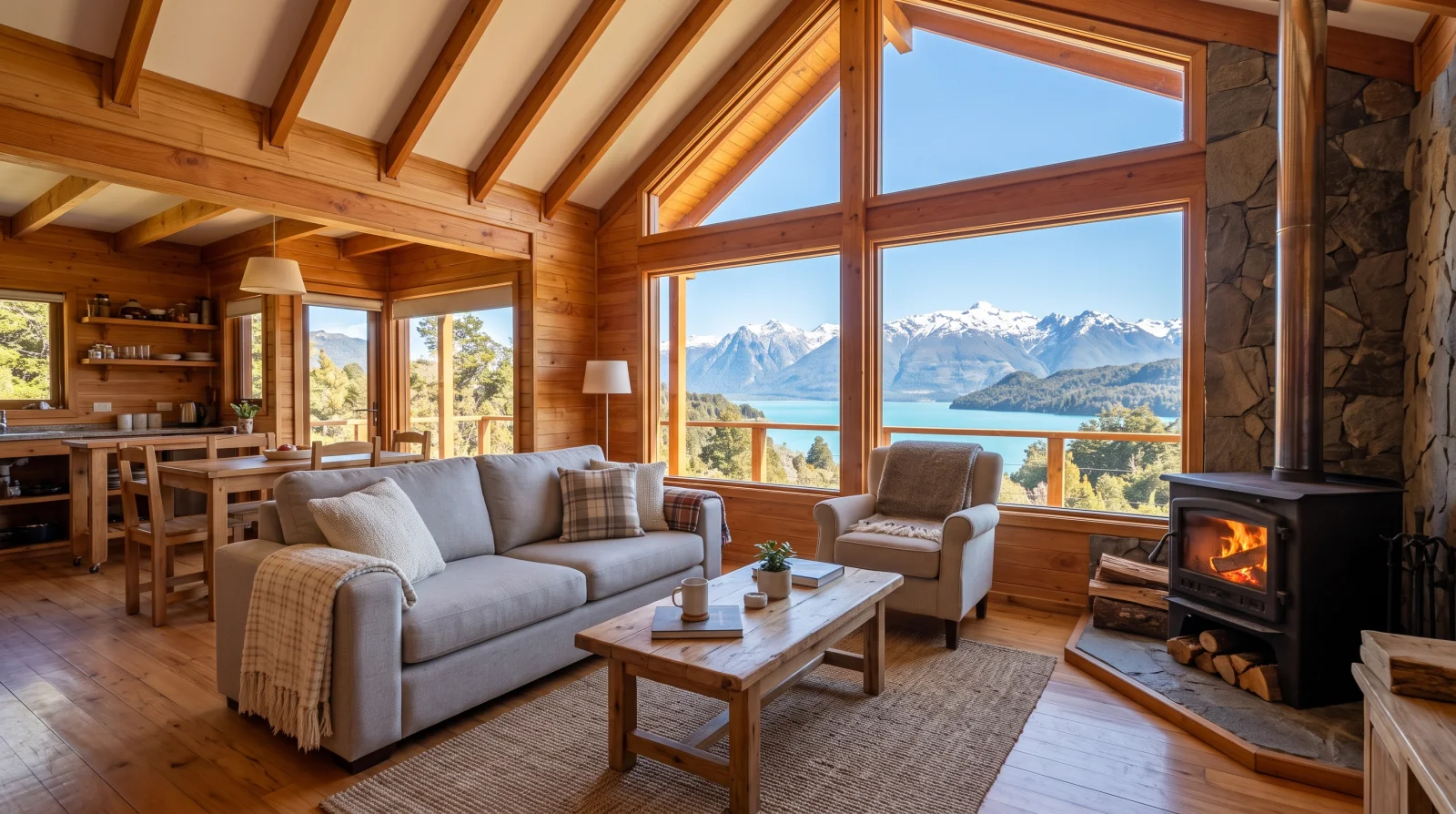 Do this
 Natural light, shot from the corner, surfaces cleared.
- Every bit of light is natural: no flash, no lamps switched on.
- Shooting from the corner shows the real width of the room.
- Surfaces are clear, with no clothes or cables in shot.
- The window shows the mountain, which is part of what you are selling.
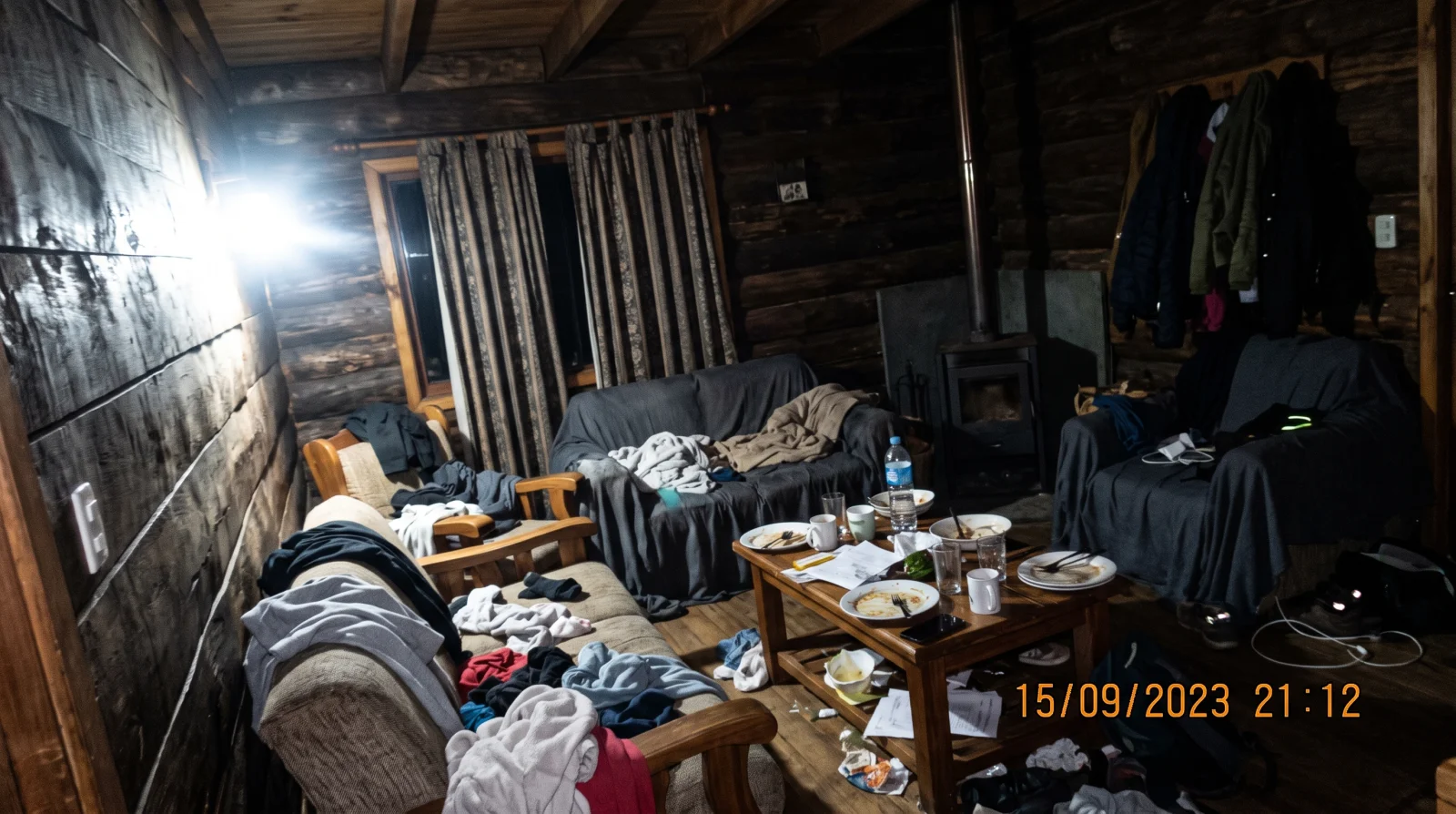 Not this
 Night-time flash, clutter, and a date stamp printed on top.
- Direct flash flattens the room and leaves hard shadows.
- Clutter has piled up across the table and the sofa.
- The date stamp printed on the photo makes the listing look old.
- The frame is crooked and cuts the room in half.
What to photograph
Walk the property in this order and skip nothing. If a room never appears in the photos, buyers assume the worst about it.
Facade
Whole and head-on, no cars in front.
Living room
From the corner, to show the width.
Kitchen
Counters cleared, daylight only.
Bedrooms
One each, beds made.
Bathrooms
Clean and free of personal items.
The view
From the window or the deck.
The land
The boundaries and the usable ground.
Between 8 and 12 photos. Fewer leaves gaps, more starts repeating.
Always horizontal. That is the shape the portal's cards are built in.
In daylight. No night-time flash, no yellow bulbs.
How do you write a title and description that work?
The title follows a three-part formula: property type, standout feature and location, in 90 characters or fewer. The description runs 150 to 250 words and always follows the same order.
The title formula
The standout feature is the one thing that separates your property from every other one in the same town: the view, the native forest, the river frontage, the size of the plot. If your title would work just as well for someone else's house, it is not finished.
3-bedroom house with valley views in Coyhaique
Type (3-bedroom house) plus feature (valley views) plus location (Coyhaique).
46 characters of 90
5,000 m2 plot with native forest in Villa Ortega
Type (5,000 m2 plot) plus feature (native forest) plus location (Villa Ortega).
48 characters of 90
The description, side by side
Both describe the same house in Coyhaique. One says nothing, the other answers everything the buyer was going to ask on the phone.
"House for sale, good location, call the number"
- It never says the size or the number of bedrooms.
- It never says which part of town the house is in.
- "Good location" means nothing without a reference point.
- It skips condition, heating and services entirely.
- It forces a phone call to learn the basics, and almost nobody calls.
Family house of 128 m2 built on a 640 m2 plot, in the upper part of Coyhaique, a ten-minute drive from the Plaza de Armas.
The layout is three bedrooms and two full bathrooms, plus a living and dining room open to the kitchen that gets sun all morning. The main bedroom has a built-in closet and looks out onto Cerro Mackay.
The house was built in 2014, timber-framed with fibre cement cladding and double glazing throughout. It is in very good condition: the floating floors and the zinc roof were both replaced in 2023.
Heating is wood-fired, with a central stove that warms the ground floor, plus electric radiators in the bedrooms. It has mains drinking water, three-phase electricity and a sewer connection.
The plot is fenced, with a covered barbecue area, a woodshed and parking for two vehicles. The neighbourhood is quiet and residential, four blocks from the school and the supermarket.
This is a house for someone who wants to live in Coyhaique year-round, with the town services close by and the mountains in view from the living room.
The order the good description follows
That order is not decorative: it runs from general to specific, which is how people read when they are comparing several properties at once.
How do you use AI to write your listing?
Copy the prompt below, paste it into ChatGPT or Claude, and fill in the template with your property's details. It returns a title and a description already shaped to the format in this guide.
Here is the part that decides the result: the AI knows nothing about your property, it only rearranges what you hand it. Paste four scattered details and you get back vague text that helps nobody. Fill in the whole template, with the exact surfaces, the year, the heating and what makes the place special, and you get a description that answers a buyer's doubts before they surface. The more complete what you paste in, the more complete the listing, and complete listings are the ones that attract enquiries.
Patagonian property copywriter
Paste it as-is into ChatGPT or Claude, fill in the fields, and publish what comes back.
Act as a real estate copywriter who knows Chilean Patagonia well.

Using the data I give you below, write exactly two things:

TITLE: 90 characters maximum. Format: property type + most distinctive feature + location.

DESCRIPTION: between 150 and 250 words, in short paragraphs, in this order: what the property is, surfaces, layout, condition and year built, heating and services, surroundings and what is nearby, and the lifestyle it suits.

Language: write both the title and the description in the language I will publish in. If my data below is in Spanish, write in Chilean Spanish; if it is in English, write in English. The portal translates the listing into the other language automatically, so I only need one version.

Rules: use only the data I give you and invent nothing. If a field is missing, leave it out rather than filling it in. No emojis, no ALL CAPS, no exclamation marks and no sales cliches like "unique opportunity". Keep the tone honest, concrete and easy to read.

MY DATA:
- Property type:
- Municipality and neighbourhood:
- Land area in square metres:
- Built area in square metres:
- Bedrooms:
- Bathrooms:
- Year built:
- Condition:
- Heating:
- Water, electricity and sewerage:
- Orientation and views:
- What is nearby (schools, services, main road):
- What makes it special:
- Reason for selling:
- Price:
Write your listing once, in Spanish or in English. The portal translates it into the other language automatically, so it reaches both local and overseas buyers.
1. Fill in the template
Complete every field with real data. If you do not know something, leave it blank rather than inventing it.
2. Check what comes back
Read the whole thing and fix anything that does not match your property. You are signing the listing, not the AI.
3. Paste it into the form
The title goes in the title field and the description in the description field. That is it.
Do you list in pesos or in UF?
List in pesos if you expect to sell within a few months and your buyer is local. List in UF if the property is higher-value or the sale could take time, because the UF adjusts itself with inflation.
| Pesos (CLP) | UF | |
|---|---|---|
| How buyers read it | A direct figure with no conversion. It is the currency most local buyers think in. | It forces a conversion, but it is the unit mortgages and valuations are quoted in. |
| When it works best | Mid-priced urban properties and sales you expect to close within a few months. | Farms, plots and higher-value properties, or any sale that could take several months. |
| What time does to it | The amount is fixed, so inflation eats into its real value if the sale drags on. | The value adjusts on its own, because the UF tracks inflation. |
Compare before you decide
The best reference is the properties like yours that are already listed. Filter by town, type and number of bedrooms, look at what they are asking and for how much space, and place yours inside that range.
See properties for sale in CoyhaiqueThe fiscal assessment as a floor
The fiscal assessment (avaluo fiscal) appears on your property tax bill and is the value the SII assigns for tax purposes. Treat it as a reference floor, not a sale price: it almost always sits below what properties actually trade for.
If the price you have in mind falls below the fiscal assessment, it is worth revisiting before you publish.
What does verifying your property do?
If you add your RUT and tax roll number, we check them against SII records and your listing displays verification badges. Both fields are optional and neither is ever published.
Earned with the owner's RUT. It confirms that whoever posted the listing exists and is an identifiable person, not an anonymous ad.
Field: owner's RUT
Earned with the tax roll number. It confirms the property exists in SII records at the address you declared.
Field: SII tax roll number
Why a verified listing gets more enquiries
Buying property at a distance is unnerving, and reasonably so. Someone browsing from Santiago or from abroad cannot drop by on the weekend, so the first thing they assess is not the property but whether the listing is real.
The badges answer that question up front. Between two similar listings, the one showing that the seller and the property are confirmed against official records is the one that gets the message. It is not magic: the other one raises a question nobody wants to have to ask.
Where to find the tax roll number
It appears on the property tax bill delivered to the address, in the format 123-45. You can also look it up on the SII website using the address.
Your details stay private
Neither the RUT nor the roll number appears on the listing. They are used only for the check, and all anyone sees is the badge.
What to check before publishing?
Tick off the nine points below before you hit publish. If they all clear, your listing has the information a buyer needs in order to write to you.
Ready to publish?
Have your photos, title, description and price to hand. The form takes a few minutes and your property goes live on the portal instantly, in both Spanish and English. Listing is free.