Right of Way in Chile: Easements for Landlocked Rural Land in Aysen
TL;DR Plenty of the prettiest parcels in Aysen do not touch a public road. To reach them you need a right of way, which in Chile is a servidumbre de tránsito, a property right governed by articles 820 onward of the Civil Code. The single most important rule: a right of way can only be created by a written title, and not even “immemorial” use is enough to create one. So “everyone has always driven through here” is worth exactly zero. If a parcel is truly landlocked, the law lets you force a right of way on the neighbour, but you pay for the land and any damage, and you get there through a court case. The cheap, fast path is a signed, recorded easement deed before you buy.
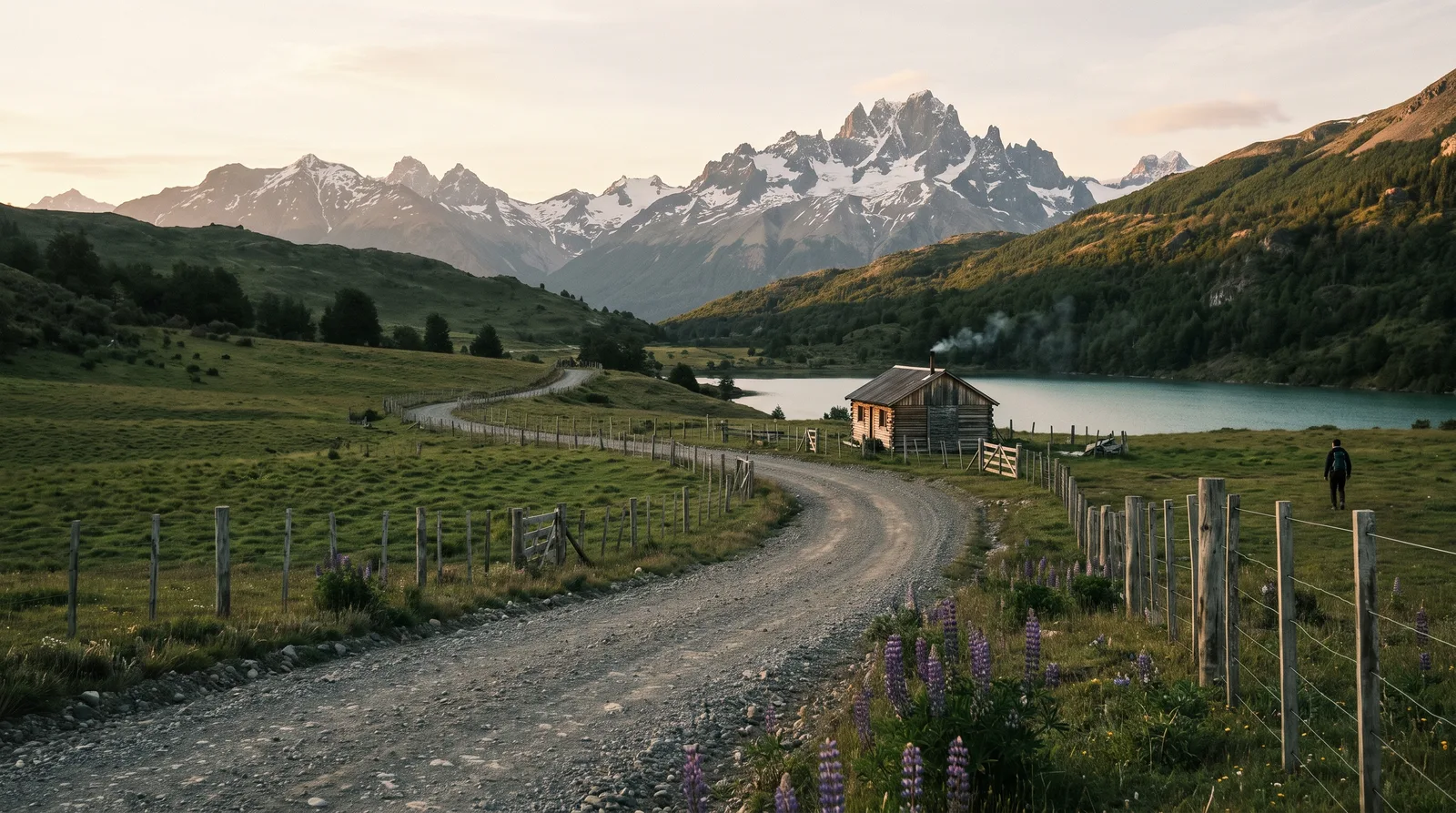 That track crosses somebody else’s field. Before you fall for the view, browse land for sale in the Aysen Region and check how each parcel actually reaches the road.
The landlocked parcel problem, Patagonian edition
Here is a scene that repeats itself every summer in Aysen. A buyer finds a parcel with river frontage, a stand of native forest and a view of glaciers. The price is suspiciously reasonable. The seller walks them in along a gravel track from the Carretera Austral, through a gate, across a neighbour’s pasture, and down to the water. Everybody shakes hands.
Nobody asks the only question that matters: who owns the track?
In a region that covers 108,494 km2 with fewer than one person per square kilometre, rural land was historically divided with more enthusiasm than precision. Big estancias were split, split again, sold to cousins, partly inherited and partly forgotten. The result is a patchwork of parcels where many lots reach the road only by crossing someone else’s land. That crossing is either backed by a legal right, or it is backed by goodwill. Goodwill has a nasty habit of ending the day the neighbouring field is sold.
This guide explains how a right of way (easement) works in Chile, why most “access” in rural Aysen is weaker than it looks, and how to lock it down before you sign. It pairs with our guides to due diligence when buying a parcela and buying a farm in Chilean Patagonia as a foreigner.
Key Insight: In rural Aysen, access is part of the price. A parcel with no recorded right of way is not a cheaper version of the same property. It is a different, riskier asset, and it should be priced like one.
What a right of way is under Chilean law
Chile does not use the common-law vocabulary of “easement appurtenant” or “easement by necessity”, but the ideas map fairly well. The Civil Code defines a servidumbre predial as a burden imposed on one property for the benefit of another property belonging to a different owner. Two terms you will hear from every notary and lawyer:
- Predio dominante: the property that benefits. If you are buying the landlocked parcel, that is you.
- Predio sirviente: the property that carries the burden. That is the neighbour whose field the track crosses.
A proper right of way is a real right, which means it belongs to the land, not the person. When either property is sold, the easement travels with it. That is the entire point: a verbal permission (lawyers call it precario, a revocable tolerance) dies with a change of owner, a family fight or a bad mood. A recorded easement does not.
The classification that actually matters for buyers
The Civil Code sorts easements into a few categories. Most of them are law-school trivia, but one pair decides whether your access can ever exist without paperwork:
- Continuous vs. discontinuous. A continuous easement works on its own, without anyone doing anything (think of an aqueduct). A discontinuous one requires a human act each time it is used. Walking or driving across a field is the textbook discontinuous easement.
- Apparent vs. non-apparent. Apparent means there is a visible sign of it, such as a track, a gate or a culvert.
A right of way along a visible track is therefore discontinuous and apparent. Remember that label, because of the next section.
Why “we have always passed here” is worth nothing
This is the part that surprises foreign buyers, especially those from countries where long use can turn into a prescriptive easement.
Article 882 of the Civil Code says that discontinuous easements of every kind can only be acquired by a title, and that “not even immemorial enjoyment is enough to constitute them”. Only easements that are both continuous and apparent can be acquired by five years of prescription. A right of way is discontinuous, so it falls on the wrong side of that line.
Translated into buyer language: it does not matter whether the seller’s grandfather drove sheep down that track in 1962. Decades of peaceful use do not create a right of way. Without a title (a deed, a subdivision deed that grants it, or a court judgment) the access is legally a favour.
Important: Chile’s Civil Code is explicit that even immemorial use cannot create a right of way. If the seller’s answer to “how do I legally reach the road?” is a story rather than a document, you do not have access. You have an anecdote.
The one exception: access that the law presumes
There are two situations where a right of way can exist even if nobody signed a dedicated easement deed. Both are worth knowing because they are common in subdivided Patagonian land.
- The land was split off from a bigger property. Under article 850 of the Civil Code, if part of a property is sold, exchanged or allocated to a co-owner and that part ends up cut off from the road, a right of way is deemed granted in its favour, with no compensation at all. This is powerful, but it only works against the land it was carved from, and you still need to prove the chain of title.
- The “family father” rule. Article 881 says that if one owner set up a continuous and apparent service between two of their own properties and later sold one, the service survives as an easement unless the sale deed says otherwise. Because it requires a continuous service, lawyers debate how well it covers plain tracks. Do not rely on it without advice.
Neither exception replaces a recorded easement. They are what your lawyer reaches for when the paperwork is missing, not a plan.
When the parcel is truly landlocked: the legal right of way
Chile does give a lifeline to owners who are completely boxed in. Article 847 of the Civil Code says that if a property is “destitute of all communication with the public road” because other properties are in the way, its owner can impose a right of way on the neighbours, to the extent it is indispensable for the use and benefit of the property, paying the value of the land needed and compensating any other damage.
Three details matter in practice:
- “Destitute of all communication” is a high bar. If your parcel has any other way out, even a worse or longer one, a court may decide it is not landlocked. Check every boundary with a surveyor before assuming you qualify.
- You pay. The dominant owner pays the value of the strip plus any other harm. If the parties do not agree, article 848 sends both the compensation and the way the easement is exercised (route, width, use) to court-appointed experts.
- It goes through court. Disputes over the constitution, exercise, change or extinction of legal easements are heard under the summary procedure of article 680 of the Code of Civil Procedure. “Summary” is a procedural label, not a promise of speed. Expect lawyers, experts, site visits and time.
There is also a clause that works against you later. Under article 849, if the easement stops being indispensable (say, you buy the next lot and gain your own road frontage), the neighbour can ask to be released from it by returning what you paid for the land.
Pro Tip: A forced right of way is a remedy, not a strategy. If you are buying a landlocked parcel, make the seller obtain a voluntary, recorded easement as a condition of the sale. You keep your money in escrow until it exists.
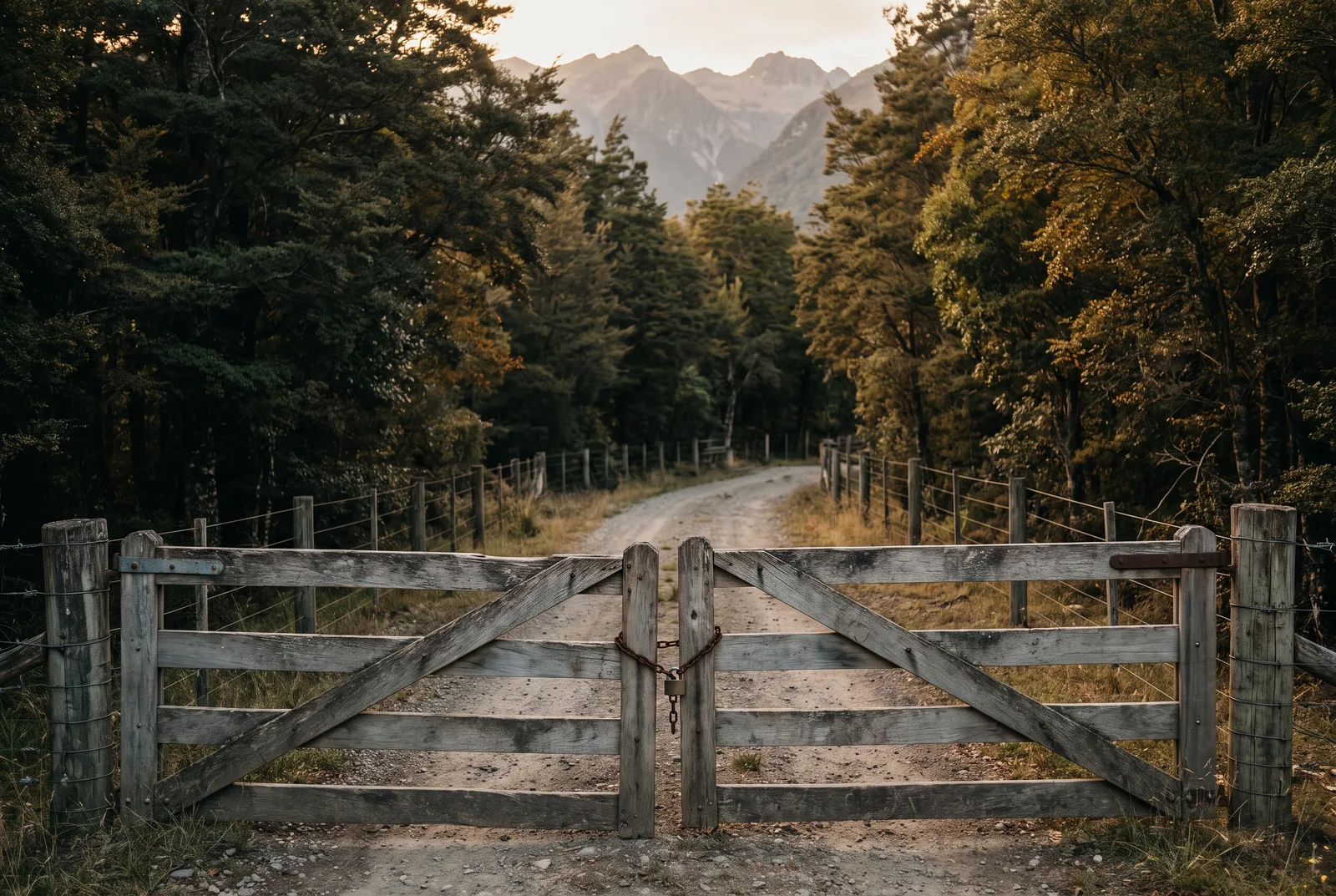 A padlocked gate is where informal access ends. If you are also weighing a sale on the other side of that gate, see how to value a property in Patagonia.
The voluntary route: how to create a right of way properly
The overwhelming majority of rural rights of way in Chile are voluntary: two owners agree, sign a deed and record it. It is faster, cheaper and far less stressful than litigation. The steps:
1. Agree on the terms with the neighbour
Negotiate the route, width, permitted uses and compensation. The law does not set a universal width for a private right of way. For forced easements the test in article 847 is what is indispensable for the property, and in a voluntary deed the width is whatever you agree. That is exactly why you should agree on something generous enough for your real plans: a pickup truck, a building materials delivery, a fire truck and, ideally, room for a future power line.
2. Survey and map the strip
Have a surveyor draw the easement strip on a plan with coordinates, tied to both properties’ boundaries. A deed that says “along the existing track” is an invitation to fight when the track moves after a wet winter.
3. Sign a public deed before a notary
The easement is granted in an escritura pública. Your lawyer drafts it, both owners (or their attorneys under a power of attorney, if you are abroad) sign before a notary.
4. Record it at the Conservador
The deed is then registered at the Conservador de Bienes Raíces for the commune where the land sits. Recording is what makes the easement visible to future buyers of both properties and what protects you when the neighbouring field changes hands. Aysen has more than one registry, so make sure the deed is recorded in the one that covers the commune of both properties.
Local Tip: In rural Aysen, the neighbour is not an obstacle to be managed, they are a relationship you will have for the next twenty years. A fair payment, a shared-maintenance clause for the track and a clear gate rule buy you more peace than any court judgment.
What to write into the easement deed
A vague easement is a lawsuit on a timer. A good deed covers at least:
- Exact route, referenced to the survey plan and coordinates
- Width in metres, including any shoulders and drainage
- Permitted uses: foot traffic, vehicles, livestock, heavy machinery, construction trucks
- Utilities: whether you may lay power cables, water pipes or fibre along the strip. If not, you may need a second negotiation later. Our off-grid utilities guide for Aysen explains why this matters.
- Maintenance: who grades the road, clears snow and fallen trees, and in what proportion
- Gates: whether the neighbour may install one, and a firm obligation to give you keys or a code
- Beneficiaries: that the easement benefits the whole dominant property, including any future subdivided lots, if that matters to your plans
- Compensation: the amount paid and a statement that it is full payment
Subdivided parcels: access baked into the paperwork
A lot of the land on offer in Aysen comes from rural subdivisions under Decree Law 3,516, which allows rural land to be split into lots of at least half a hectare. The Agriculture and Livestock Service (SAG) certifies those subdivisions, and when a property does not open directly onto public space, SAG asks for a document proving the active right of way that serves the subdivision.
That is a helpful safety net, but it is not the end of your homework. Check that:
- The right of way is recorded in favour of your specific lot (identified by its rol), not just the original big property
- The internal road on the subdivision plan matches the road on the ground
- There is a written agreement on who maintains the shared road and how costs are split
- Nobody sold “their” part of the internal road to someone else
Our guide to subdividing rural land in Chile under DL 3,516 walks through how these subdivisions are built, and why some older ones were built badly.
Is it a public road or a private track?
Before you negotiate anything, confirm what kind of road you are actually on. Chile’s roads law (DFL 850 of the Ministry of Public Works) presumes that a road which is or has been in public use is public, while preserving the right of a private owner to claim ownership in court. In practice, a track that has served several properties and the public for years may be a public road, and the regional roads authority (Vialidad) can take an interest if someone fences it off.
Do not treat that presumption as your access plan. Whether a specific track is public is a factual and legal question. Ask the municipality and the regional Vialidad office whether the road appears in the public road network before you rely on it.
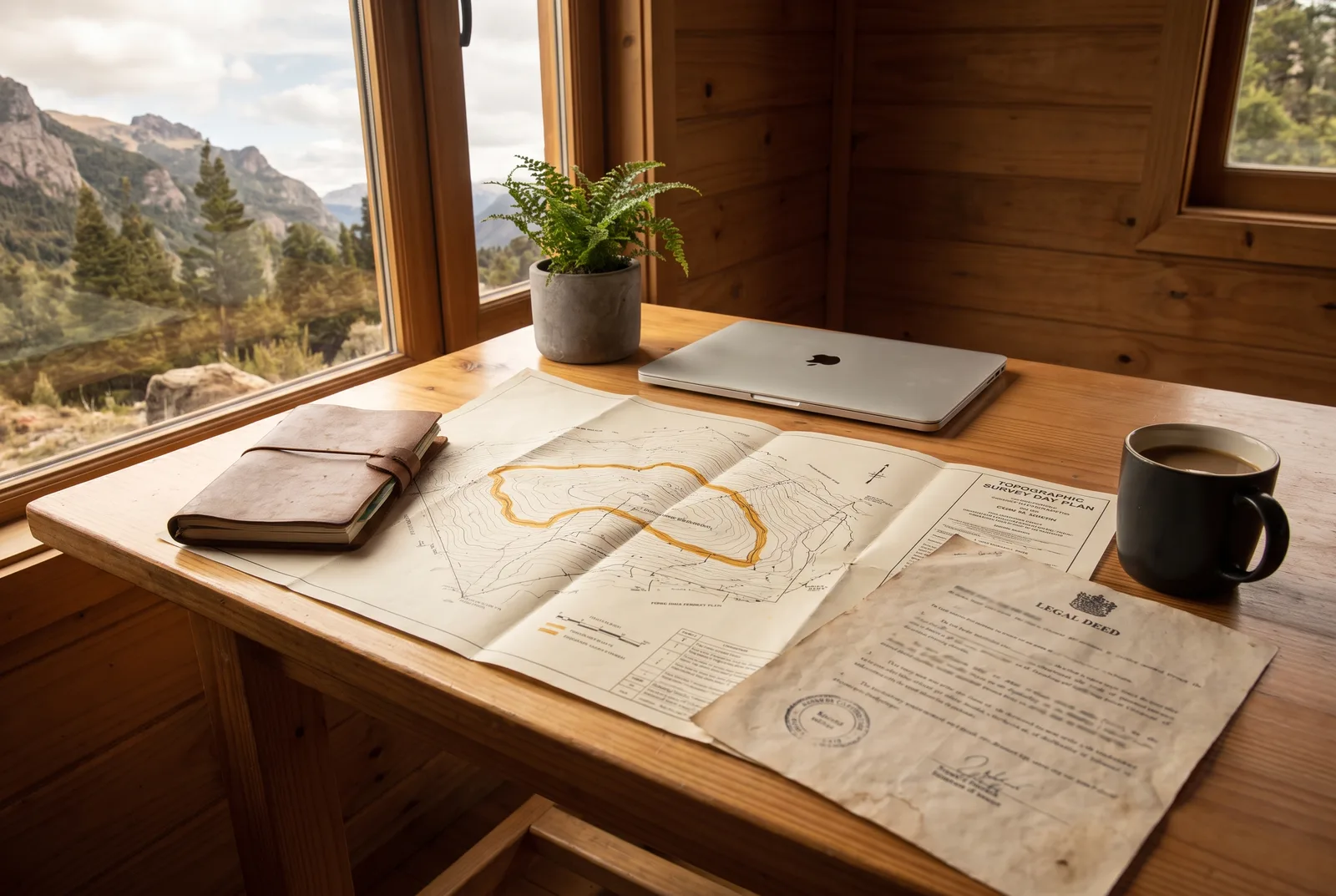 The survey plan and the recorded deed are the access. Make sure both are in your file along with the documents a buyer needs in Chile.
Buyer’s checklist: access due diligence in Aysen
Before you sign a promesa de compraventa, have your lawyer confirm:
- Title certificate (certificado de dominio vigente) of the parcel from the correct Conservador
- Encumbrances certificate (certificado de hipotecas, gravámenes, interdicciones y prohibiciones) for both your parcel and the neighbour’s. Easements show up here.
- The easement deed itself, read in full, not a summary from the seller
- A survey plan showing the easement strip and matching the track on the ground
- A site visit walking or driving the entire route, noting gates, locks, washouts and bridges
- Utilities rights along the strip, if the parcel has no power or water yet
- The neighbour’s attitude, gathered by a friendly conversation, not by assumption
If the right of way does not exist yet, write its constitution into the promesa as a condition precedent: the sale only closes once the easement deed is signed and recorded. Our step-by-step legal purchase process shows where this fits in the timeline.
Numbers That Matter: Easements are lost by three years of non-use under article 885 of the Civil Code. An abandoned parcel with a recorded easement that nobody has driven in years is a legal question mark, not a certainty.
Red flags that should slow you down
- The listing says “access by agreement” (acceso por convenio) or “right of way in process” without a recorded deed
- The seller offers to “sort the access after closing”
- The track on the ground and the track on the plan disagree
- The parcel is priced far below comparable land nearby with the same features
- The neighbour’s property is itself for sale, in probate or in a family dispute
- The only access is by boat or across a river ford. That can be charming, and it can also be the reason the price is low.
None of these is automatically a deal breaker. Some of the best land in the region sits behind an easement. They are all reasons to get a lawyer involved before money moves, and to have a hard look at how the market values access. Our land prices in Aysen analysis is a useful starting point.
Where to go from here
If you are browsing parcels, filter your shortlist by access before anything else. Search farms for sale in Aysen or land around Coyhaique, then ask each seller one blunt question: “Can you send me the recorded easement deed?” The answer tells you a lot about the parcel, and about the seller.
If you would like help reading an easement deed or finding land with clean road access, get in touch with us.
Frequently Asked Questions
Can I get title insurance to cover access problems in Chile?
Title insurance is not a standard part of residential or rural purchases in Chile. Buyers rely on the lawyer’s title study and the certificates from the Conservador instead, which is why reading the easement deed and the encumbrances certificate yourself is so important.
Can a foreigner be the owner of a property that benefits from a right of way?
Yes. A right of way belongs to the land, not the person, so it passes to whoever owns the dominant property, whatever their nationality. Separate rules apply to border zones, which our guide to border zone restrictions in Aysen covers.
Does a right of way affect my property tax?
A recorded easement does not automatically change the fiscal appraisal used for property tax. Property tax in Chile is based on the SII appraisal of land and buildings. Our annual property tax guide explains how that appraisal works.
Can I let a new neighbour use my right of way?
Not by yourself. The easement is defined by its deed. If a third party wants to use the same track across the servient property, they need their own agreement with that owner, or the deed must already allow future beneficiaries.
What happens to the easement if I subdivide my parcel?
It depends on the wording of the deed. If it benefits “the property” without restriction, each new lot generally keeps the right, but the servient owner may argue the burden has grown. If you plan to subdivide, negotiate that point before you buy, not after.
Should I buy a landlocked parcel at all?
Sometimes. A discount on landlocked land can be worth it if a voluntary easement is realistic and the seller agrees to deliver it before closing. It is a poor bet if the only route is through a hostile neighbour or a court case.
Interested in buying land in Patagonia?
We connect buyers with the best opportunities in Chile's Aysen Region. Tell us what you're looking for and we'll help you find it.
No commitment. Your information is kept confidential.

Written by
Nicolas GorroñoFounder & Editor
Founder of Patagonia Properties. Grew up in Coyhaique, lived in Australia, and is now back in Patagonia full-time. SEO and digital marketing specialist.
LinkedIn