Can a Foreigner Get a Mortgage in Chile? Financing Patagonian Property in 2026

TL;DR Buying property in Chile as a foreigner is easy. Borrowing money to do it is not. Chilean banks almost universally require permanent residency (residencia definitiva), a Chilean RUT, and income earned and taxed in Chile, none of which a non-resident buyer has. If you do qualify, the news is good: mortgage rates hit 4.12% in January 2026, their lowest since 2021, and loans are denominated in UF rather than pesos. If you do not qualify, the realistic routes are cash, borrowing against an asset at home, seller financing, or getting residency first and buying second. Rural campos and parcelas are the hardest of all to finance, because banks in Aysen rarely lend against land with no house on it.
Where most of the financing work actually happens. Browse houses for sale in Coyhaique.
The short answer, before you email twelve banks
You can buy. You probably cannot borrow.
Chile is unusually relaxed about who owns its land. There is no foreign buyer approval board, no nationality quota, no minimum investment, and no residency requirement to hold title. The tax authority will even issue you a taxpayer number specifically so you can complete the purchase: the SII states that a foreign tourist must obtain a RUT through its website before buying real estate in Chile, and that a foreigner making investments should appoint a legal representative domiciled in Chile to handle it. That is the entire gate. We cover the ownership mechanics in detail in our guide to buying property in Chile as a foreigner.
Financing is a completely different institution with completely different incentives. A bank is not asking whether you are allowed to own the house. It is asking whether it can verify your income, garnish your salary, sue you in a Chilean court, and repossess a property it can actually resell. A non-resident buyer with income in dollars, euros or francs fails most of those tests at once.
So the honest framing of this article is not “how to get a Chilean mortgage as a foreigner.” It is “here is exactly why the answer is usually no, here is what it looks like on the rare occasion the answer is yes, and here are the four other things that actually work.”
Why Chilean banks say no to non-residents
The gatekeeper is residencia definitiva
Chile’s major retail banks publish essentially the same eligibility line: you must be Chilean, or a foreigner holding permanent residency. That is not a soft preference. It is a hard filter applied before anyone looks at your income.
Permanent residency is not something you can arrange in the weeks between finding a property and signing. Under Chile’s migration law, Ley 21.325, permanent residency is granted to foreigners who already hold a valid temporary residence permit, and the qualifying period runs from twelve months upward depending on your circumstances. The official application process runs through the Servicio Nacional de Migraciones and must be filed no more than 90 days before your existing permit expires.
In practice that means a two to three year runway: temporary visa, residence in Chile, then permanent residency, then a bank will even open the conversation. Buyers who plan to spend three weeks a year in a cabin near Puerto Rio Tranquilo are not going to complete that path, and should stop planning around it.
Then comes the income test
Assuming you clear the residency filter, the bank runs a standard affordability assessment. The CMF, Chile’s financial regulator, lists what lenders ask for: your cédula de identidad, recent payslips if you are employed, income tax returns if you are self-employed, and documentation of other assets you hold such as vehicles, company stakes or other real estate. The CMF is explicit that each institution sets its own conditions for granting credit, which is why bank-to-bank answers vary so much.
The problem for foreign buyers is not the paperwork itself. It is that almost every document on that list is a Chilean document. Foreign payslips, a foreign tax return and a foreign credit history do not slot into a Chilean underwriting model. Chilean banks also lean heavily on domestic behavioural data: months of account activity, pension contributions, and a clean record in the local commercial registry. A brand new arrival has none of that history, which is why banks typically want to see six months or more of local employment before they take an application seriously.
Key Insight: Residency gets you in the door. Chilean income gets you the loan. Foreign buyers usually fail the second test even after passing the first, because a bank cannot underwrite a salary it cannot verify or attach.
The one government-backed exception, and why it is not for you
There is a mortgage product in Chile aimed squarely at people living abroad, and it is worth knowing about precisely so you do not waste weeks chasing it. BancoEstado offers a mortgage for Chileans residing overseas, financing up to 80% of the property value over terms of 8 to 30 years, with income accepted from abroad and a judicial representative in Chile acting under a special power of attorney.
Every element of that structure is exactly what a foreign buyer needs. The catch is in the first requirement: the applicant must be Chilean. If you hold Chilean nationality through a parent or grandparent and never activated it, this product alone may justify the paperwork of claiming it.
What a Chilean mortgage actually looks like
If you are on the residency path, or you are a dual national, it helps to understand how different Chilean mortgages are from what you know at home.
Everything is denominated in UF, not pesos
Chilean mortgages are written in Unidades de Fomento. The UF is an inflation-indexed unit of account, republished daily, and it is the reason Chile can offer 20 and 30 year fixed-rate loans in a country with a history of inflation. The SII publishes the daily UF table, and on 4 September 2026 the UF stood at CLP 40,879.04.
The practical consequence is that your debt is inflation-proofed from the bank’s side, not yours. Your outstanding balance and your monthly dividendo both rise with Chilean inflation in peso terms. A rate quoted as “4.1%” is a real rate on top of indexation, not a nominal one. Anyone comparing it to a 4.1% nominal US mortgage is comparing two very different products. If you are converting figures while you shop, our UF converter does the arithmetic at the current day’s value.
Rates are at a four-year low
This is the genuinely good news of 2026. Chilean mortgage rates have been falling all year. The average rate on housing loans in UF at terms over three years reached 4.12% in January 2026, the lowest level since December 2021, when it touched 4.00%. The Banco Central publishes the underlying series in its statistical database, and rates have stayed near that floor through the year.
Also worth knowing: the rate you are offered is not necessarily fixed for life. The CMF explains that Chilean mortgage rates can be fixed, variable or mixed, and the distinction is buried in the contract rather than the marketing. Ask which one you are signing.
Three instruments, one word
Chileans use “crédito hipotecario” loosely for three legally distinct products. Letras de crédito are an older mechanism where the bank issues tradeable mortgage bills rather than handing over cash. A mutuo hipotecario endosable is a loan the originator can sell on to a third party, usually a life insurance company. A mutuo no endosable stays on the originating bank’s books.
For a borrower the difference mostly shows up in flexibility and in who you deal with for the next 20 years. Endorsable loans are frequently issued by mutuarias rather than banks and sometimes have slightly looser income requirements, which occasionally matters for self-employed or newly resident borrowers.
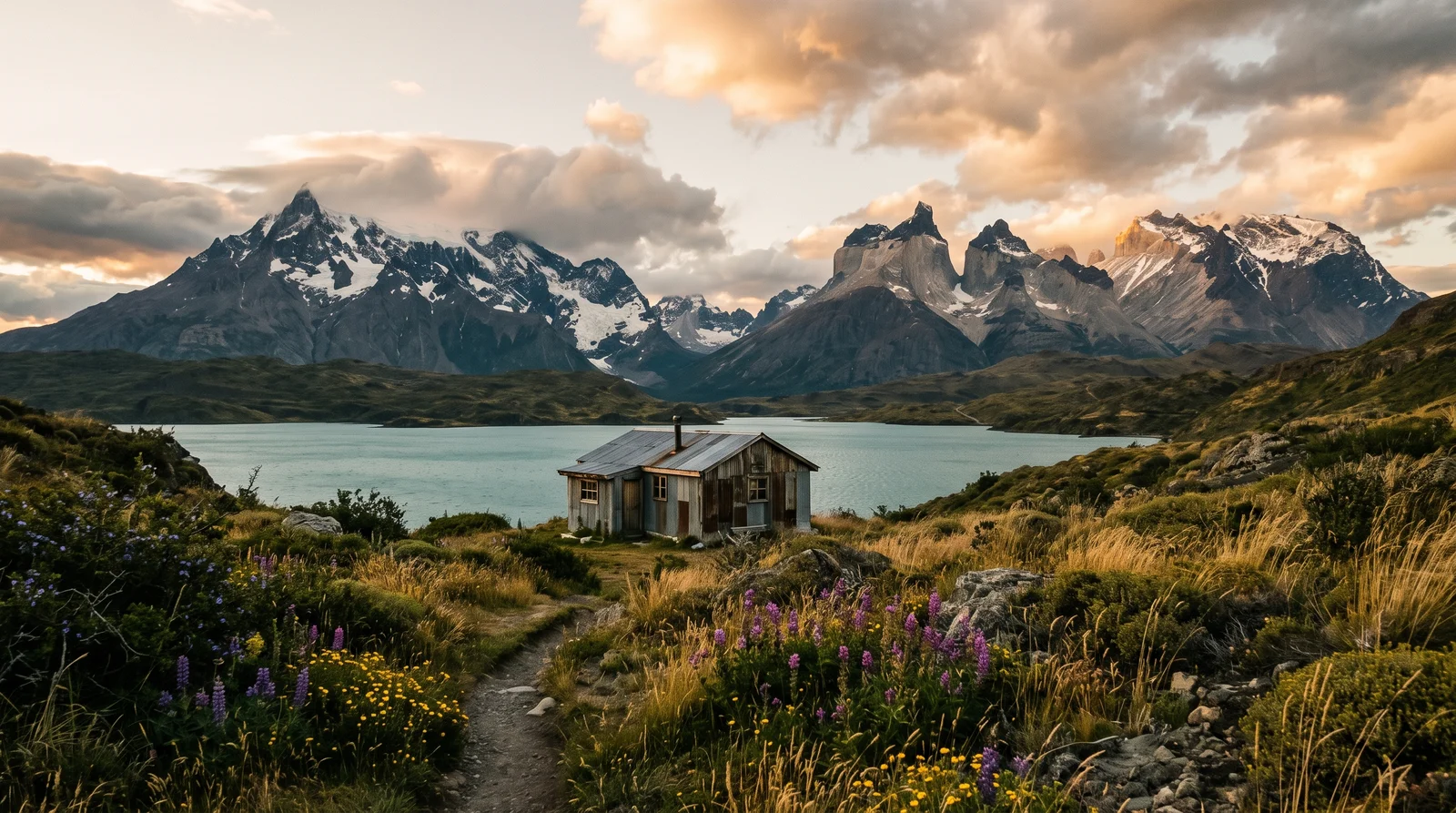 The property is the easy part. See land and cabins across the Aysen Region.
The financing costs nobody quotes you
Even a fully approved borrower pays a set of transaction costs that are separate from the purchase price and separate from the interest rate.
Stamp tax on the loan itself
Chile taxes credit documents. The impuesto de timbres y estampillas runs at 0.066% of the credit amount per month or fraction of a month, capped at 0.8%. Since every mortgage runs well past twelve months, the cap applies: budget 0.8% of the loan.
There is one important discount. For loans used to buy a “vivienda económica” under DFL 2 of 1959, the rate is a quarter of that. The SII confirms that article 7 of Ley 20.780 set the economic housing rate at 25% of 0.8%, that is 0.2%. DFL 2 status turns on size: dwellings of no more than 140 square metres of built surface qualify.
On a UF 4,000 loan that is a difference of roughly UF 24, around CLP 981,000 at today’s UF. Worth checking the square metres before you sign anything.
Numbers That Matter: Stamp tax on a mortgage is 0.8% of the loan, but only 0.2% if the home is 140 m² or less and qualifies under DFL 2. Most Patagonian cabins are comfortably under that threshold. Most lodges are not.
Valuation, insurance and the closing stack
The bank appoints its own tasador and you pay for the valuation. If the appraisal lands below the agreed sale price, the bank lends against the appraisal, not the contract, and the gap becomes your problem in cash. This happens more in Aysen than in Santiago because comparable sales are thin and appraisers are conservative about remote locations.
You will also carry mandatory fire and life insurance for the life of the loan, plus the standard conveyancing costs that apply to any Chilean purchase: notary fees, Conservador de Bienes Raíces registration, and the title study. Those are unchanged whether you borrow or pay cash, and once you own the property the annual contribuciones bill starts.
Five ways foreign buyers actually finance Patagonia
Here is what genuinely happens, ranked roughly by how often we see it.
1. Cash, wired properly
The overwhelming majority of foreign purchases in Aysen are cash. The money comes in as an international transfer, is converted through the formal exchange market, and lands in a Chilean account or is paid directly at signing via vale vista.
The compliance step people forget is the Banco Central. Inbound foreign investment is reported to the Central Bank under Capítulo XIV of the Compendio de Normas de Cambios Internacionales. Your bank or exchange house normally files this, but confirm it rather than assume it, because a clean paper trail on the way in is what lets you take proceeds out cleanly when you eventually sell.
2. Borrow at home, buy in cash here
This is the single most practical route for buyers who do not want to liquidate investments. A drawdown against a primary residence, a securities-backed line of credit, or a remortgage in your home country converts you into a cash buyer in Chile while keeping the debt in the currency you actually earn.
It also sidesteps the UF question entirely. Your debt stays denominated in your home currency and indexed to nothing, while your asset sits in an inflation-indexed Chilean market. That currency mismatch cuts both ways, so it is worth a conversation with an adviser rather than a spreadsheet on a plane.
3. Seller financing
Private instalment arrangements are common in rural Chile, particularly for campos and larger parcelas where the seller is an individual rather than a developer and the buyer pool is small. The structure is usually a promesa de compraventa with staged payments, and title transferring only on the final payment.
This can work well and it can go badly. The non-negotiables are a notarised promesa, a full title study before the first payment, and a clear registered mechanism protecting your position if the seller dies, divorces or is sued before the last instalment lands. Do not do this on a handshake because the property is beautiful and the seller seems nice.
4. Get residency first, then borrow
If Patagonia is a life plan rather than a holiday plan, sequencing matters. Establish temporary residence, work or invoice locally, build a Chilean banking and pension record, obtain permanent residency, then finance. Buyers on this track are also the ones who can access Chile’s domestic housing support, which we cover in the guide to first home subsidies and mortgages in Aysen.
The trade-off is time, and Aysen land prices have not been standing still while people arrange paperwork. Our analysis of land price trends in Aysen is the relevant counterweight to any “wait three years and then borrow” plan.
5. Developer instalments on new build
A small number of new-build projects, mostly apartments in Coyhaique and Puerto Aysen, sell with staged payments through construction. This is not a mortgage, it is a payment schedule, and the balance is typically due on delivery. Useful for spreading a deposit, not for financing the whole purchase.
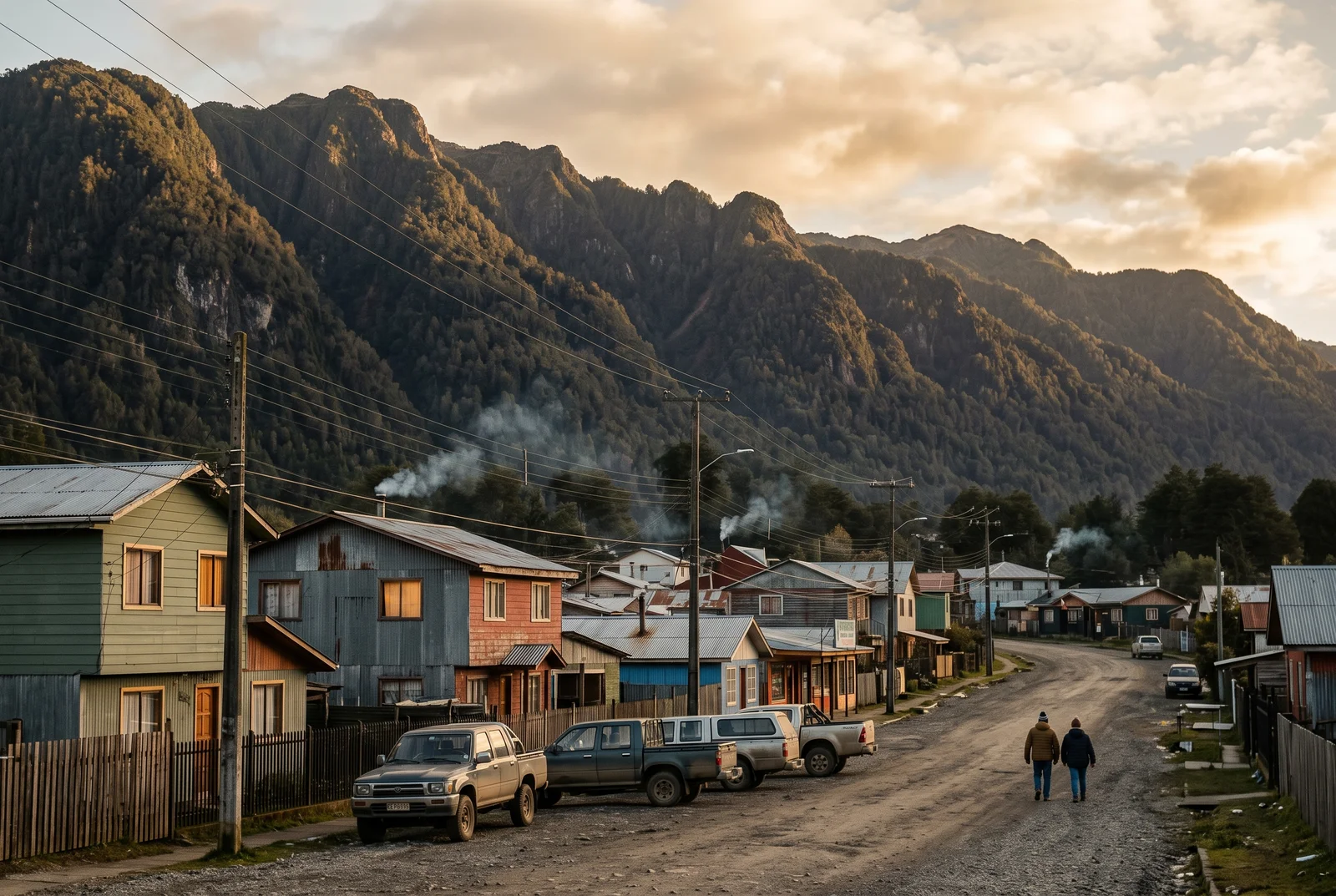 Where the appraisers actually have comparables. See property for sale in Coyhaique.
A worked example
Take a mid-market Coyhaique house. Across our own listings, the median asking price for a house for sale in Coyhaique sits around UF 9,000, so use UF 5,000 as a modest, realistic target rather than a trophy property.
Assume you are a permanent resident with verifiable Chilean income, and the bank lends 80%.
- Purchase price: UF 5,000, about CLP 204.4 million at the 4 September 2026 UF
- Deposit at 20%: UF 1,000
- Loan: UF 4,000 over 25 years
- Rate: 4.1% real, in line with the current Banco Central average
- Monthly dividendo: roughly UF 21.3, about CLP 872,000 today
- Stamp tax at 0.2% if the house is under 140 m²: UF 8
- Stamp tax at 0.8% if it is not: UF 32
Two things stand out. First, the dividendo is quoted in UF, so the peso figure rises every year with inflation while your salary may not. Chilean lenders and advisers commonly work to a guideline that the dividendo should not exceed about a quarter of household income, which for this loan implies household income near CLP 3.5 million per month. Second, the deposit is the real barrier, not the rate. UF 1,000 is roughly CLP 40.9 million in cash before you have paid a single closing cost.
The rural problem: campos, parcelas and unbuilt land
Everything above assumes a house in a town. Much of what people actually want in Aysen is not that.
Financing bare land is materially harder. Banks are lending against collateral they may one day need to resell, and a 20 hectare parcela three hours down a gravel road with no dwelling, no address and no recent comparable sales is a collateral file nobody in a Santiago credit committee enjoys. Add the frequent complications of rural Chilean title, from properties held without a registered deed to water rights that may or may not transfer with the land, and most applications stop before underwriting.
Two structural points make it worse. DFL 2 benefits attach to dwellings, so the 0.2% stamp tax discount does not help a land purchase. And parcels created under DL 3516 subdivision rules carry their own restrictions that affect resale, which the bank will read as risk.
The realistic conclusion: assume rural land is a cash purchase. If a lender surprises you, treat it as a bonus rather than a plan.
Local Tip: In Aysen the appraisal is often the binding constraint, not the interest rate. Properties in Coyhaique and Puerto Aysen have comparable sales. A cabin outside Villa O’Higgins does not, and a conservative valuation quietly becomes a larger deposit.
The tax deduction you probably cannot use
Chile does offer mortgage interest relief. Under article 55 bis of the income tax law, the SII allows individuals to deduct interest paid on housing-secured loans, capped at 8 annual tax units, with the full benefit available below 90 UTA of gross annual income, tapering between 90 and 150 UTA, and disappearing above 150 UTA.
The catch is in who qualifies. The relief applies to people paying Chile’s Impuesto Único de Segunda Categoría or Impuesto Global Complementario, meaning taxpayers on Chilean-source employment or comprehensive income. A non-resident owner with no Chilean income has nothing to deduct it from. It is a benefit for residents, which is another quiet reason the residency path changes the economics rather than just the paperwork.
Before you make an offer
A short list that saves the most time and money:
- Decide your funding route before you view anything. Cash, home-country borrowing and seller financing have completely different timelines, and sellers in Aysen ask.
- Get your RUT early, through a Chilean representative if you are abroad.
- Confirm the built surface. Under 140 m² is worth real money in stamp tax and later in property tax.
- Commission an independent title study, always, and especially if anyone offers you instalments.
- Ask any lender in writing which of the three mortgage instruments they are offering and whether the rate is fixed.
- Budget the deposit plus about 3 to 4% in transaction costs before you commit.
If you want a sanity check on a specific property or funding structure, get in touch. We are a listings portal rather than a broker or a lender, so the answer you get is not steering you toward a product.
Frequently Asked Questions
Can I use a Chilean mortgage to buy a second home or a rental property?
Yes, if you qualify as a borrower. Chilean mortgages are not restricted to primary residences, and lenders finance investment purchases routinely. Expect a larger deposit than for a first home, and note that DFL 2 tax benefits are limited to two qualifying properties per individual, so the advantages thin out as your portfolio grows.
Does a Chilean bank account alone help my application?
It helps, but on its own it is not enough. Banks look at months of account activity, pension contributions and local commercial record as evidence of stable Chilean income. An account opened and funded from abroad shortly before an application demonstrates almost nothing about repayment capacity.
What happens to my mortgage if the UF rises sharply?
Your outstanding balance and monthly payment both rise in peso terms, because the debt is indexed. This is the core risk of UF borrowing for anyone earning in pesos. For a borrower earning in dollars or euros, the risk instead sits in the exchange rate, since a strengthening peso raises the real cost of every payment.
Can I buy through a Chilean company to access financing?
Company ownership does not unlock retail mortgage lending. A Chilean SpA can borrow commercially, but commercial credit is assessed on the company’s own trading history and assets, which a newly formed holding vehicle does not have. Setting up an SpA solely to obtain a mortgage generally adds accounting cost without solving the underwriting problem.
Is it possible to pay off a Chilean mortgage early?
Yes. Prepayment is permitted, and Chilean law caps the compensation a lender may charge, but the exact prepayment terms differ by instrument and by contract. Confirm the prepayment clause before signing rather than after, particularly on endorsable loans that may be transferred to a third party.
Do I need to be in Chile to sign the mortgage and the deed?
Not necessarily. A properly drafted and apostilled power of attorney lets a representative sign on your behalf, which is standard practice for overseas buyers. The document must be granted before a notary, apostilled in your country, and where required translated into Spanish. Banks are stricter than sellers about the wording, so have the lender approve the draft.
Are there mortgage brokers in Chile who work with foreigners?
There are brokers and comparison services, and they can save time across multiple lenders. Be aware that they are compensated by placement, so their incentive is to find any approval rather than to tell you the honest answer is no. If three lenders have already declined on residency grounds, a fourth intermediary will not change the underwriting rule.
Interested in buying land in Patagonia?
We connect buyers with the best opportunities in Chile's Aysen Region. Tell us what you're looking for and we'll help you find it.
No commitment. Your information is kept confidential.

Written by
Nicolas GorroñoFounder & Editor
Founder of Patagonia Properties. Grew up in Coyhaique, lived in Australia, and is now back in Patagonia full-time. SEO and digital marketing specialist.
LinkedIn