Fly Fishing Property in Chilean Patagonia: The Angler's Investment Guide
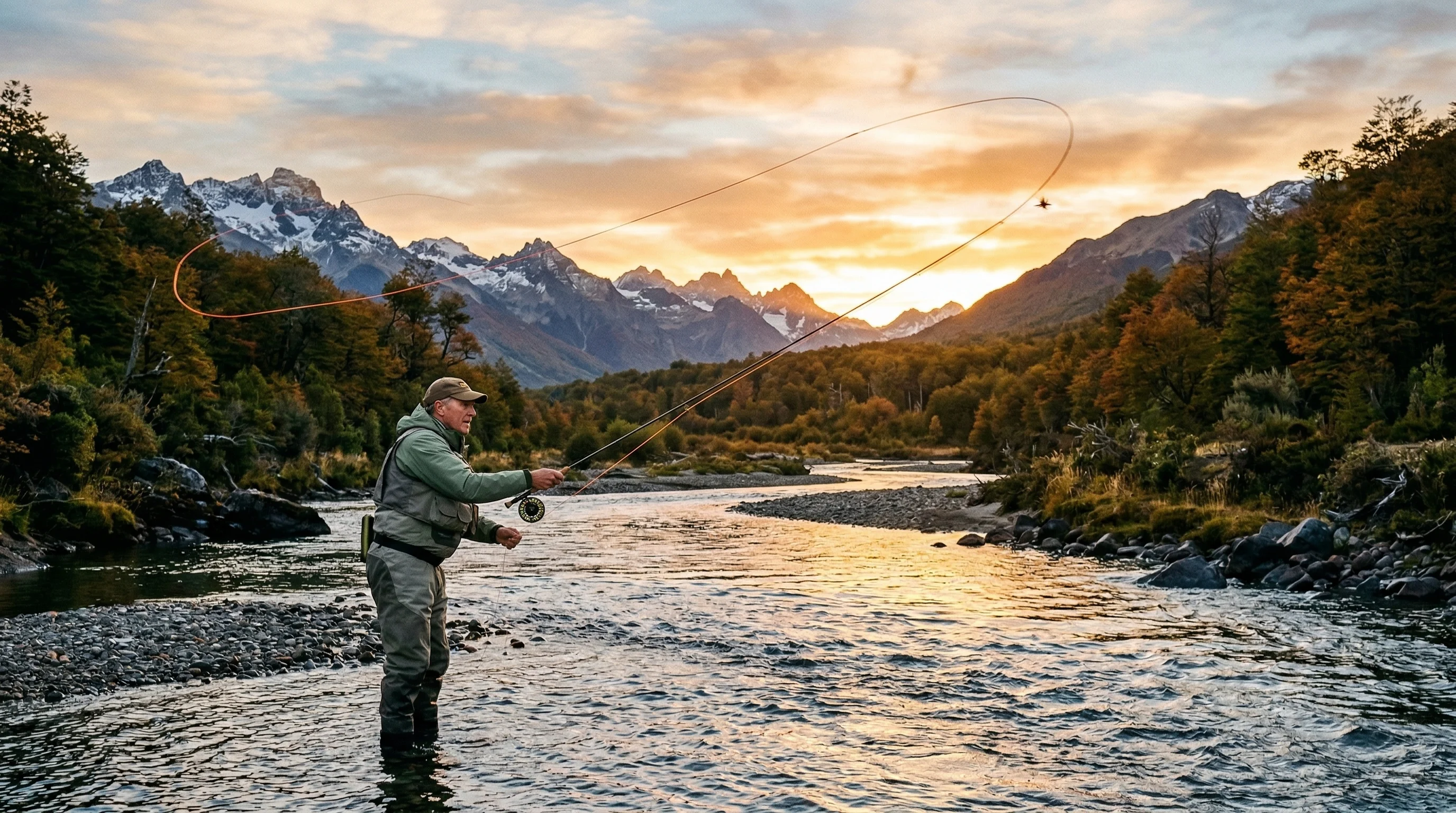
TL;DR: Montana riverfront property lists at an average of $2.73M. New Zealand fishing land runs $6,000 to $50,000 per hectare and needs government consent above 5 hectares. Iceland barely sells fishing rights at all. Chilean Patagonia, widely considered the world’s most pristine trout fishery, offers riverfront land from roughly $40,000 per hectare, with multi-river access, road connectivity, and proximity to a national park. Fundo Risopatron, a 20-lot development at the confluence of three rivers near Puyuhuapi, is a concrete example of what that price point buys.
Most fly fishing enthusiasts dream of owning water. A stretch of river. A cabin on a spring creek. A piece of land where the only footprints on the bank are their own. The problem is that in the world’s best-known fishing destinations, that dream now costs seven figures.
Chilean Patagonia offers a different equation entirely. The fishing is world-class, the pressure is virtually nonexistent, and the land prices belong to a different era. This article breaks down the numbers.
What does fly fishing property cost in Montana, New Zealand, and Chile?
Riverfront fishing property lists at an average of $2.73 million in Montana and NZ$6,000 to NZ$50,000 per hectare in New Zealand, while Iceland does not meaningfully sell fishing rights at all. Chilean Patagonia trades at $20,000 to $80,000 per hectare.
Here is what each of the major markets looks like in 2025-2026:
Montana, USA: The gold standard for American fly fishing real estate. Riverfront property currently listed in Montana averages roughly $2.73 million across nearly 280 active listings, with prime Madison, Gallatin, and Park county water sitting at the top of that range. The land itself is not what costs that. The USDA values Montana farm real estate at $1,230 per acre and explicitly excludes recreational and amenity land from that survey, which is precisely the premium a trout river adds. In Montana you are paying for the water, not the dirt.
New Zealand: Rural land with fishing access ranges from NZ$6,000 to NZ$50,000 per hectare depending on region and water quality. South Island backcountry, where the best sight-fishing rivers flow, commands the upper end. Foreign buyers face additional hurdles: under the Overseas Investment Act 2005, non-urban land of 5 hectares or more is classed as sensitive and requires Overseas Investment Office consent, assessed against both an investor test and a benefit-to-New-Zealand test.
Iceland: The most exclusive fishing market on earth, and for practical purposes, it is closed to outsiders. Under Icelandic fisheries law, angling rights attach to the riparian land rather than trading separately from it, and landowners along a river are required to form a fishery association that leases the fishing collectively. Rod-days on premium Atlantic salmon rivers are commonly quoted between $1,500 and $3,000. Acquiring land with transferable salmon rights is not a realistic option for a foreign individual.
Chilean Patagonia: Riverfront land in the Aysen region currently trades between $20,000 and $80,000 per hectare, depending on location, access, and water frontage quality. There are no foreign ownership restrictions on most parcels (border zone rules apply within 10 km of Argentina). The fishing is uncrowded, the rivers are healthy, and the regulatory environment is stable.
The price gap in one number: The average Montana riverfront listing, at $2.73 million, costs roughly the same as 68 hectares of three-river frontage in Chilean Patagonia. The trout do not know the difference.
Chilean Patagonia’s reputation in the fly fishing world
Aysen’s reputation rests on two hard numbers: barely 100,000 people occupy an area the size of Iceland, and its trout reproduce naturally rather than arriving on a hatchery truck. Almost no anglers, entirely wild fish.
This is not a market that needs to be sold to serious anglers. Chilean Patagonia has been described by multiple fly fishing publications as the “most well-preserved trout fishery on earth.” That reputation rests on measurable factors:
- Extremely low fishing pressure. Chile’s 2024 census counted 100,745 residents in the Aysen region, spread across an area the size of Iceland, and it was the only region in the country to lose population. Most rivers see fewer anglers in an entire season than a Montana tailwater sees on a Saturday in July.
- Pristine water quality. No agricultural runoff, no dams on the major rivers, no industrial pollution. Clarity in the region’s spring-fed systems is exceptional by the standards of any developed trout fishery.
- Self-sustaining wild populations. These are not stocked fisheries. Rainbow trout, brown trout, and brook trout reproduce naturally in virtually every drainage, and peer-reviewed work tracing life histories in Patagonian river fishes documents established wild salmonid populations moving freely between fresh water and the sea. The genetics are strong, the growth rates are excellent, and the fish fight like their ancestors never saw a hatchery truck.
- Minimal regulation, maximum access. Chile’s sport fishing licence from SERNAPESCA is priced in fractions of a UF: 0.3 UF for a year of freshwater fishing, roughly US$12 at current values. There are no slot limits on most rivers, no mandatory catch-and-release zones (though voluntary C&R is standard practice among lodge guests), and no restricted-access permits required.
The result is fishing that feels like Montana in the 1970s or New Zealand in the 1990s: abundant, uncrowded, and genuinely wild.
The rivers: what swims where
The Aysen region contains dozens of fishable rivers and lakes. A few systems stand out for property buyers:
Rio Simpson: The region’s most accessible world-class river, flowing through a valley just outside Coyhaique. Rainbow and brown trout average 14 to 18 inches, with fish over 22 inches taken regularly on dry flies. King salmon (chinook) run the Simpson and its tributaries from December through March, with fish reaching 45 pounds in the lower river. Chinook were introduced to Chile decades ago and are now a naturalised, self-reproducing part of Patagonian river systems, not a put-and-take fishery. Simpson Valley land commands premium prices due to proximity to Coyhaique and the Balmaceda airport.
Queulat corridor rivers (Palena, Risopatron, Dinamarca): These three rivers converge near Puyuhuapi in the northern Carretera Austral zone. The Queulat area is known for sea-run brown trout. Argentina’s Rio Grande in Tierra del Fuego remains the continent’s headline sea-trout destination, but the Chilean fjord-connected rivers are far less fished and far less written about. Otolith chemistry from western Patagonian rivers confirms that brown trout here run a mix of freshwater-resident and sea-going life histories, entering fresh water from the Pacific with the size that sea feeding provides. Average sea-runs measure 18 to 24 inches, with occasional fish over 30 inches. Resident rainbow and brown trout fill the tributaries year-round.
Lake General Carrera system: Chile’s largest lake (shared with Argentina as Lago Buenos Aires) feeds several productive rivers. The lake itself holds enormous rainbow and brown trout, with trophy fish exceeding 10 pounds. Shore access and boat fishing are both productive. Surrounding rivers like the Rio Ibáñez offer excellent wade fishing.
What fish species are in these rivers?
The primary species across the Aysen region:
- Rainbow trout (Oncorhynchus mykiss): Present in virtually every river and lake. Average 14 to 18 inches, with fish over 22 inches common in productive systems. Best on dry flies October through March.
- Brown trout (Salmo trutta): Widely distributed, generally larger and more selective than rainbows. Average 16 to 20 inches. Sea-run browns in the Queulat corridor rivers are a unique fishery.
- Brook trout (Salvelinus fontinalis): Found in smaller tributaries and spring creeks. Average 10 to 14 inches. Beautiful fish, aggressive feeders.
- King salmon / Chinook (Oncorhynchus tshawytscha): Run the Rio Simpson and select other drainages December through March. Fish commonly reach 20 to 35 pounds, with exceptional specimens over 45 pounds. Not a traditional fly fishing target but increasingly pursued with heavy streamers and spey rods.
Do I need a fishing license in Chile?
Yes. Chile requires a sport fishing license issued by SERNAPESCA (Servicio Nacional de Pesca y Acuicultura). The process is simple:
- Cost: Priced in UF, so it moves with inflation. The official licence schedule runs 0.1 UF for a week of freshwater fishing, 0.2 UF for a month, 0.3 UF for a year, and 0.4 UF for a year covering both fresh and salt water: roughly US$4 to US$16.
- Where to get it: Online through the SERNAPESCA website, or in person at regional offices in Coyhaique and other Aysen towns.
- Requirements: Valid identification (passport for foreigners). No residency requirement.
- Season: The general trout season runs from the first Friday in October through the first Sunday in May, though specific dates vary by zone. Some lakes remain open year-round.
- Regulations: Bag limits apply (typically 2 to 3 trout per day depending on the water body), though catch-and-release is strongly encouraged and practiced by most visiting anglers.
Fundo Risopatron: three rivers, one property
Among current listings in the Aysen region, Fundo Risopatron stands out as a specific case study for the fishing-property buyer.
The facts: 20 individual lots of 3+ hectares each, situated at the confluence of the Rio Palena, Rio Risopatron, and Rio Dinamarca near Puyuhuapi. The price works out to approximately 1,189 UF per hectare, roughly $40,000 USD per hectare at current exchange rates.
What that price buys, in practical fishing terms:
- Three-river confluence. The meeting point of three rivers creates diverse water types within walking distance: riffles, pools, runs, slack water, and channel braids. Different conditions fish differently depending on water level and time of day. A single property provides access to multiple fishing environments.
- Sea-run brown trout water. The Queulat corridor is one of the few places in Chilean Patagonia where sea-run browns reliably enter freshwater rivers. This fishery is virtually unknown outside South America and represents a genuinely unique angling opportunity.
- Road access via Carretera Austral. Puyuhuapi sits on Chile’s iconic 1,240-kilometer Carretera Austral highway. The property is not fly-in backcountry. It is accessible by car from Coyhaique (approximately 4 hours) or from the Chaitén ferry terminal to the north.
- Queulat National Park proximity. The Ventisquero Colgante (hanging glacier) sits inside Queulat National Park, 154,000 hectares of protected forest, mountain, and glacier that CONAF describes as the most visited park in the Aysen region. It draws a steady stream of nature tourists through Puyuhuapi, which matters for anyone considering a lodge business.
Fishing property price comparison
| Market | Typical Price Range | Fishing Quality | Foreign Ownership | Key Constraint |
|---|---|---|---|---|
| Montana, USA | ~$2.73M average listing | World-class trout | Unrestricted | Price, competition |
| New Zealand (South Island) | $6K - $50K/ha | World-class sight fishing | Consent required at 5+ ha | Investor and benefit tests |
| Iceland | Lease-only (rarely for sale) | Premium Atlantic salmon | Practically unavailable | Rights not sold fee simple |
| Chilean Patagonia (Aysen) | $20K - $80K/ha | World-class trout, low pressure | Unrestricted (most areas) | Remoteness, liquidity |
| Fundo Risopatron | ~$40K/ha | 3-river confluence, sea-run browns | Unrestricted | 4 hours from Coyhaique |
The lodge business case
A week at a Chilean Patagonia fishing lodge sells for roughly $5,600 to $9,000 per angler, all-inclusive. Land at $40,000 per hectare against those room rates is what makes the lodge model work here and not in Montana.
Owning fishing property in Patagonia is satisfying on its own terms. But for buyers thinking about returns, the fishing lodge model deserves examination.
Premium fly fishing lodges in Chilean Patagonia charge in the region of $5,600 to $9,000 per week per angler, typically including meals, guiding, equipment, and transfers. One established Aysen operator publishes rates of $5,600 double and $6,850 single for a 7-night, 6-day package covering guiding, all meals, drinks, and ground transport. Most lodges operate with 6 to 12 guests per week during a season that runs from October through April (roughly 26 weeks, with peak demand in December through March).
A quick sketch of the economics for a small operation (6 rods per week):
- Revenue at 60% occupancy during peak season (16 weeks): 6 rods x 16 weeks x 0.6 x $7,000 = $403,200
- Revenue from shoulder season (10 weeks at 30% occupancy): 6 rods x 10 weeks x 0.3 x $6,500 = $117,000
- Total gross revenue: approximately $520,000 per season
- Operating costs (staff, food, fuel, maintenance, insurance, marketing): highly variable, but established operators report 50% to 65% of revenue
These are rough figures, not a business plan. But they illustrate why international fishing lodge operators have been entering the Chilean market. The combination of low land acquisition costs and premium pricing creates margins that are difficult to replicate in Montana or New Zealand, where the land alone consumes most of the capital.
The demand side is measurable, and the regional government measures it. Sernatur Aysen’s Barometro Turistico reports 310,876 passengers through Balmaceda aerodrome in 2024, up 4.7% on 2023 (though still 91.6% of the 2019 figure), and 108,703 international tourist arrivals to the region, up 50.5% year on year. More usefully for anyone looking at Puyuhuapi specifically, Sernatur tracks a destination it calls Carretera Austral Norte / Queulat, covering the communes of Cisnes and Lago Verde: room occupancy there hit 75.5% in the peak February 2024 window. Nature-based tourism in Aysen is expanding, and the fly fishing segment, while niche, draws high-spending visitors who stay longer and spend more per day than typical tourists.
Can you build a fishing lodge?
The practical question for any property buyer considering a lodge: what does it take to operate a tourism business in Aysen?
Permits and zoning: Rural land in Chile can be used for tourism activities (hospedaje rural) with the appropriate permits from the local municipality and SERNATUR (Chile’s national tourism service). The process is bureaucratic but navigable. Construction permits follow standard Chilean building codes, with additional requirements for properties in environmentally sensitive zones near national parks.
Infrastructure: A fishing lodge needs reliable water, electricity (or off-grid power), road access for guest transfers, and ideally internet connectivity for bookings and guest communication. The Puyuhuapi area has grid electricity, mobile coverage, and improving internet infrastructure along the Carretera Austral. Properties further from the highway may require solar, micro-hydro, or generator systems.
Staffing: Fishing guides, cooks, and lodge staff are available locally, though experienced fishing guides command premium wages. Many lodge operators bring in one or two senior guides from abroad and train local staff for support roles.
Season: October through April, with peak demand December through March. The off-season (May through September) is cold, wet, and quiet. Most lodges close entirely during winter months, which means seasonal cash flow management is critical.
For broader context on 2026 buying conditions and regional incentives, see our analysis of whether 2026 is a good time to buy land in Patagonia.
Beyond fishing: the full picture
A property purchase near Puyuhuapi is not a single-use investment. The area offers a density of natural attractions that appeal well beyond the fly fishing community:
- Termas del Ventisquero: Natural hot springs accessible by boat from Puyuhuapi, one of the most popular attractions on the Carretera Austral. Hot springs tourism is a year-round draw, extending the visitor season beyond summer.
- Queulat National Park: The Ventisquero Colgante (hanging glacier) is one of Chile’s most photographed natural features, inside the most visited protected area in the Aysen region. The park draws hikers, photographers, and nature tourists who pass through Puyuhuapi as their base town.
- Carretera Austral: Chile’s 1,240-kilometer scenic highway connects Puyuhuapi to the broader Patagonian tourism circuit. Road-trippers, cyclists, and overlanders pass through the town in growing numbers each season.
- Kayaking and boating: The Puyuhuapi fjord and surrounding channels offer world-class sea kayaking, with marine wildlife including dolphins, sea lions, and occasional whale sightings.
- Hiking: Beyond Queulat, the surrounding mountains offer backcountry hiking ranging from day walks to multi-day traverses through old-growth forest.
This matters for the lodge business case. A property positioned for fly fishing can also serve hikers, kayakers, hot springs visitors, and general nature tourists, diversifying the revenue base beyond a single activity.
Frequently asked questions
How does Chilean Patagonia’s fly fishing compare to Montana or New Zealand?
The fishing quality is comparable to the best of Montana and New Zealand, with one critical advantage: dramatically lower pressure. Montana’s blue-ribbon rivers see hundreds of anglers per day in peak season. New Zealand’s most famous rivers have implemented booking systems to manage crowds. Chilean Patagonia’s rivers, by contrast, often go days without seeing a single angler. The trout are wild, self-sustaining populations that have never been supplemented by stocking. Average size (14 to 22 inches for trout) is competitive with any destination worldwide.
What is the fishing season in Chilean Patagonia?
The general trout season runs from the first Friday in October through the first Sunday in May, though dates vary slightly by specific water body. Peak fishing conditions are November through March, when longer days, warmer water temperatures, and prolific insect hatches create ideal dry fly conditions. King salmon run from December through March. Sea-run brown trout in the Queulat corridor are most active from October through December as they enter freshwater from the Pacific.
Can a foreigner buy riverfront land in Chilean Patagonia?
Yes. Chile allows foreign nationals to purchase property with the same rights as Chilean citizens in most of the Aysen region. The constraints sit in Decreto Ley 1939 and are narrower than they are usually described: state-owned land within 10 kilometres of the frontier can only be acquired by Chileans, and nationals of neighbouring countries (Argentines, in Aysen’s case) are barred from acquiring property in declared border zones unless the President grants an exemption by supreme decree. Buyers from outside the neighbouring states face no such prohibition, though parcels touching the border zone can still attract additional review that adds months. Puyuhuapi and the Queulat corridor are not in the border zone. For the complete process, see our guide to buying property as a foreigner in Chile.
Is there a risk that Chilean fishing regulations will become more restrictive?
Chile’s sport fishing regulations have been stable for decades, and there is no pending legislation to significantly restrict recreational fishing access. The more likely trajectory is toward catch-and-release regulations on specific trophy water, which would actually increase the value of fishing property by protecting the resource. SERNAPESCA’s recreational fishing framework has been pragmatic: seasons and administration measures are set per region and per water body rather than through blanket closures, and the service publishes them annually. Sport fishing tourism brings economic benefit to remote regions like Aysen, and regulation has focused on sustainability rather than restriction.
Interested in buying land in Patagonia?
We connect buyers with the best opportunities in Chile's Aysen Region. Tell us what you're looking for and we'll help you find it.
No commitment. Your information is kept confidential.

Written by
Nicolas GorroñoFounder & Editor
Founder of Patagonia Properties. Grew up in Coyhaique, lived in Australia, and is now back in Patagonia full-time. SEO and digital marketing specialist.
LinkedIn