Buying Land in Patagonia: What to Check Before You Commit

TL;DR
- Define the intended use before comparing listings.
- Verify the parcel, ownership and restrictions with current documents.
- Investigate building approvals, water and access separately.
- Compare asking prices with their currency, date and practical conditions visible.
A photograph can put a piece of Patagonia on your shortlist. The decision to buy should come later, after you understand the property, the documents and the work needed to use it. This guide focuses on privately owned land in Chile’s Aysén Region. Use it to prepare questions and organize a professional review of the specific parcel.
Start with the life you want the land to support
Before comparing listings, write a short description of how you would actually use the property. A permanent home, an occasional retreat and a tourism business create different questions. For each, list what must be available on arrival and what you could realistically arrange later. Put those requirements beside your budget.
Include an ordinary week in that picture: shopping, getting to appointments, receiving deliveries and maintaining the place when you are away. A beautiful view can remain on your wish list, but it should sit alongside practical requirements you can investigate. Explore the Aysén area guides to organize your search by location.
Can Americans buy land in Chilean Patagonia?
Americans can generally buy private land in Chile, but should check the parcel’s legal status, tax requirements and any restrictions before committing.
The SII’s RUT requirements for foreign investors include non-residents acquiring real estate. Its guidance also addresses representation for people without Chilean residence or domicile. Arrange the applicable identification and representation with your adviser before the purchase process advances.
Be precise about borders. DIFROL’s border-zone guidance distinguishes state-owned property from private land and identifies a specific restriction affecting nationals of neighboring countries and certain companies. It does not say every foreign buyer needs the same permission for any private parcel near Argentina. Give your lawyer the exact location and buyer details, including any company structure.
Which documents should you review first?
Start with current ownership and encumbrance records, then have a local lawyer reconcile the seller, parcel identity, boundaries and relevant title history.
A current ownership certificate identifies the registered owner. A mortgages, encumbrances and prohibitions certificate records matters such as mortgages, easements and restrictions affecting the property. These official Santiago registrar pages explain the documents; request the actual Aysén records from the registrar responsible for the property’s location.
Ask the seller for registration details and the plan that identifies exactly what is being sold. Keep the listing, documents and correspondence in one folder. A name match alone does not resolve the full review, and an attractive listing is not evidence of clean title.
What does a rural subdivision certificate establish?
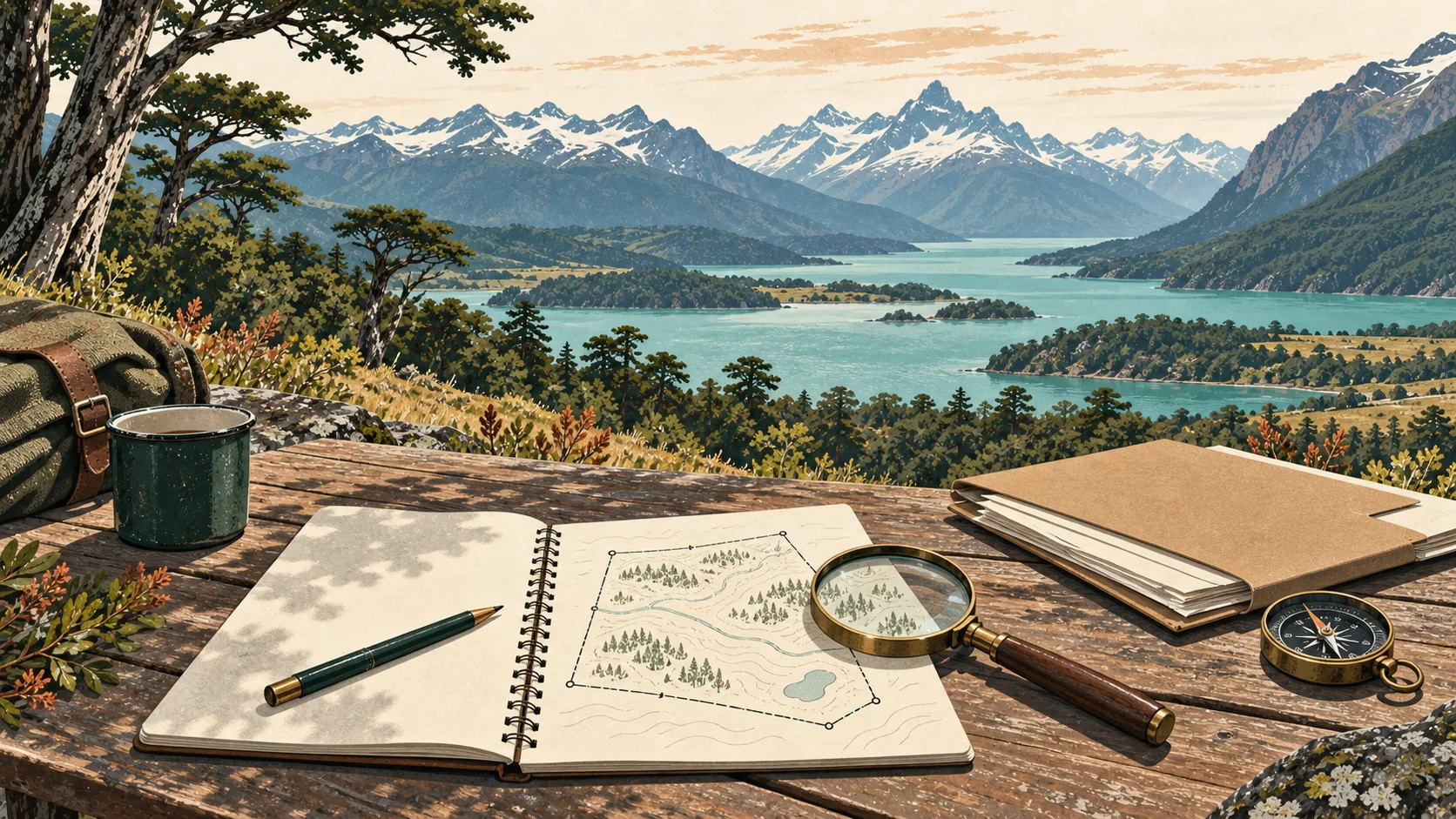
A SAG subdivision certificate is one part of the process; it does not by itself establish a completed registration or permission to build.
SAG describes rural subdivision certification as a step toward formal subdivision at the relevant Conservador de Bienes Raíces. Its guidance gives a general minimum of 0.5 hectares, with statutory exceptions, and says the land must retain its agricultural, livestock or forestry suitability.
If a listing advertises a parcela, ask whether it is already separately registered or being offered as part of a proposed subdivision. Have the actual plan, certificate and registration reconciled. Do not treat a drawn boundary in a brochure as the final legal parcel. Confirm the answers for the property you are considering, even if the neighboring lot has already sold.
Can you build the home or lodge you have in mind?
Confirm the proposed use and applicable approvals for the exact parcel before buying; a rural listing or subdivision certificate is not building approval.
SAG’s guidance on non-agricultural construction in rural areas explains the roles of municipal approval and the relevant favorable reports under Article 55. The applicable route depends on the proposed project. Ask the municipal works department and an appropriate local professional what is required for your specific plans.
Bring a clear description of the project: intended use, approximate building area and the services it would need. Ask which answers can be established before purchase and which require further studies. Keep written responses with the property file. A seller’s suggestion that a site would suit cabins or a lodge is a starting point for investigation, not a substitute for the necessary approvals. Budget the investigation before treating construction as a settled possibility.
| Listing statement | Question to resolve | Evidence to request |
|---|---|---|
| “Ready to build” | Is this proposed use approved? | Parcel-specific response and applicable approvals |
| “Independent parcela” | Is the offered parcel separately registered? | Plan, certification and registry records |
| “Water available” | What supply and rights are included? | Supply documents and current relevant records |
| ”Road access” | What legal and physical route serves the parcel? | Access documents and an on-site inspection |
Does a river or stream mean water is included?
A visible water source is not proof of the rights or supply arrangements offered with a property; check the documents and practical availability separately.
The DGA’s registered water-rights information is useful for research, but the agency explicitly says that its dataset does not establish current ownership of those rights. Record searches therefore need to be reconciled with the relevant current documents and the proposed transaction.
Ask what the seller means by “water”: a connection, an existing system, a claimed right, or simply water visible on the land. Then ask a suitable professional to examine the evidence and assess the intended supply. Keep legal entitlement, physical availability and suitability for your planned use as separate questions. Do not infer drinking-water quality from a photograph or clear appearance. Record unresolved questions before deciding whether the property deserves a further visit.
How should you check access before travelling?
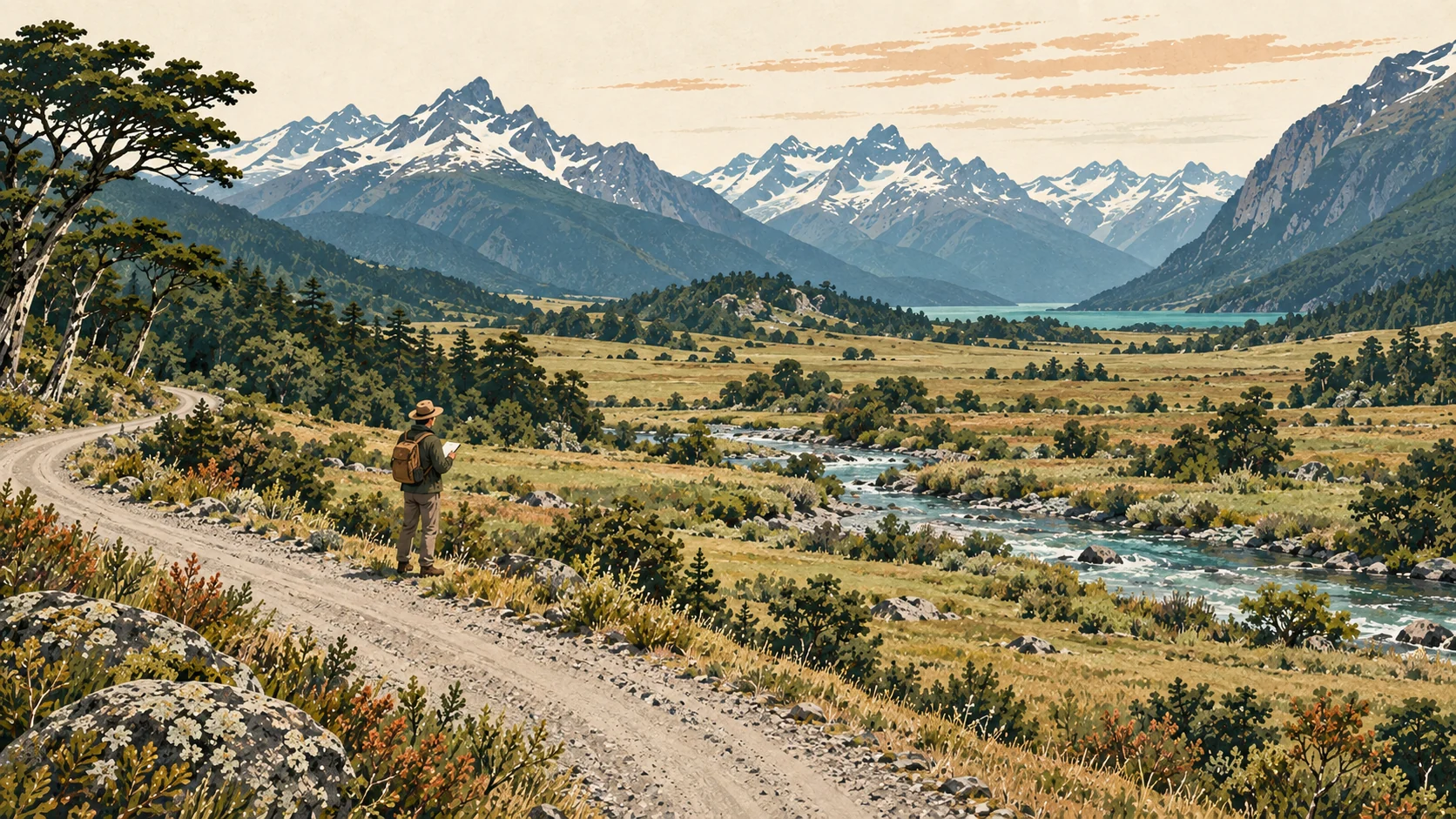
Check both the legal right to reach the parcel and the practical route, including gates, shared roads, maintenance responsibilities and seasonal conditions.
SAG’s subdivision-document requirements include evidence of an active access easement where the parcel does not directly reach public space or a CORA road. That requirement is a useful reminder to investigate documented access rather than relying only on a line shown on a map.
Ask for the approach route from the nearest public road and identify every gate or shared section. On the visit, compare that route with the documents and ask who maintains it. Request current local information about the conditions relevant to the months you intend to use the property. An uncomplicated visit on one day answers only part of the question. Write down what you observed personally and keep it separate from what someone told you.
How can you compare asking prices sensibly?
Compare similar properties using the same currency date, area units and practical conditions; a low asking price alone does not establish good value.
For each candidate, record the asking currency exactly as advertised and confirm the current amount with the advertiser. If a price uses UF, read our guide to understanding UF before comparing it with a peso or dollar listing. Keep the conversion date visible in your worksheet.
Then compare access, documents, usable space, services and intended use. Treat advertised prices as asking prices, not completed sales. This guide does not supply a regional price-per-acre average or predict appreciation: the evidence gathered for it does not establish either. Ask for property-specific estimates for the work you would need, and leave uncertain costs marked as unknown. If an unknown could change your decision, investigate it before calling one option cheaper than another.
Compare two candidates without inventing a valuation
The table below is a decision worksheet, not a comparison of real listings. Use it for two properties that meet the same intended use. Write the seller’s answer first, then record the document or inspection that supports it. An empty evidence cell means there is still work to do.
A candidate with fewer unresolved questions may be easier to investigate, but that does not automatically make it the better purchase. Some gaps can be resolved; others may change the project entirely. Give each unresolved item a next action and a person qualified to answer it. Revisit the shortlist after those answers arrive, rather than assigning a made-up investment score.
| Compare | Candidate A | Candidate B |
|---|---|---|
| Asking price and currency | Confirm with advertiser | Confirm with advertiser |
| Exact parcel and ownership | Attach reviewed records | Attach reviewed records |
| Access and water | List verified facts and gaps | List verified facts and gaps |
| Intended use and approvals | Record professional response | Record professional response |
| Additional work and costs | Attach quotations when available | Attach quotations when available |
Turn the shortlist into a productive viewing
Send the advertiser a focused message before you travel: identify the listing, explain the intended use, and request the documents and access details you still need. Ask which questions they can answer immediately and which should go to the owner, a professional or the relevant authority. That makes the visit more specific.
Prepare one page per property with a route, a contact, the documents received and the questions still open. During the viewing, add your observations without overwriting the earlier claims. Afterwards, compare the file with your original requirements. The purpose of the trip is to decide what merits further investigation; you do not need to force a purchase decision while standing in front of a view.
Build your shortlist
Browse properties for sale in Chilean Patagonia, select a few candidates that fit your requirements, and ask their advertisers for the evidence needed to take the next step. This is a preparation guide; have your local lawyer and relevant technical professionals review the specific transaction.
Frequently asked questions
Can a US citizen buy land in Chile without living there?
Non-resident property purchases are contemplated in the SII’s foreign-investor RUT guidance. Confirm the applicable identification, representation and property-specific restrictions with your adviser.
Does a 5,000-square-metre parcela automatically allow a house?
No. Subdivision certification and the approval route for rural construction address different questions. Check the intended project with the relevant professionals and authorities.
Does a DGA record prove that the seller owns a water right?
No. The DGA states that its registered-rights dataset does not establish current ownership. Have the record checked against current documents.
What is a reliable price per acre for Aysén?
This review does not establish one. Compare relevant current listings and their conditions, then obtain property-specific advice and supporting evidence rather than applying a regional average to every parcel.
Where should I begin a practical shortlist?
Start with the English property listings and area guides. Choose locations and property types that fit your intended use, then contact the advertiser to confirm details.
Interested in buying land in Patagonia?
We connect buyers with the best opportunities in Chile's Aysen Region. Tell us what you're looking for and we'll help you find it.
No commitment. Your information is kept confidential.

Written by
Nicolas GorroñoFounder & Editor
Founder of Patagonia Properties. Grew up in Coyhaique, lived in Australia, and is now back in Patagonia full-time. SEO and digital marketing specialist.
LinkedIn