Buying Property in Chile as an American: The Complete 2026 Guide
TL;DR Yes, Americans can buy property in Chile with the same rights as Chilean citizens. The US-Chile tax treaty (in force since December 2023) slashes double-taxation risk. You will need a Chilean RUT (tax ID), a local lawyer, and about 30-60 days from offer to deed registration. Budget 5-8% on top of the purchase price for closing costs. FATCA and FBAR reporting rules apply if you hold Chilean bank accounts, but the property itself is not a reportable “foreign financial asset.”
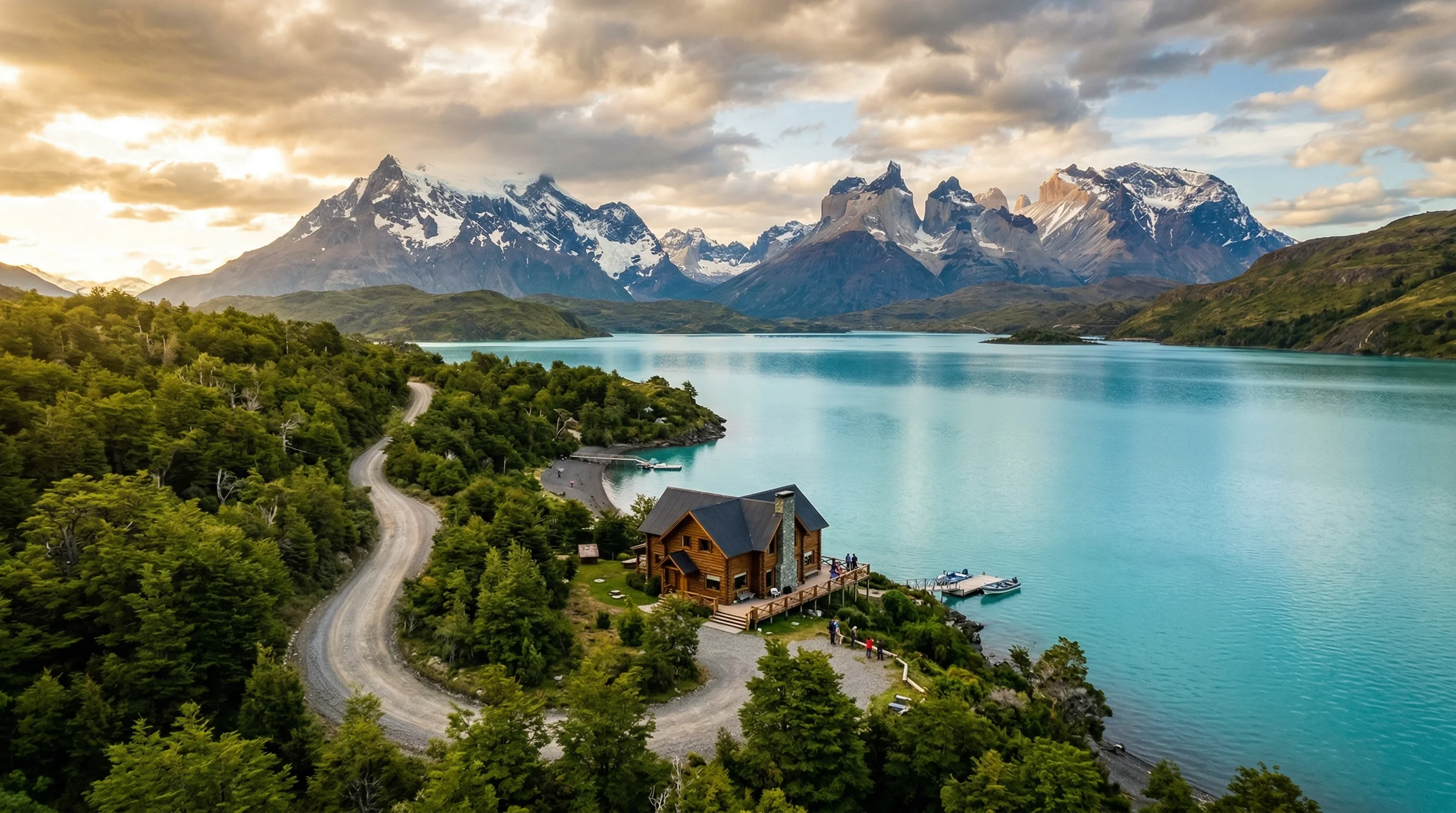
Why Americans are looking at Chilean Patagonia
Something shifted over the last few years. Between remote work becoming permanent for millions of Americans, the dollar stretching further in South America, and a general exhaustion with US housing prices, Chile’s Patagonia region has quietly become one of the most interesting real estate markets for American buyers.
The numbers help explain why. A lakefront parcel in the Aysen Region can cost what a studio apartment costs in Austin or Denver. A fully built cabin on five hectares near Coyhaique might run you less than a down payment on a house in most US metros. And unlike some Latin American markets that have been “discovered” and priced up, Aysen remains genuinely early-stage.
Key Insight: Chile is one of the few countries in the world where foreigners have exactly the same property ownership rights as citizens. No special permits, no ownership caps, no restrictions on land size (with one exception for border zones, covered below).
But there is also a practical reason beyond price: the US-Chile income tax treaty entered into force in December 2023. This was a game-changer. Before the treaty, American property owners in Chile faced the same double-taxation headaches that German buyers still deal with. Now, Americans have a clear legal framework for tax credits that most other foreign buyer nationalities (except the French, Spanish, and Swiss) do not have.
The US-Chile tax treaty: what it means for your property
Let’s get the most important financial piece out of the way first. The bilateral income tax treaty between the US and Chile was ratified after years of negotiation and became effective for taxable periods beginning January 1, 2024.
Here is what matters for property owners:
Rental income
If you rent out your Chilean property (Airbnb, long-term tenant, seasonal lodge), Chile taxes that rental income. For non-residents, the standard Chilean withholding rate is 35% on rental income.
As a US taxpayer, you must also report this income on your US tax return (worldwide income). But the treaty’s foreign tax credit provisions mean you can credit the Chilean taxes paid against your US tax liability on that same income. In most cases, this eliminates or dramatically reduces double taxation.
Pro Tip: The foreign tax credit is generally limited to the US tax that would be due on the foreign income. Since Chile’s 35% rate exceeds the effective US tax rate for many Americans, you may end up with excess foreign tax credits that can be carried forward. A CPA familiar with international real estate can help you optimize this.
Capital gains
When you sell Chilean property, Chile may tax the capital gain under its domestic law. The treaty explicitly allows both countries to tax gains from the sale of real property situated in their territory (Article 13). However, the treaty’s foreign tax credit mechanism again prevents you from being taxed twice on the same gain.
Chilean tax law provides some relief for long-held properties. If you’ve owned the property for over a year, different rules may apply. Consult a Chilean tax advisor (contador) for the current exemption thresholds, as these change periodically.
Estate/inheritance
The US-Chile treaty covers income tax only, not estate tax. Chile has its own forced heirship rules (the legitima), which reserve 75% of an estate for certain heirs. This is a significant difference from US estate law, and it applies to real property on Chilean soil regardless of the owner’s nationality. You should have a Chilean will drafted by a local lawyer specifically for your Chilean assets, separate from your US estate plan.
FATCA and FBAR: what you actually need to report
This is where many Americans get unnecessarily anxious. Let’s separate the real obligations from the myths.
FATCA (Form 8938)
FATCA (Foreign Account Tax Compliance Act) requires reporting of “specified foreign financial assets” above certain thresholds on Form 8938. Here is the good news: real estate held directly is NOT a specified foreign financial asset. You do not report the Chilean property itself on Form 8938.
However, if you hold the property through a foreign entity (like a Chilean SpA company), the ownership interest in that entity IS reportable. And any Chilean bank accounts you open to manage the property are reportable if they exceed the thresholds.
The thresholds for Form 8938 depend on your filing status and residency:
- US resident, single: $50,000 end-of-year or $75,000 at any point during the year
- US resident, married filing jointly: $100,000 / $150,000
- Living abroad, single: $200,000 / $300,000
- Living abroad, married filing jointly: $400,000 / $600,000
FBAR (FinCEN Form 114)
FBAR is separate from FATCA and applies to foreign financial accounts (bank accounts, investment accounts). If you open a Chilean bank account to pay property taxes, receive rent, or manage expenses, and the aggregate value of all your foreign accounts exceeds $10,000 at any point during the year, you must file FBAR.
The FBAR is filed electronically with FinCEN (not the IRS) and the deadline is April 15 with an automatic extension to October 15.
Important: FBAR penalties are severe: willful violation can result in penalties up to $100,000 or 50% of the account balance per violation. Don’t skip this filing. If you have a Chilean bank account with even modest amounts, file the FBAR.
What you DON’T need to report
- The property itself (when held directly, not through an entity)
- Chilean property taxes paid (contribuciones): these are deductible on Schedule A if you itemize
- The purchase transaction (though you should keep all records for cost-basis documentation)
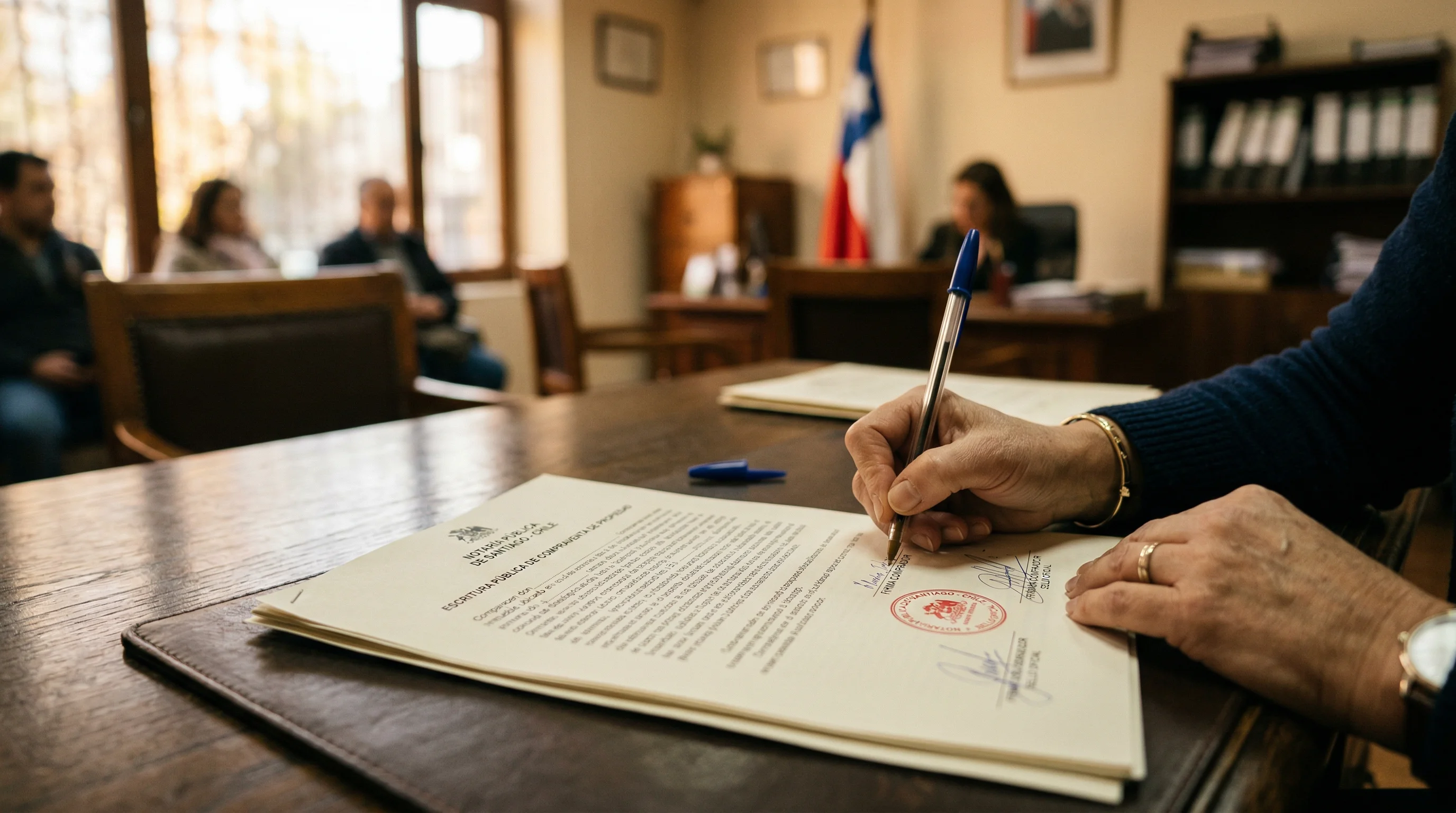
The buying process: step by step
Chile’s property purchase process is well-established, transparent, and generally faster than buying in the US. Here is the sequence:
Step 1: Get your RUT
The RUT (Rol Unico Tributario) is Chile’s tax identification number. You cannot buy property without one. As an American, you can obtain it:
- At a Servicio de Impuestos Internos (SII) office in Chile with your passport
- Through your Chilean lawyer using a notarized power of attorney
- At the Chilean Embassy in Washington DC or consulates in New York, Chicago, Houston, Los Angeles, Miami, San Francisco
The RUT is permanent. Once issued, you never need to renew it.
Step 2: Find and vet the property
This is where working with a local agent who knows the Aysen Region makes a real difference. Remote properties in Patagonia can have complications that don’t exist in urban Chile: unclear water rights, unpermitted structures, road access easements, or proximity to the Argentine border (which triggers a special authorization process).
Browse properties for sale across all Aysen towns to start your search. The most popular towns for American buyers include Coyhaique (regional capital, best services), Futaleufu (world-class fly fishing and rafting), and Chile Chico (sunny microclimate on Lake General Carrera).
Step 3: Due diligence
Your lawyer will conduct a title study (estudio de titulos) covering the property’s ownership history. This is non-negotiable. The key checks:
- Title history at the Conservador de Bienes Raices (property registry) for the past 10 years
- Liens and encumbrances (hipotecas, gravamenes)
- Property tax status: confirm contribuciones are current
- Water rights: verified independently at the Direccion General de Aguas (DGA). In the Aysen Region, water rights are separate from land title and must be purchased or transferred separately
- Border zone check: if within 10 km of the Argentine border, you need authorization from the Ministry of National Defense (typically 3-6 months processing)
- Zoning and land use: confirm the property can be used as intended
Did You Know: Chile’s border zone restriction (Decreto Ley 1.939) applies to nationals of bordering countries (Argentina, Bolivia, Peru), NOT to Americans. US citizens can buy border-zone property without the additional Ministry of Defense authorization that some other nationalities require.
Step 4: Promesa de compraventa (promise of sale)
This is the binding preliminary contract, signed before a Chilean notary. It locks in the price, specifies the deposit (typically 5-10% of the purchase price), and sets a deadline for closing. Due diligence conditions are included here.
If you cannot be physically present, your lawyer can sign on your behalf using a power of attorney. The power of attorney must be:
- Notarized by a US notary
- Apostilled by the appropriate state authority (Secretary of State in most US states)
- Translated into Spanish by a certified translator
Both the US and Chile are parties to the Hague Apostille Convention, so no consular legalization is needed.
Step 5: Escritura publica (public deed)
The definitive purchase deed, signed before a notary. This is when the balance is paid. Payment is typically wired from your US bank to either the seller’s account or a notary trust account.
Step 6: Conservador de Bienes Raices (property registry)
The deed must be registered at the local Conservador. Ownership is only legally perfected once registration is complete. This step takes 1-4 weeks. Do not pay the full balance until your lawyer confirms the registration path is clear.
Timeline and costs
From accepted offer to registered deed: 30-60 days typically.
Closing costs to budget (source):
- Notary fees: under 1% of purchase price
- Conservador registration: 0.5-1%
- Legal fees: 1-2% (negotiable)
- Title study: fixed fee (varies by region)
- Power of attorney + Apostille + translation: $200-500
- Total: approximately 3-5% of purchase price for a standard transaction without mortgage
Currency transfer: USD to CLP
Transferring money from the US to Chile for a property purchase involves compliance on both sides.
Chile side
Foreign currency transfers exceeding USD 10,000 equivalent must go through Chile’s formal banking system (Mercado Cambiario Formal). The bank files a report with the Banco Central de Chile. This is standard anti-money-laundering procedure, not a restriction.
US side
Wire transfers over $10,000 may trigger a Currency Transaction Report (CTR) by your US bank. This is automatic and requires no action from you. However, you should keep records of the transfer, the exchange rate, and the source of funds. This documentation becomes your cost-basis evidence when you eventually sell.
Pro Tip: The exchange rate matters. Chile’s peso (CLP) fluctuates significantly against the dollar. Some buyers split their transfer into two or three tranches to average out the exchange rate risk. Your bank or a service like Wise can help minimize transfer fees.
SpA company structure: when it makes sense
Some American buyers consider purchasing through a Chilean SpA (Sociedad por Acciones), a flexible single-shareholder company. The main reasons:
- Corporate tax rate: an SpA pays 27% first-category tax on rental income vs. 35% for non-resident individuals
- Liability separation: the company owns the property, limiting personal exposure
- Easier succession: transferring company shares can be simpler than transferring real property title
The downsides: annual accounting, Chilean tax filings, compliance costs (roughly $1,000-2,000/year), and when profits are distributed to a US shareholder, additional withholding tax applies. The net tax benefit needs to be calculated holistically with both a Chilean contador and a US CPA.
For a single vacation property that you don’t plan to rent, the SpA structure usually isn’t worth the overhead. For a rental portfolio or a lodge business, it often is.
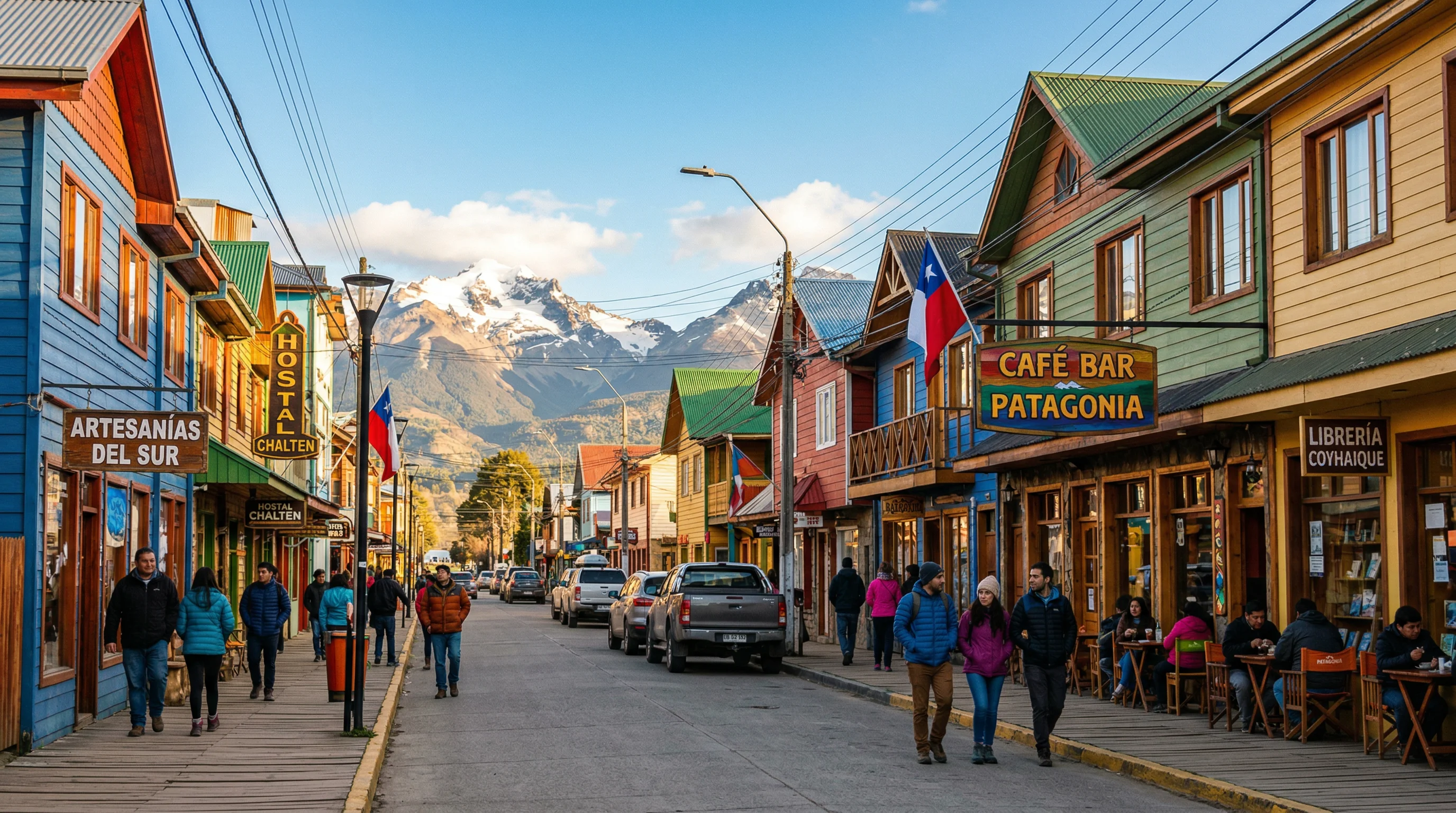
Where Americans are buying in the Aysen Region
The Aysen Region stretches 1,240 km along the Carretera Austral, with dramatically different towns and landscapes. Here is where most American interest concentrates:
Coyhaique: The regional capital with 57,000 residents, an airport, hospitals, schools, and the widest selection of houses and land. If you want services and convenience, this is your base.
Futaleufu: World-famous for whitewater rafting and fly fishing. Small (2,500 people) but attracts serious adventure-property buyers. Prices have been climbing.
Chile Chico: On Lake General Carrera, with the sunniest microclimate in Patagonia. Fruit orchards, vineyards at 46 degrees south. Farms and ranches with water rights.
Cochrane: Gateway to Patagonia National Park and the Baker River. Conservation-minded buyers love it here. Growing tourism infrastructure.
Cerro Castillo: Booming trekking destination near the national park. Small village feel with rising property interest for cabins and tourist accommodation.
Your team: who you need before buying
- Chilean lawyer (abogado): specializing in real estate, ideally experienced with foreign buyers in the Aysen Region. They handle the RUT, title study, contract drafting, and Conservador registration.
- US CPA: one who understands international real estate, FATCA, FBAR, and the US-Chile treaty. Not every CPA does. Ask specifically.
- Chilean accountant (contador): if you plan to rent the property or use an SpA structure.
- Local real estate agent: someone who knows the Aysen market, property histories, and can identify issues that don’t show up in paperwork (road access in winter, flooding patterns, neighbor disputes).
Making your decision
Buying property in Chile as an American is straightforward from a legal perspective. The US-Chile tax treaty, which entered into force in December 2023, removed the biggest financial uncertainty that existed before. You have equal ownership rights, a clear tax framework, and a purchase process that typically closes in under two months.
The real questions are about fit: does the remoteness of Patagonia work for your lifestyle? Can you manage a property from thousands of miles away? Are you comfortable with Chilean bureaucracy (which, while transparent, moves at its own pace)?
If you are ready to explore, browse current properties across the Aysen Region or contact our team to discuss your search criteria.
Frequently Asked Questions
Do I need to visit Chile in person to buy property?
No. You can complete the entire purchase remotely using a power of attorney granted to your Chilean lawyer. The power of attorney must be notarized in the US, apostilled by your state’s Secretary of State, and translated into Spanish. That said, visiting the property before committing is strongly recommended, especially for rural land in Patagonia where conditions can vary dramatically from photos.
Can I get a mortgage from a Chilean bank as a non-resident American?
It is technically possible but difficult in practice. Chilean banks generally require residency, a local credit history, and proof of Chilean income to extend a mortgage. Most American buyers purchase with cash or arrange financing through US-based lenders using their US assets as collateral. Some sellers in Patagonia also offer direct financing (pago en cuotas).
What ongoing costs should I expect after buying?
Annual property tax (contribuciones) in Chile is relatively low, typically 0.98-1.143% of the fiscal assessed value (which is usually much lower than market value). If you rent the property, you’ll need to file Chilean tax returns. Other ongoing costs include property insurance, utilities, and maintenance. For remote Patagonian properties, consider budgeting for a local caretaker.
Is Chile politically and economically stable enough for real estate investment?
Chile consistently ranks as one of the most stable economies in Latin America. It holds investment-grade credit ratings from Fitch (A-), Moody’s (A2), and S&P (A). Property rights are well-protected, the judiciary is independent, and the Conservador system provides transparent title registration. No Latin American country scores higher on property rights protection in the Heritage Foundation’s Index of Economic Freedom.
What happens if I want to sell the property later?
You can sell at any time with no restrictions on repatriating the proceeds to the US. Chile taxes the capital gain, and you can credit that tax against your US liability under the treaty. Keep meticulous records of your purchase price, improvement costs, and the exchange rates at the time of purchase and sale. These records are your defense against overpaying taxes in either country.
Do I need a Chilean visa to own property?
No visa is required to own property. US citizens can visit Chile for up to 90 days on a tourist entry (no visa needed). If you plan to live in Chile, you will need a residency visa, but property ownership does not require one and does not by itself qualify you for residency.
Interested in buying land in Patagonia?
We connect buyers with the best opportunities in Chile's Aysen Region. Tell us what you're looking for and we'll help you find it.
No commitment. Your information is kept confidential.

Written by
Nicolas GorroñoFounder & Editor
Founder of Patagonia Properties. Grew up in Coyhaique, lived in Australia, and is now back in Patagonia full-time. SEO and digital marketing specialist.
LinkedIn