Chile vs Argentina: Where to Buy Land in Patagonia (2026)
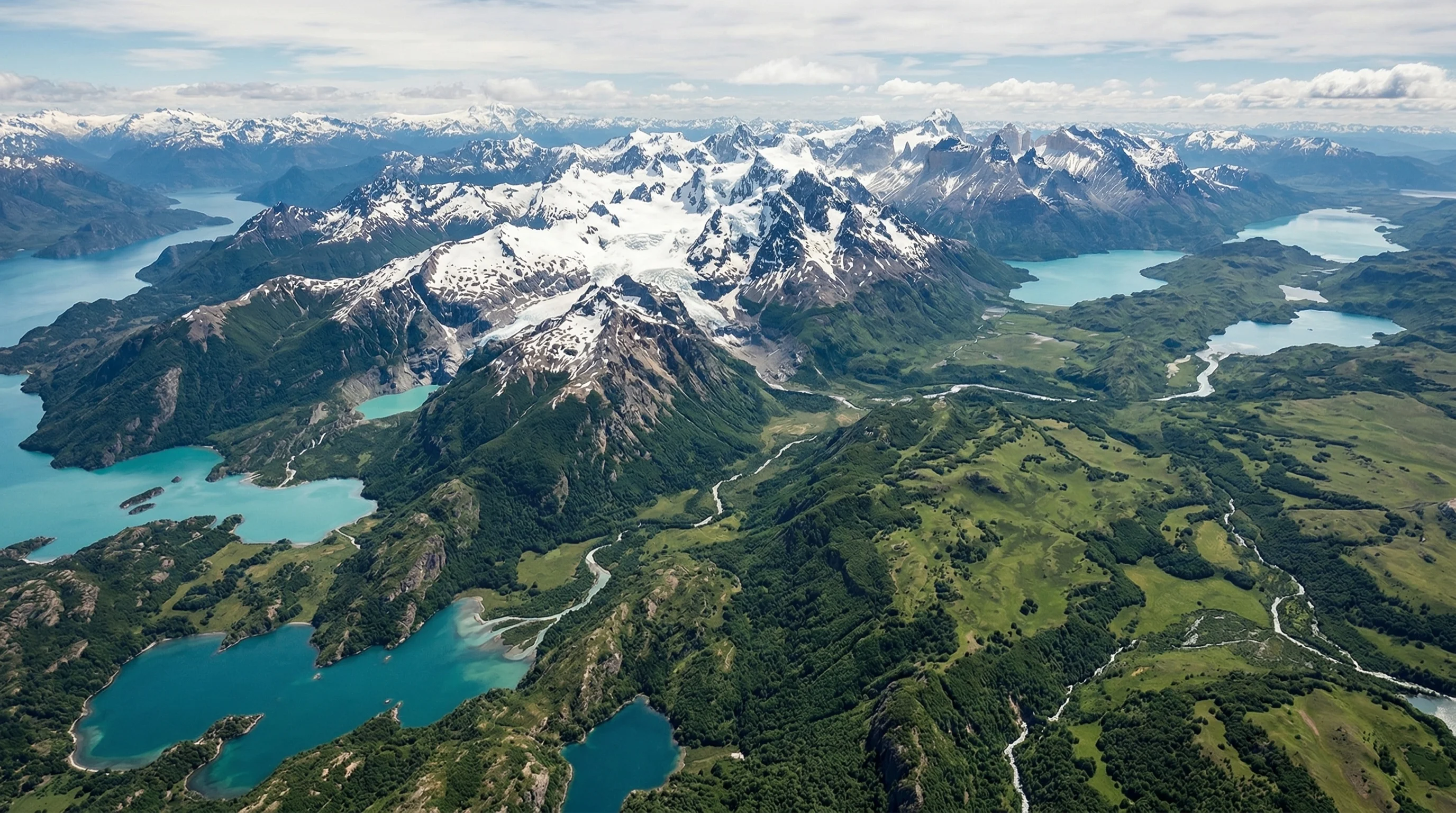
TL;DR: Chile lets any foreigner buy land with no ownership caps, no currency controls, and closing costs of 1.5% to 3%. Argentina’s Ley de Tierras caps foreign ownership at 15% per province, bars purchases within 150 km of borders, and operates in a currency that lost 99% of its value against the dollar since 2012. Milei’s attempt to repeal the law was blocked by courts in January 2024. For buyers seeking clarity and stability, Chilean Patagonia is the stronger bet.
Chile and Argentina share 5,300 km of border, the same Andes, and some of the most spectacular wilderness on earth. The glaciers, lenga forests, and turquoise lakes that define Patagonia exist on both sides. But the legal, economic, and practical realities of buying land differ so profoundly that choosing the wrong side of the border can cost you years and tens of thousands of dollars.
This article compares the two countries across every factor that matters to land buyers in 2026: ownership rights, currency stability, property registration, closing costs, and actual price data. It is not a balanced “both have pros and cons” piece. The data points in one direction.
The same mountains, different rules
Stand at Paso Coihaique and look east into Argentina’s Chubut province. Then look west into Chile’s Aysen Region. The landscape is nearly identical: volcanic soil, ancient forests, rivers running cold and clear. The shared geography makes the policy differences even more striking.
Chile operates an open market for foreign land ownership. Argentina does not.
This single distinction cascades through every aspect of the buying experience, from the initial search to the closing table to your ability to sell decades later. Let us break down each dimension.
Foreign ownership: open market vs. restrictions
Chile: no caps, no quotas
Chile imposes no restrictions on foreign ownership of land. A buyer from the United States, Germany, or Japan has the same rights as a Chilean citizen. There is no percentage cap, no acreage limit, and no requirement for government approval (with one narrow exception for border zones).
The process is straightforward: obtain a RUT (tax identification number), sign the deed before a notary, and register the title at the Conservador de Bienes Raices. The entire transaction can close in 30 to 60 days.
The border zone exception applies to properties within 10 km of the Argentine border under DL 1939. This restriction targets nationals of neighboring countries (Argentina, Bolivia, Peru), not all foreigners. A North American or European buyer faces no additional requirements. For a full breakdown, see our border zone restrictions guide.
Argentina: the Ley de Tierras
Argentina’s Law 26,737, passed in 2011, imposes hard caps on foreign land ownership:
What is Argentina's Ley de Tierras?
The Ley de Tierras (Law 26,737) was enacted in December 2011 after public controversy over large land purchases by foreign investors, notably Benetton (900,000 hectares in Patagonia) and Lewis (14,000 hectares near Bariloche). Key provisions:
- 15% national cap: Foreign nationals collectively cannot own more than 15% of all rural land in Argentina
- 15% provincial cap: The same 15% limit applies at the provincial level, preventing concentration
- 1,000-hectare cap: No single foreign owner can hold more than 1,000 hectares in “productive” zones (the equivalent varies by zone classification)
- 150 km border exclusion: Foreigners cannot purchase land within 150 km of international borders without specific authorization from the National Registry of Rural Land
- Water body restrictions: Properties containing or bordering significant water bodies face additional foreign ownership limitations
The law requires all foreign land purchases to be registered with the National Registry of Rural Land (Registro Nacional de Tierras Rurales). Transactions that would breach any cap are blocked at the registry level.
The contrast is stark. Chile says “buy what you want, register it, done.” Argentina says “check the national cap, check the provincial cap, check the per-owner cap, check the border exclusion, check the water body rule, register with the national land registry, and hope none of the caps have been reached.”
The Milei factor
When Javier Milei took office in December 2023, his libertarian agenda included repealing the Ley de Tierras. The repeal was embedded in his massive “omnibus bill” (Ley de Bases), which attempted to reform over 300 laws in a single legislative package.
The Ley de Tierras repeal was stripped from the bill before it passed Congress in June 2024. A separate judicial challenge had already resulted in a court injunction in January 2024 blocking the repeal on constitutional grounds.
As of March 2026, the Ley de Tierras remains fully in force. Milei has not reintroduced a standalone repeal bill. The political window for deregulation has narrowed as his coalition’s legislative position weakened after the 2025 midterm elections.
For land buyers, this means the restrictions are not going away in any foreseeable timeframe. Anyone counting on an Argentine deregulation play is making a speculative political bet.
Currency: UF vs. the Argentine peso
Currency stability is not an abstract concern for land buyers. It determines whether the price you agreed to is the price you actually pay, and whether your investment holds value over time.
Chile’s UF (Unidad de Fomento): Created in 1967, the UF is an inflation-adjusted unit of account that resets daily based on the previous month’s CPI. As of March 2026, 1 UF equals approximately CLP 38,800 (around USD 37). Nearly all Chilean real estate transactions are denominated in UF. This means the price adjusts automatically for inflation, protecting both buyer and seller. A property listed at UF 5,000 in January 2026 and sold in June 2026 costs exactly UF 5,000 in real terms, regardless of what inflation did during those six months.
Argentina’s peso tells a different story. The exchange rate trajectory:
- 2012: ARS 4.55 per USD
- 2015: ARS 9.80 per USD
- 2019: ARS 59.89 per USD
- 2023 (pre-Milei): ARS 366 per USD
- December 2023: ARS 800 per USD (157% overnight devaluation when Milei took office)
- 2024: ARS 1,031 per USD (official rate)
- 2026: The gap between official and parallel (“blue dollar”) rates has narrowed under Milei’s policies, but the peso remains among the world’s worst-performing currencies over any multi-year horizon
Argentine land is typically priced in US dollars, which protects the seller but creates complications: buyers must source dollars (historically difficult under capital controls), and the legal peso price on the deed often bears little relationship to the actual dollar amount exchanged. This dual-currency reality adds cost, risk, and opacity to every transaction.
Price comparison: what does Patagonian land actually cost?
| Property Type | Chilean Patagonia (Aysen) | Argentine Patagonia (Lake District) |
|---|---|---|
| Raw rural land (per hectare) | USD 1,500 to 8,000 | USD 12,000 to 40,000 |
| Lakefront parcels (per hectare) | USD 4,500 to 25,000 | USD 25,000 to 125,000+ |
| Small farms (20-50 ha) | USD 30,000 to 120,000 | USD 150,000 to 500,000+ |
| Conservation/fjord land (per hectare) | USD 800 to 3,000 | Limited comparable inventory |
| Typical parcel size | 5 to 100+ hectares | 1 to 20 hectares |
| Price trend (3 years) | Gradual appreciation, 8-15% annually in prime areas | Volatile, highly dependent on peso/dollar dynamics |
Chilean Patagonia is cheaper across every category. The gap ranges from 3x for basic rural land to 10x or more for premium lakefront. Some of this reflects Argentina’s more developed tourism infrastructure and proximity to Buenos Aires. But much of it reflects speculative premium and currency-driven distortion in the Argentine market.
For detailed pricing trends in the Aysen Region specifically, see our analysis on buying land in Patagonia in 2026.
Property rights and legal security
Chile’s property registration system, the Conservador de Bienes Raices, traces its origins to the colonial era and has operated continuously since. Every property transaction is notarized, registered, and publicly searchable. Title certainty is high. Chile’s judiciary is independent and consistently ranked among the strongest in Latin America by the World Justice Project Rule of Law Index (Chile ranks 1st in Latin America, 26th globally as of 2024).
Argentina also has property registries, but they operate at the provincial level with varying degrees of digitization and accessibility. The regulatory overlay for foreign transactions (Ley de Tierras compliance, national registry requirements, border zone checks) adds layers of due diligence that do not exist in Chile.
What is Chile's DIFROL process?
DIFROL (Direccion Nacional de Fronteras y Limites del Estado) oversees border zone property matters in Chile. Key facts:
- Only applies to land within 10 km of international borders (compare to Argentina’s 150 km exclusion zone)
- Only restricts nationals of neighboring countries (Argentina, Bolivia, Peru), not all foreigners
- Private land sales between private parties do not require DIFROL authorization
- The restriction targets fiscal (government-owned) land transfers
- Non-neighboring foreigners (Americans, Europeans, Australians, etc.) are treated identically to Chilean citizens
In practice, DIFROL’s scope is narrow. Most foreign buyers of Chilean Patagonian land never interact with the agency. For buyers from neighboring countries, the process adds 3 to 6 months but is routinely approved for legitimate purchases.
For details, see our full article on border zone restrictions in Aysen.
Closing costs and timeline
| Factor | Chile | Argentina |
|---|---|---|
| Notary fees | 0.1% to 0.5% of sale price | 1% to 2% (varies by province) |
| Registration (Conservador/Registry) | 0.2% to 0.5% | 0.5% to 1% |
| Transfer tax | None (0%) | 1.5% stamp tax (varies by province) |
| Legal fees | 1% to 2% | 1% to 3% |
| Total closing costs | 1.5% to 3% | 4% to 7%+ |
| Typical timeline | 30 to 60 days | 60 to 120 days (longer for foreign buyers) |
| Currency of transaction | UF or CLP (inflation-protected) | USD cash + peso deed (dual-currency gap) |
| Foreign buyer registration | RUT (tax ID), obtained in days | National Rural Land Registry approval required |
Chile’s closing process is faster, cheaper, and more transparent. A straightforward land purchase in Aysen can close in 30 days from signed promise to registered title. Argentina’s process involves more parties, more approvals, and more uncertainty around the actual price being transacted.
For foreign buyers, our guide to buying property in Chile covers the complete process.
Where to buy in Chilean Patagonia
For buyers who have decided on the Chilean side, the Aysen Region offers a range of entry points at different price levels. Three current listings illustrate the diversity:
Fjord-access conservation land: Isla Patagonia offers parcels facing the fjord near Puerto Chacabuco. This type of waterfront land simply does not exist on the Argentine side, where Patagonia is landlocked.
Conservation and eco-tourism: Santuario Quitralco features conservation-oriented parcels on the fjord, suited for buyers interested in nature preservation combined with selective eco-tourism development.
River frontage near national parks: Fundo Risopatron sits along the Rio Puyuhuapi near Queulat National Park, combining river frontage with proximity to one of Patagonia’s most visited attractions.
Each of these properties would be either unavailable to foreign buyers under Argentina’s Ley de Tierras (border zone restrictions) or priced at multiples of their current asking prices if located on the Argentine side.
The full comparison at a glance
| Factor | Chile | Argentina |
|---|---|---|
| Foreign ownership cap | None | 15% per province |
| Per-owner acreage limit | None | 1,000 ha in productive zones |
| Border exclusion zone | 10 km (neighboring nationals only) | 150 km (all foreigners) |
| Currency stability | UF (daily inflation adjustment since 1967) | Peso lost 99%+ vs USD since 2012 |
| Transaction currency | UF or CLP (transparent) | USD cash + peso deed (opaque) |
| Property registry | Centralized, digitized, colonial-era continuity | Provincial, varies by jurisdiction |
| Rule of Law Index (2024) | #1 in Latin America, #26 globally | #56 globally |
| Closing costs | 1.5% to 3% | 4% to 7%+ |
| Closing timeline | 30 to 60 days | 60 to 120+ days |
| Capital controls | None | Historically imposed, partially lifted |
| Land price (rural, per hectare) | USD 1,500 to 8,000 | USD 12,000 to 40,000 |
Frequently asked questions
Can foreigners buy land freely in both Chile and Argentina?
In Chile, yes. Foreigners have identical rights to citizens with no ownership caps, no acreage limits, and no government approval required (except for neighboring-country nationals in a narrow 10 km border strip). In Argentina, foreign ownership of rural land is capped at 15% per province under the Ley de Tierras. Individual foreigners cannot hold more than 1,000 hectares in productive zones, and purchases within 150 km of international borders require special authorization. Companies with 40%+ foreign capital face the same restrictions.
Did Milei repeal Argentina’s foreign land ownership restrictions?
No. Milei included the repeal in his December 2023 omnibus bill, but courts issued an injunction in January 2024 blocking the repeal on constitutional grounds. The Ley de Tierras provisions were subsequently stripped from the bill before Congress passed it in June 2024. As of March 2026, the law remains fully in force with no active legislation to repeal it.
Is Chilean Patagonia cheaper than Argentine Patagonia?
Significantly. Raw rural land in Chile’s Aysen Region costs USD 1,500 to 8,000 per hectare. Comparable land in Argentine Patagonia’s Lake District (Bariloche, San Martin de los Andes, El Bolson) ranges from USD 12,000 to 40,000 per hectare. Lakefront properties show an even wider gap: Chilean lakefront sells for USD 4,500 to 25,000 per hectare versus USD 25,000 to 125,000+ in Argentina. The price difference reflects Argentina’s more mature tourism infrastructure, but also speculative premium and currency distortion.
What is Chile’s UF and why does it matter for land buyers?
The UF (Unidad de Fomento) is an inflation-adjusted unit of account used in virtually all Chilean real estate transactions. It resets daily based on the previous month’s Consumer Price Index. Currently 1 UF equals approximately USD 37. Because land prices are denominated in UF, both buyer and seller are protected from inflation between the promise of sale and closing. Argentina has no equivalent mechanism. Its peso has lost over 99% of its value against the dollar since 2012, making peso-denominated contracts essentially meaningless over any extended timeframe.
The bottom line
The comparison between Chile and Argentina for Patagonian land purchases is not close in 2026. Chile offers unrestricted foreign ownership, a stable inflation-adjusted currency, a transparent property registry with centuries of continuity, closing costs under 3%, and land prices that are a fraction of the Argentine equivalent.
Argentina offers spectacular landscapes (shared with Chile), a more developed tourism infrastructure in established towns, and the possibility that deregulation could eventually open the market further. But that possibility has been receding, not advancing, since Milei’s repeal attempt failed.
For buyers who want legal certainty, price efficiency, and a straightforward path from search to registered title, Chilean Patagonia is the clear choice.
Interested in buying land in Patagonia?
We connect buyers with the best opportunities in Chile's Aysen Region. Tell us what you're looking for and we'll help you find it.
No commitment. Your information is kept confidential.

Written by
Nicolas GorroñoFounder & Editor
Founder of Patagonia Properties. Grew up in Coyhaique, lived in Australia, and is now back in Patagonia full-time. SEO and digital marketing specialist.
LinkedIn