You Can Own Island Land in Patagonia for Under $15,000
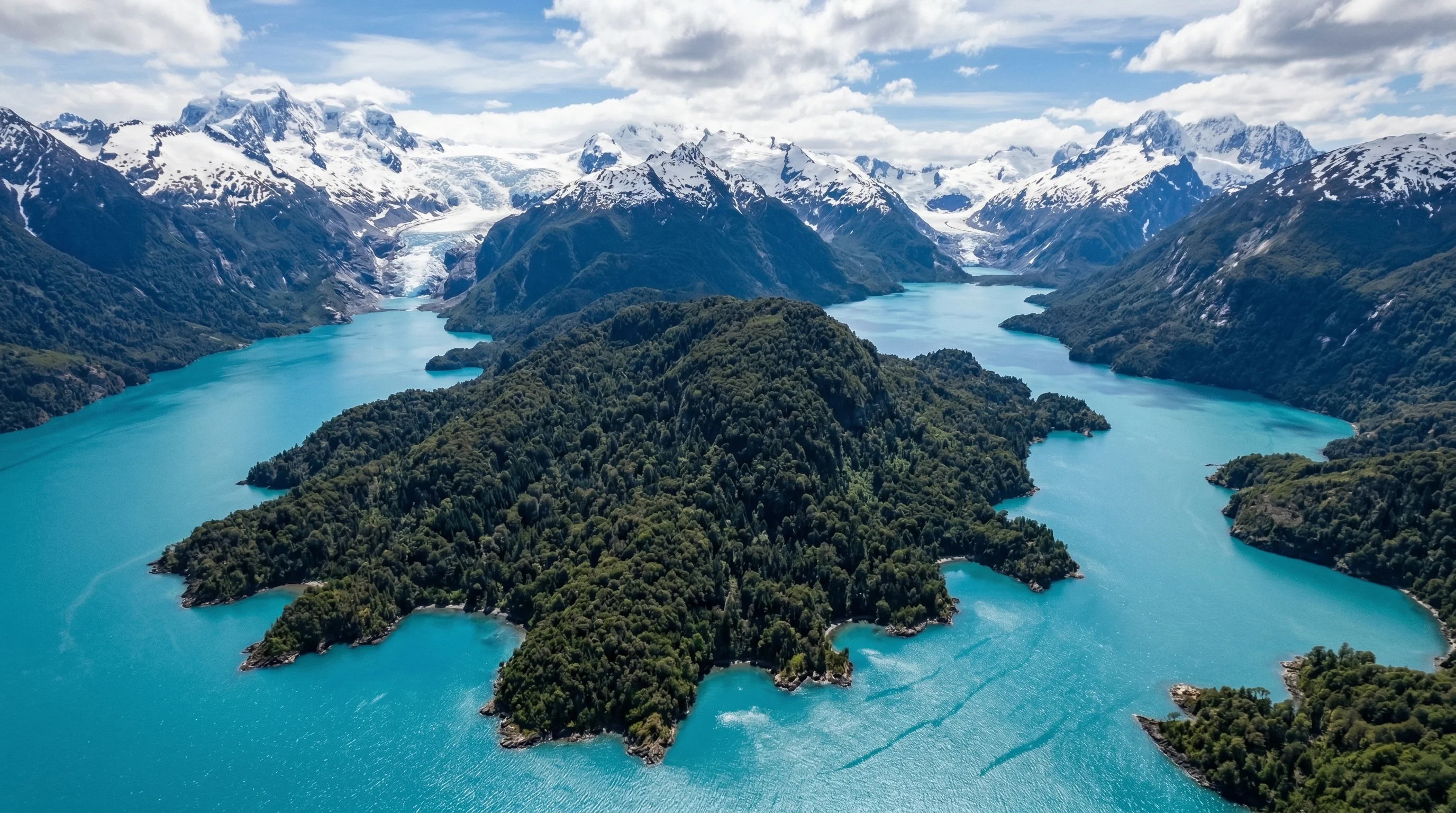
TL;DR: Private island listings worldwide start at $1M and average $4.7M. But “island lots” (individually titled parcels on shared islands) are a different product entirely. In the Aysen Fjord of Chilean Patagonia, titled 1-2 hectare island lots start at 294 UF per hectare (roughly $10,000 USD), with full ownership rights, construction freedom, and no HOA. The trade-off: marine-only access, no grid electricity, and genuine remoteness. This is not a resort. It is wilderness ownership at a price point that barely exists elsewhere on the planet.
Every few months, a headline circulates about a private island selling for $75 million in the Bahamas or $12 million in Fiji. The implication is clear: island ownership is a billionaire game. And for whole islands, that is largely true.
But the whole-island market is not the only way to own land surrounded by water. A growing segment of the global real estate market focuses on “island lots,” individually titled parcels on islands shared among multiple owners. This model changes the economics completely. And in one specific corner of Chilean Patagonia, it produces price points that would be difficult to believe without documentation.
The island property myth
The global private island market is tiny and extremely expensive. According to Private Islands Inc. (the largest broker in the sector), the median asking price for a private island worldwide was approximately $4.7 million in 2024. The cheapest listings in the Caribbean rarely drop below $500,000 for bare land, and most require $2M+ before any development.
Here is what the market looks like at a glance:
| Region | Typical Price Range | Notes |
|---|---|---|
| Caribbean (Bahamas, Belize) | $500K - $75M | Most expensive segment. Strong demand from North American buyers |
| Scandinavia (Norway, Sweden) | EUR 150K - 500K | Small rocky islands, cold climate. EUR 192K/ha average in Norway |
| Canada (Nova Scotia, BC) | CAD 200K - 5M | Seasonal access, harsh winters |
| Southeast Asia (Philippines, Indonesia) | $100K - 2M | Leasehold only in most cases (no freehold for foreigners) |
| Scotland | GBP 150K - 3M | Limited building permissions, conservation constraints |
| Chilean Patagonia (Aysen Fjord) | $10K - $30K per lot | Freehold island lots, 1-2 ha, full ownership |
The Chilean entry sits in a category so far below the others that it raises an obvious question: what is the catch? We will get to that. But first, the model that makes it possible.
A different model: fractional island ownership
The concept of subdividing island land into individually titled lots is not new. It exists in the San Juan Islands (Washington State), the Outer Hebrides (Scotland), and across the Greek islands. What is unusual is finding it in a pristine wilderness setting at this price level.
The fractional ownership real estate market is growing at a 13.7% compound annual rate globally, according to Allied Market Research. Most of that growth is in luxury resort properties and vacation co-ownership platforms. But the same legal structure (individual title, shared infrastructure) works just as well for raw land on a remote island.
The key distinction: this is not timeshare, and it is not co-ownership of a single property. Each lot has its own title (inscribed in the Conservador de Bienes Raices), its own boundaries, and its own building rights. You own the land outright, the same way you would own a downtown apartment or a rural farm.
Isla Patagonia: what you actually get
Isla Patagonia is a private island in the Aysen Fjord, 5 minutes by boat from Puerto Chacabuco (the port town serving the region). It sits near the departure point for Laguna San Rafael, one of Chile’s most visited glacial attractions.
The specifics:
- Lot sizes: 1 to 2 hectares (2.5 to 5 acres)
- Price: 294 UF per hectare, approximately $10,000 USD at current UF values
- Access: Marine only. A shared community dock serves all lot owners
- Vegetation: Native Patagonian forest (coigue, lenga, tepú)
- Ownership: Full freehold title (dominio pleno), inscribed in the local Conservador de Bienes Raices
- Building restrictions: None from a community or HOA standpoint. Standard Chilean building regulations apply
- Utilities: Off-grid. No municipal electricity, water, or sewage connections
The price in context: At 294 UF/ha ($10,000 USD), Isla Patagonia costs roughly 1/50th of a comparable island lot in Norway, 1/20th of bare land in the Canadian maritimes, and less than a used car in most developed countries. For this price, you receive a titled, registered hectare of native forest on an island in one of the world’s last pristine fjord systems.
Puerto Chacabuco, the nearest mainland town, has a population of approximately 1,500 and serves as the primary port for the Aysen Region. It connects to Coyhaique (the regional capital, population 60,000) via a 70 km paved highway. Regular ferry services operate from Chacabuco to Laguna San Rafael, Quellón (Chiloé), and Puerto Montt. The island is not as isolated as “private island in Patagonia” might suggest. The mainland, with groceries, fuel, healthcare, and flights, is a short boat ride away.
What can you build?
Full ownership means exactly that. Chilean property law does not distinguish between island and mainland parcels in terms of building rights. As the titled owner, you can:
- Build a cabin, house, or lodge (subject to standard Chilean building permits)
- Install off-grid systems (solar panels, rainwater collection, composting sanitation)
- Develop tourism infrastructure (glamping, kayak launch, guided excursions)
- Harvest timber from native forest under CONAF regulations
- Transfer, sell, or bequeath the property freely
There is no homeowners association, no mandatory design guidelines, and no annual fees beyond standard Chilean property taxes (contribuciones), which in rural Aysen are minimal. A typical 1-2 hectare rural parcel in this part of the region generates annual property tax obligations under $100 USD.
For context on what else is available in the area, Santuario Quitralco offers conservation-oriented fjord lots in a similar price range, and Fundo Risopatrón provides riverfront parcels near Queulat National Park.
The catch: honest risks and limitations
This section matters more than anything above. Island land in Patagonia is cheap for reasons that are real, not because the market has failed to notice it.
Marine-only access. There is no bridge. Every trip to and from the island requires a boat. In the Aysen Fjord, weather can change rapidly. Wind, rain, and reduced visibility are common, particularly from May through September. If you need to reach a hospital, you are dependent on water transport.
No grid electricity. Solar is viable (Aysen gets 1,200-1,500 hours of sunshine annually, concentrated in November through February), but winter days are short (7-8 hours of daylight in June). A serious off-grid setup with battery storage, solar panels, and a backup generator costs $8,000 to $25,000 depending on capacity.
No municipal water or sewage. Rainwater collection is standard for off-grid properties in this region (Aysen receives 2,000-3,000 mm of rainfall annually, so supply is abundant), but you need to install the systems yourself.
Construction logistics. Every building material arrives by boat. This adds 20-40% to construction costs compared to mainland builds. A basic 60 m2 cabin that might cost $40,000 to build in Coyhaique could run $50,000-$55,000 on the island.
Resale liquidity. This is not a liquid market. Island lots in Patagonia are a niche within a niche. If you need to sell quickly, you should expect a long timeline (12-24 months minimum) and potentially reduced pricing. This is a buy-and-hold asset, not a flip.
Climate. Aysen’s climate is temperate oceanic, but “temperate” here means average highs of 14 C in January (summer) and 4 C in July (winter). It rains frequently. If your vision involves sunbathing and tropical cocktails, this is the wrong island.
Bottom line on risk: Island lots at this price point are not underpriced resort properties waiting to be discovered. They are affordable because the access constraints, remoteness, and development costs are real. The right buyer is someone who values solitude, wilderness, and long-term land ownership over convenience and liquidity.
How to buy as a foreigner
Chile allows foreigners to buy property with essentially the same rights as Chilean citizens. There are no restrictions on foreign ownership of private land, with one exception: border zone properties within 10 km of the Argentine border (which does not apply to Isla Patagonia, as it faces the Pacific coast, not the Argentine border).
The process:
- Get a RUT (Rol Unico Tributario): Chile’s tax identification number. Available at any SII office with your passport. Takes 1-2 days.
- Due diligence: Verify the property title at the Conservador de Bienes Raices. Confirm no liens, encumbrances, or competing claims. A local attorney should handle this (cost: $500-$1,500).
- Sign a promesa de compraventa (purchase promise): A binding agreement specifying price, conditions, and timeline. Typically includes a 10% deposit.
- Sign the escritura publica (public deed): The final transfer document, executed before a notary. Both parties must be present or represented by poder (power of attorney).
- Register at the Conservador de Bienes Raices: The notarized deed is inscribed in the property registry, completing the transfer.
Total transaction costs (attorney, notary, registration, taxes): approximately 3-4% of the purchase price. On a $10,000 lot, that is $300-$400 in fees.
For the complete process, see our guide to buying property in Chile as a foreigner.
What about DIFROL border zone restrictions?
DIFROL (Direccion Nacional de Fronteras y Limites del Estado) restrictions under DL 1939 apply to properties within 10 km of the Argentine border. Isla Patagonia is located in the Aysen Fjord, facing the Pacific coast, well west of the border zone. These restrictions do not apply.
However, if you are considering other properties in eastern Aysen (Chile Chico, Cochrane, areas near border crossings), border zone rules become relevant, particularly for nationals of neighboring countries (Argentina, Bolivia, Peru). For a detailed explanation, see our article on border zone restrictions in Aysen.
Who is this for?
Be honest with yourself about whether this fits. Island lots in Patagonia make sense for:
- Conservation-minded buyers who want to protect a piece of native forest and visit occasionally
- Adventure tourism operators building a remote lodge or kayaking base (the Aysen Fjord is a world-class kayaking destination)
- Long-term land investors comfortable with illiquidity and a 10+ year horizon
- Off-grid enthusiasts with experience (or willingness to learn) in remote, self-sufficient living
- Portfolio diversifiers seeking a hard asset in a politically stable jurisdiction at a de minimis price point
This does not make sense for anyone seeking rental income, quick appreciation, easy access, or a tropical vacation property.
Comparison: what $10,000 buys you elsewhere
For perspective on what a $10,000 budget gets in the global land market:
| Location | What $10,000 Buys | Ownership Type |
|---|---|---|
| Caribbean island | Nothing. Minimum entry is ~$500K | N/A |
| Norwegian island lot | ~520 m2 (at EUR 192K/ha) | Freehold |
| Rural Portugal | ~2,000 m2 of inland farmland | Freehold |
| Rural Tennessee, USA | ~4,000 m2 (1 acre) unimproved | Freehold |
| Isla Patagonia, Chile | 10,000 m2 (1 hectare) of island forest | Freehold |
The value proposition is not subtle. Whether it is the right value for you depends entirely on what you plan to do with a hectare of remote island forest in the world’s southernmost fjord system.
Can foreigners own island land in Chile?
Yes. Chilean law treats foreign and domestic buyers identically for private property purchases. There are no special restrictions on island properties, coastal properties, or rural land for foreign nationals (with the narrow exception of border zone rules for nationals of neighboring countries). You will need a RUT (tax ID), which takes 1-2 days to obtain with a passport.
Is Isla Patagonia connected to the electrical grid?
No. The island is entirely off-grid. Electricity must be generated on-site, typically through solar panels with battery storage. A functional off-grid system for a small cabin costs $8,000-$15,000 installed. The Aysen region receives adequate solar radiation for basic needs during the October-March period, but winter months require backup generation or very conservative power usage.
How do you get to the island?
By boat from Puerto Chacabuco, approximately 5 minutes. Chacabuco is accessible by paved highway from Coyhaique (70 km, roughly 1 hour drive), which has a commercial airport with daily flights to Santiago, Puerto Montt, and Balmaceda. There is a shared community dock on the island. You will need your own boat or arrange regular transport with a local operator.
What are the annual costs of owning island land in Aysen?
Property taxes (contribuciones) on rural parcels in Aysen are minimal, typically under $100 USD per year for undeveloped land. There are no HOA fees, no community charges, and no mandatory maintenance obligations. If you build a structure, you will have ongoing costs for off-grid system maintenance (solar, water collection), boat access, and periodic property visits. A realistic annual budget for an owner who visits 2-4 times per year: $500-$2,000, depending on whether you own a boat or hire transport.
Interested in buying land in Patagonia?
We connect buyers with the best opportunities in Chile's Aysen Region. Tell us what you're looking for and we'll help you find it.
No commitment. Your information is kept confidential.
Written by
Nicolas GorroñoFounder & Editor
Founder of Patagonia Properties. Grew up in Coyhaique, lived in Australia, and is now back in Patagonia full-time. SEO and digital marketing specialist.
LinkedIn