Chile Capital Gains Tax: How Inflation Indexation Works
TL;DR Yes, Chile adjusts capital gains for inflation. Before calculating your taxable gain on a property sale, the SII adjusts your original purchase cost using the IPC (consumer price index), so you only pay tax on real gains, not inflation. Combined with the 8,000 UF lifetime exemption, most individual sellers end up owing little or no capital gains tax on their first few property sales.
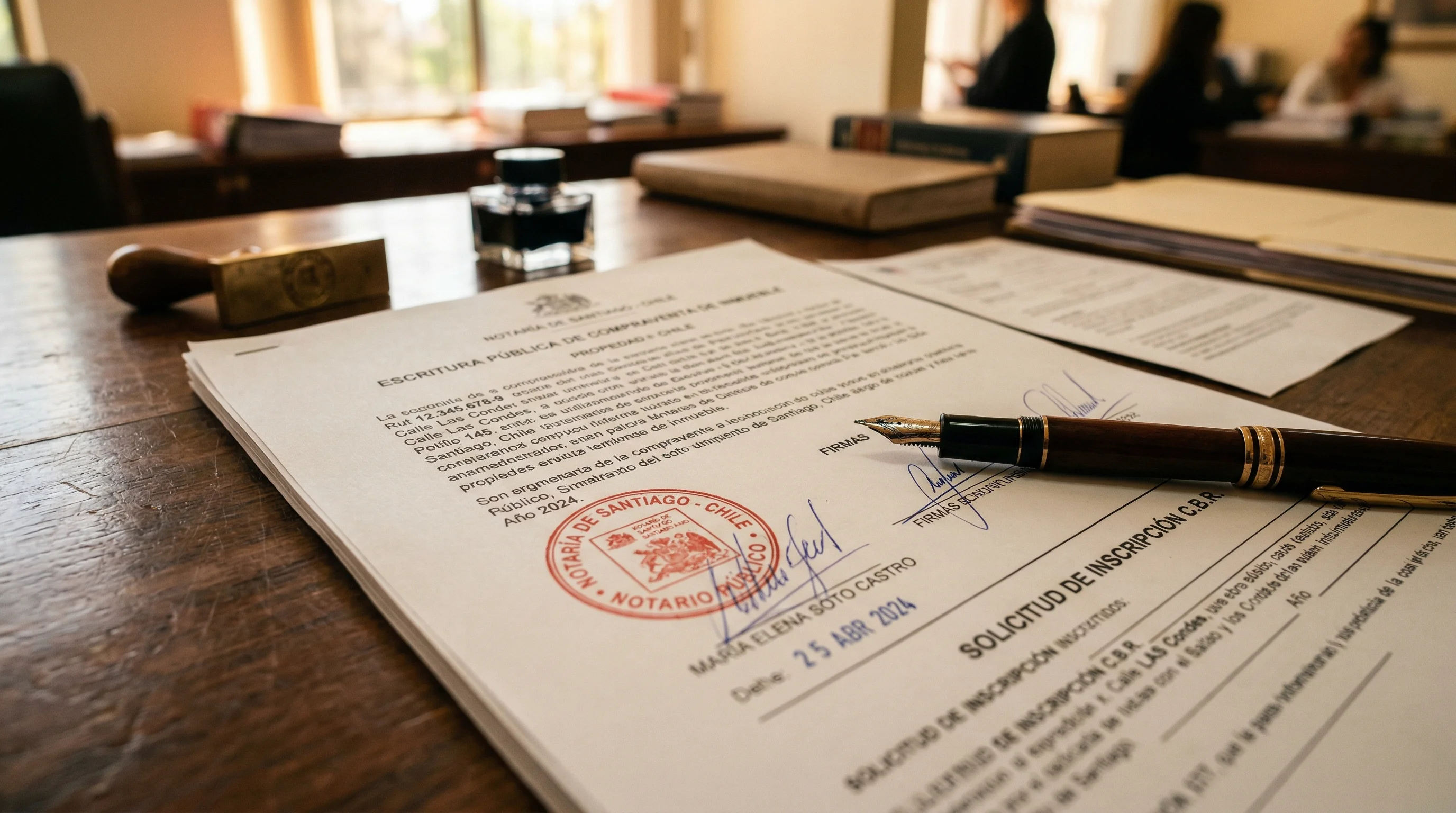
Does Chile adjust capital gains for inflation? Yes. When you sell property in Chile, the tax authority (SII, Servicio de Impuestos Internos) does not simply subtract your purchase price from your sale price and call that the gain. Instead, Chilean tax law requires that your original acquisition cost be adjusted upward to reflect inflation between the date you bought the property and the date you sold it. This adjustment is called correccion monetaria (inflation indexation), and it is mandated by Article 41 of the Ley de la Renta (DL 824). The result: you are only taxed on the real increase in value, not the nominal one.
This matters enormously in Chile, where cumulative inflation over a five or ten-year holding period can easily account for 25% to 40% of the nominal price difference. Without indexation, you would be paying tax on phantom gains that represent nothing more than the peso losing purchasing power.
How the IPC Inflation Adjustment Works
The mechanism is built around the IPC (Indice de Precios al Consumidor), Chile’s official consumer price index. The INE (Instituto Nacional de Estadisticas) publishes this index monthly. It tracks the cost of a standardized basket of goods and services, and it is the same index used across the Chilean economy to adjust contracts, rents, and financial obligations for inflation.
The formula for adjusting your cost basis is:
Adjusted Cost = Original Cost x (IPC at month before sale / IPC at month of purchase)
Key Insight: The IPC value used on the sale side is always the month before the sale, not the month of the sale itself. If you sold in March 2026, you use the February 2026 IPC value. This is a common mistake in manual calculations.
Here is what each piece of the formula means:
- Original Cost: The total acquisition cost in CLP, including the purchase price plus qualifying expenses (more on these below).
- IPC at month of purchase: The IPC index value for the month you signed the escritura (deed) and officially acquired the property.
- IPC at month before sale: The IPC index value for the calendar month immediately preceding your sale date.
The SII applies this calculation automatically during your annual tax filing (Operacion Renta). But understanding the mechanics yourself lets you estimate your tax position before deciding to sell, which is essential for planning.
Step-by-Step Calculation Example
Let’s walk through a realistic scenario with numbers that reflect Chile’s actual inflation trajectory.
Scenario: You bought a house in Coyhaique in March 2020 for CLP $80,000,000. You also paid CLP $2,400,000 in notary fees and transfer taxes at closing. Your total acquisition cost is CLP $82,400,000. You sold the property in March 2026 for CLP $125,000,000.
Step 1: Find the relevant IPC values
You can look up official IPC values from the INE’s IPC data portal or the SII’s published tables.
| Item | Period | IPC Value |
|---|---|---|
| Purchase month | March 2020 | 97.5 |
| Month before sale | February 2026 | 126.8 |
Note: These IPC values are illustrative. Always verify with official INE or SII figures for actual calculations.
Step 2: Calculate the adjustment factor
Adjustment Factor = IPC February 2026 / IPC March 2020
Adjustment Factor = 126.8 / 97.5 = 1.3005
This tells you that the general price level rose approximately 30% between your purchase and sale dates.
Step 3: Calculate the inflation-adjusted cost basis
Adjusted Cost = CLP $82,400,000 x 1.3005 = CLP $107,161,200
Step 4: Calculate the real capital gain
Real Capital Gain = Sale Price - Adjusted Cost
Real Capital Gain = CLP $125,000,000 - CLP $107,161,200 = CLP $17,838,800
The Impact of Indexation
Look at the difference:
| Calculation Method | Capital Gain |
|---|---|
| Without inflation adjustment (nominal) | CLP $42,600,000 |
| With inflation adjustment (real) | CLP $17,838,800 |
| Reduction in taxable income from indexation | CLP $24,761,200 |
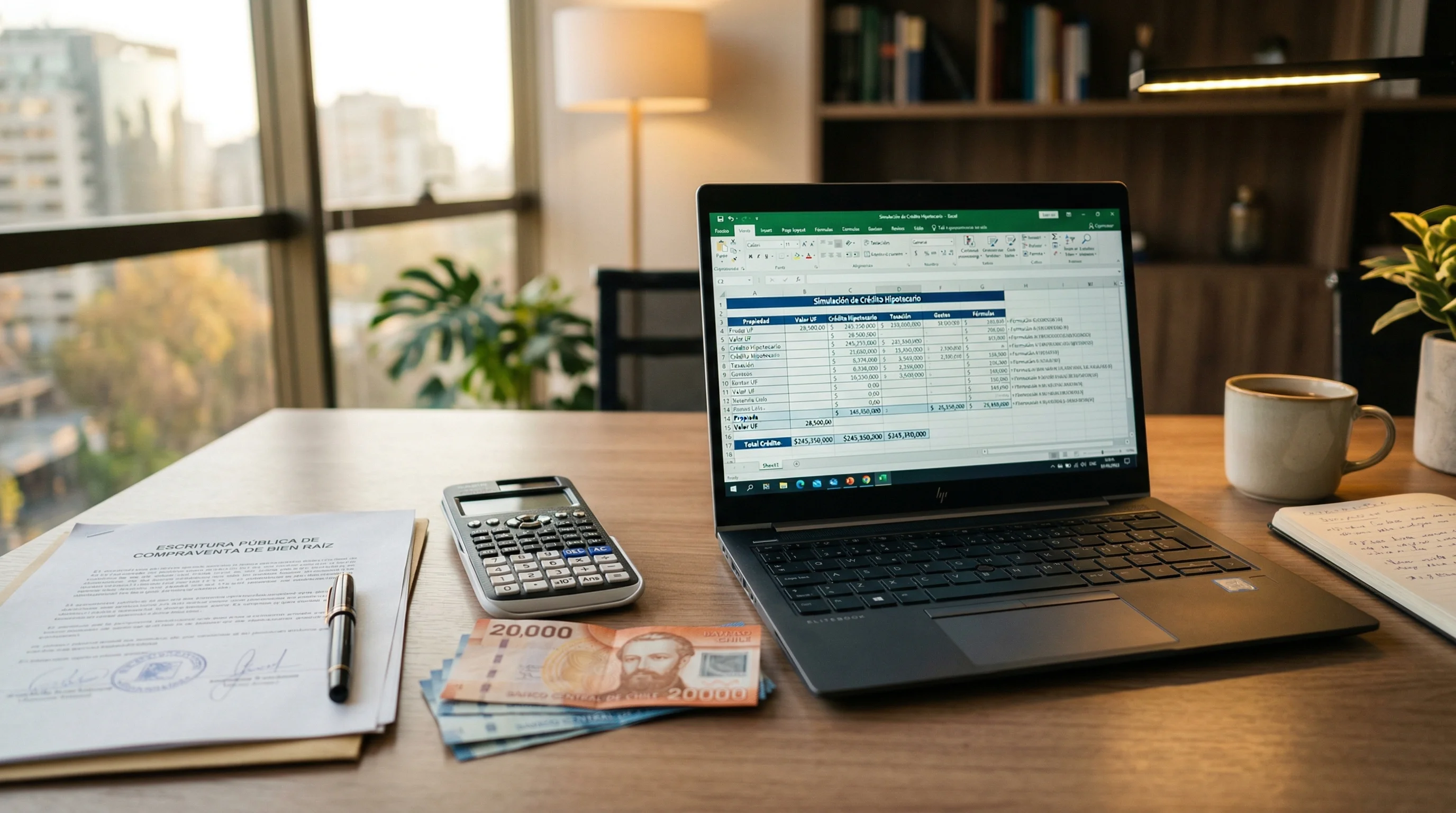
Without indexation, the SII would see a CLP $42.6 million gain. With indexation, the taxable gain drops to CLP $17.8 million. The remaining CLP $24.7 million was simply the peso losing value, not your property becoming more valuable in real terms. Chile’s system ensures you are not penalized for holding an asset through an inflationary period.
Key Insight: The longer you hold a property, the more inflation indexation works in your favor. In Chile, where annual inflation has ranged from 3% to 13% over the past decade, a ten-year hold can shift an enormous portion of your nominal gain into the “inflation, not real profit” category.
What Costs Can Be Added to the Cost Basis?
The inflation adjustment applies not just to the purchase price but also to qualifying costs that you can add to your acquisition cost basis. Each cost is adjusted individually using the IPC from the month that expense was incurred. Our selling costs guide covers the full list, but here are the main categories:
Costs that increase your adjusted basis:
- Construction and improvement costs (with proper invoices/facturas). Major renovations, additions, and structural improvements qualify. Routine maintenance and cosmetic repairs do not.
- Notary fees (gastos notariales) paid at the time of purchase.
- Transfer taxes and inscription fees at the Conservador de Bienes Raices.
- Real estate agent commissions paid at purchase (not commissions paid when selling).
- Legal fees directly related to acquiring the property.
Each of these is inflation-adjusted separately. For example, if you spent CLP $10,000,000 on a new roof in June 2022, that amount is adjusted using the IPC variation from June 2022 to the month before your sale, not from the original purchase date.
Key Insight: You must have facturas (formal invoices) for every cost you add to the basis. Boletas or informal receipts are not sufficient. The SII can request documentation during an audit, and undocumented deductions will be rejected.
Connection to the 8,000 UF Exemption
Here is where everything comes together. After the inflation adjustment, the resulting real capital gain is measured against Chile’s 8,000 UF lifetime exemption, established in Article 17 No. 8 of the Ley de la Renta. The sequence matters:
- Calculate the inflation-adjusted cost basis (using the IPC formula above).
- Subtract the adjusted cost from the sale price to find the real gain.
- Compare the real gain to your remaining lifetime 8,000 UF allowance.
- If the gain fits within the allowance, you pay zero capital gains tax.
In our example, the real gain of CLP $17,838,800 is approximately 478 UF (at UF $37,300 in March 2026). If this is your first property sale, you would still have roughly 7,522 UF of exemption remaining for future sales.
This double benefit (inflation adjustment reducing the taxable gain, then the 8,000 UF exemption potentially eliminating it entirely) makes Chile one of the more favorable jurisdictions for individual property investors. For the full rules on the exemption, including the conditions you must meet, see our detailed 8,000 UF capital gains exemption guide.
To understand how UF works as a unit of account and why Chile uses it, check our guide to the UF.
Rules for Foreign Property Sellers
The inflation indexation system applies identically to foreign owners selling property in Chile. There are no separate IPC tables, different formulas, or special rules for non-residents. However, foreign sellers should keep several things in mind:
- All calculations happen in CLP. The SII does not consider what happened to the exchange rate between CLP and your home currency. If the Chilean peso depreciated against the US dollar during your holding period, your real return in dollars may look very different from the CLP-denominated gain. The inflation adjustment only accounts for Chilean inflation, not currency movements.
- The IPC adjustment still applies in full. Your acquisition cost is adjusted using the same IPC index as any Chilean seller. Residency status makes no difference to this calculation.
- Tax treaties may reduce double taxation. Chile has double taxation treaties with dozens of countries (including the US, UK, Canada, Australia, Spain, and most of the EU). The inflation-adjusted gain (not the nominal gain) is the starting point for treaty calculations. Your home country may grant a credit for Chilean taxes paid.
- Provisional withholding at sale. When a non-resident sells property, the buyer is typically required to withhold a provisional tax amount at the time of sale. This withholding is reconciled against your actual tax liability during Operacion Renta.
For the complete process, including how to appoint a representative and handle the provisional withholding, see our guide on selling property in Chile as a foreigner. For a broader overview of all property capital gains rules, our capital gains tax guide for Chile covers the full picture.
Key Insight: Foreign sellers sometimes assume they should calculate their gain in dollars or euros. The SII does not do this. The entire calculation, from acquisition cost to inflation adjustment to gain determination, happens in Chilean pesos.
How to Verify the Calculation
Do not rely solely on your own spreadsheet. There are several ways to confirm the inflation-adjusted cost basis:
- SII online tools. The SII provides correction monetaria calculators at sii.cl. Enter the original amount, the purchase date, and the sale date, and it returns the adjusted value.
- INE IPC tables. The official IPC values are published monthly by the INE. Download the historical series and verify the exact index numbers used in your calculation.
- Avaluo fiscal lookup. The SII publishes the fiscal valuation of every property in Chile through its avaluo fiscal portal. While this is not the same as the market value, it provides a useful cross-reference for your cost basis.
- UF conversion check. You can cross-check amounts using the CMF’s UF values or the SII’s UF tables to verify that your gain in UF terms makes sense relative to the 8,000 UF threshold.
- Your accountant (contador). For any property sale in Chile, working with a contador who specializes in real estate transactions is strongly recommended. They will prepare the inflation adjustment as part of your Operacion Renta filing, ensure all qualifying costs are included, and handle the provisional withholding reconciliation if applicable.
The inflation-adjusted calculation should be finalized before you file your annual tax return during Operacion Renta (April of the year following the sale). If you sold in 2026, you declare it during Operacion Renta 2027.
Key Takeaways
Chile’s inflation indexation system protects property sellers from being taxed on phantom gains caused by inflation. The IPC adjustment reduces your taxable capital gain to reflect only the real increase in value. Combined with the 8,000 UF lifetime exemption, most individual property sellers in Chile end up paying little or no capital gains tax on their first few sales. The system works automatically through the SII, but understanding the mechanics helps you plan the timing of your sale and estimate your tax position accurately.
For properties in the Aysen region, where prices have been climbing due to genuine demand rather than pure inflation, this distinction is especially relevant. The indexation ensures that only the portion of your gain above the general inflation rate is considered a taxable event. If you are exploring houses for sale in Coyhaique or elsewhere in Patagonia, knowing how inflation indexation works gives you a clearer picture of the true after-tax return on your investment.
Frequently Asked Questions
Does Chile adjust the cost basis for inflation on property sales?
Yes. Chile requires that the original acquisition cost of a property be adjusted for inflation using the IPC (consumer price index) before calculating the capital gain. This adjustment, called correccion monetaria, is mandated by Article 41 of the Ley de la Renta and applies automatically to all property sales reported to the SII.
What index does Chile use for capital gains inflation adjustment?
Chile uses the IPC (Indice de Precios al Consumidor), published monthly by the INE. The adjustment factor is calculated by dividing the IPC value for the month before the sale by the IPC value for the month of purchase. This ratio is then multiplied by the original cost to produce the inflation-adjusted cost basis.
Can I add renovation costs to my inflation-adjusted cost basis?
Yes, but only if you have formal invoices (facturas) for the work. Major renovations, structural improvements, and additions qualify. Each cost is adjusted for inflation individually, using the IPC from the month the expense was incurred, not the month of the original purchase. Routine maintenance and cosmetic repairs do not qualify.
Does the 8,000 UF exemption apply before or after the inflation adjustment?
After. First, the SII adjusts your acquisition cost for inflation. Then the real capital gain (sale price minus inflation-adjusted cost) is compared against your remaining 8,000 UF lifetime exemption as defined in Article 17 No. 8 of the Ley de la Renta. If the real gain falls within your remaining allowance, no capital gains tax is owed.
Do foreign property owners get the same inflation adjustment in Chile?
Yes, foreign property owners receive exactly the same inflation indexation as Chilean residents. The IPC adjustment formula, the qualifying cost deductions, and the 8,000 UF exemption all apply identically regardless of residency status. The only additional consideration is the provisional withholding that may apply at the time of sale for non-resident sellers.
Interested in buying land in Patagonia?
We connect buyers with the best opportunities in Chile's Aysen Region. Tell us what you're looking for and we'll help you find it.
No commitment. Your information is kept confidential.

Written by
Nicolas GorroñoFounder & Editor
Founder of Patagonia Properties. Grew up in Coyhaique, lived in Australia, and is now back in Patagonia full-time. SEO and digital marketing specialist.
LinkedIn