Buying Property in Chile as a German: Complete Guide for Deutsche Kaufer
Why Patagonia attracts German buyers
Germany has a long cultural connection with southern Chile. German settlers arrived in the Lake District and further south during the 19th century, leaving a lasting imprint on the region’s architecture, food, and community values. For modern German buyers, Patagonia offers something that resonates deeply: vast, unspoiled nature combined with a society that values sustainability, outdoor living, and environmental stewardship.
Beyond culture, there are practical reasons for the interest. Chilean real estate prices remain significantly lower than comparable properties in Germany, Austria, or Switzerland. A lakefront plot in the Aysen Region can cost a fraction of what similar land would cost in Bavaria or Brandenburg. For Germans looking to diversify their investment portfolio beyond the eurozone, Chilean property offers exposure to a stable Latin American economy with strong rule of law and transparent property registration.
The Aysen Region in particular appeals to German buyers who value space, self-sufficiency, and proximity to nature. Whether you are seeking a retirement property, a vacation home, or productive agricultural land, the region offers options that simply do not exist in Central Europe at these price points.
No double taxation treaty: what this means for you
This is the single most important financial fact for German buyers to understand. Germany and Chile do not have a double taxation agreement (DTA) in force. Among the four major European buyer nationalities for Chilean property (Germany, France, Spain, Switzerland), Germany is the only one without this protection.
This does not mean you will automatically be taxed twice on the same income. But it does mean that avoiding double taxation requires more planning and relies on Germany’s unilateral relief mechanisms rather than a bilateral treaty.
Rental income: taxed at 35% in Chile plus German worldwide income tax
If you rent out your Chilean property, Chile will tax that rental income at a flat 35% rate for non-residents. Germany, as a country that taxes worldwide income, will also require you to declare this rental income on your German tax return.
Without a DTA, the coordination between these two tax obligations depends entirely on German domestic law. You will need to work with a Steuerberater who understands international taxation to ensure proper reporting.
Capital gains: 35% non-resident rate with no treaty reduction
When you sell a Chilean property, the capital gain is subject to a 35% tax for non-resident sellers. Under a DTA, this rate could potentially be reduced or credit mechanisms clearly defined. Without one, you face the full Chilean rate plus the obligation to report the gain in Germany.
The holding period matters in Chilean tax law. Properties held for more than one year may qualify for certain exemptions or reduced rates under Chilean domestic rules, but these provisions change periodically. Always verify current rules with a Chilean tax advisor before planning a sale.
Unilateral relief via Anrechnungsmethode (foreign tax credit)
Germany’s domestic tax law provides relief from double taxation through the Anrechnungsmethode (credit method) under Section 34c of the Einkommensteuergesetz (EStG). This allows you to credit Chilean taxes paid against your German tax liability on the same income.
The credit is limited to the amount of German tax that would have been due on that specific foreign income. If the Chilean tax rate exceeds your effective German rate on that income, you cannot recover the excess. This is particularly relevant because Chile’s 35% non-resident rate is higher than many German taxpayers’ effective rate.
Structuring options: SpA company ownership
Some German buyers consider purchasing through a Chilean SpA (Sociedad por Acciones) to manage their tax exposure. An SpA is a flexible single-shareholder company under Chilean law that can own property and has its own tax profile.
Potential advantages include a lower corporate tax rate (27% first category tax) on rental income compared to the 35% non-resident individual rate. However, distributing profits to a German shareholder triggers additional withholding tax, and the overall tax burden must be calculated holistically. An SpA also adds administrative costs: annual accounting, tax filings, and legal compliance in Chile.
This is not a decision to make without professional advice from both a Chilean and a German tax advisor working together.
Inheritance law conflicts: Pflichtteil vs. Chilean legitima
Cross-border inheritance between Germany and Chile presents genuine complexity. Both countries have forced heirship rules, but they operate very differently.
Germany’s 50% monetary claim vs. Chile’s 75% forced heirship
Under German law, the Pflichtteil gives certain close relatives (children, spouse, parents) a monetary claim equal to 50% of their intestate share. Critically, this is a claim for money, not a claim for specific assets. The testator can leave the property to anyone, and the Pflichtteil beneficiary receives a cash payment.
Chilean law works differently. The legitima reserves 50% of the estate for forced heirs (children, spouse), and an additional 25% (the cuarta de mejoras) must also go to certain heirs, though the testator can choose how to distribute it among them. Only 25% of the estate (the cuarta de libre disposicion) can be freely willed. Unlike the German Pflichtteil, Chilean forced heirship can apply directly to the property itself.
EU Regulation 650/2012 and choice-of-law clauses
EU Regulation 650/2012 on succession matters allows EU citizens to choose the law of their nationality to govern their entire estate. As a German citizen, you can elect German law to apply to your succession, including your Chilean assets, through a choice-of-law clause (professio juris) in your will.
However, Chilean courts may not recognize this choice for immovable property located in Chile. Chilean private international law generally applies Chilean succession law to real property on Chilean territory (lex rei sitae). This creates a potential conflict between the EU regulation and Chilean law.
Practical recommendation: dual wills with professio juris
The safest approach is to have two separate wills: one German will for your German and EU assets (including a professio juris clause choosing German law), and one Chilean will specifically for your Chilean property, drafted by a Chilean lawyer to comply with Chilean forced heirship rules.
Both wills must be carefully coordinated to avoid one revoking the other. Your German Notar and Chilean abogado should review each other’s documents. This is an area where spending money on proper legal advice upfront saves significant problems and costs for your heirs.
The buying process step by step
Chile grants foreigners the same property rights as Chilean citizens. The process is well-established and transparent, though it does require navigating Chilean bureaucracy.
RUT application
The RUT (Rol Unico Tributario) is Chile’s tax identification number. You cannot buy property without one. As a German citizen, you can obtain a RUT in several ways:
- In person at a Servicio de Impuestos Internos (SII) office in Chile with your passport
- Through a representative using a notarized power of attorney (this is the most common approach for buyers who are not yet in Chile)
- At a Chilean consulate in Germany (Berlin, Hamburg, Frankfurt, Munich)
The RUT is permanent once issued and does not need to be renewed.
Power of attorney with Apostille (Hague Convention)
If you cannot be present in Chile for every step of the transaction, you will need to grant a power of attorney (poder) to a Chilean lawyer. The document must be:
- Notarized by a German Notar
- Apostilled by the competent German authority (typically the Landgericht or Oberlandesgericht in your jurisdiction)
- Translated into Spanish by a certified translator
Both Germany and Chile are parties to the Hague Apostille Convention, so no consular legalization is needed. The Apostille is generally sufficient.
Promesa de compraventa, escritura publica, and Conservador registration
The purchase follows three stages:
-
Promesa de compraventa (promise of sale): A binding preliminary contract signed before a Chilean notary. It establishes price, deposit (typically 5-10%), and a deadline for closing. This is where due diligence conditions are typically included.
-
Escritura publica (public deed): The definitive purchase contract, signed before a notary. This is when the balance is paid and the property legally changes hands.
-
Conservador de Bienes Raices (property registry): The deed must be registered at the local Conservador. Ownership is only fully perfected once registration is complete. This step typically takes 1 to 4 weeks.
Currency transfer: EUR to CLP
Transferring large sums from Germany to Chile requires attention to both German and Chilean regulations.
Banco Central regulations for transfers above USD 10,000
Chile requires that foreign currency transfers exceeding USD 10,000 equivalent be channeled through the formal banking system (Mercado Cambiario Formal). The bank will file a report with the Banco Central de Chile. This is a standard anti-money-laundering requirement, not a restriction on the transfer itself.
From the German side, transfers above EUR 12,500 must be reported to the Bundesbank for statistical purposes (AWV-Meldung). Your bank may handle this automatically, but verify to avoid compliance issues.
Documenting the origin of funds
This step is critically important and often overlooked. When you eventually sell the Chilean property, you will need to prove the original acquisition cost to calculate capital gains. The documentation of your incoming transfer (bank statements, exchange rate at the time of transfer, proof of the source of funds) becomes your evidence for the cost basis.
Keep certified copies of all transfer records, exchange rate documentation, and purchase price evidence. Store these separately from the property itself, ideally both in Germany and with your Chilean lawyer.
Due diligence checklist for German buyers
Before committing to a purchase, verify the following:
- Title study (estudio de titulos): A lawyer reviews the property’s ownership history over the past 10 years
- Certificates of liens and encumbrances from the Conservador de Bienes Raices
- Property tax status: Confirm contribuciones are current
- Water rights: In the Aysen Region, water rights are separate from land title and must be verified independently at the Direccion General de Aguas (DGA)
- Border zone authorization: If the property is within 10 km of the Argentine border, you need authorization from the Ministry of National Defense (typically 3-6 months)
- Zoning and land use: Verify the property can be used for your intended purpose (residential, agricultural, commercial)
- Physical inspection: Soil conditions, road access, utility connections, and flood risk areas
- Environmental restrictions: Some areas in Patagonia are subject to conservation easements or protected zone regulations
Making your purchase decision
Buying property in Chile as a German citizen is entirely feasible, and thousands of Europeans have done so successfully. The key challenge specific to German buyers is the absence of a double taxation treaty, which makes tax planning more complex and potentially more expensive than for French, Spanish, or Swiss buyers.
The right professional team makes a significant difference: a Chilean abogado experienced with foreign buyers, a Steuerberater in Germany who understands international real estate taxation, and if you are purchasing through an SpA, a Chilean contador (accountant) for ongoing compliance.
If you are exploring properties in Chilean Patagonia, we invite you to browse our current listings across the Aysen Region. For questions about the buying process or to discuss a specific property, contact our team directly.
Interested in buying land in Patagonia?
We connect buyers with the best opportunities in Chile's Aysen Region. Tell us what you're looking for and we'll help you find it.
No commitment. Your information is kept confidential.
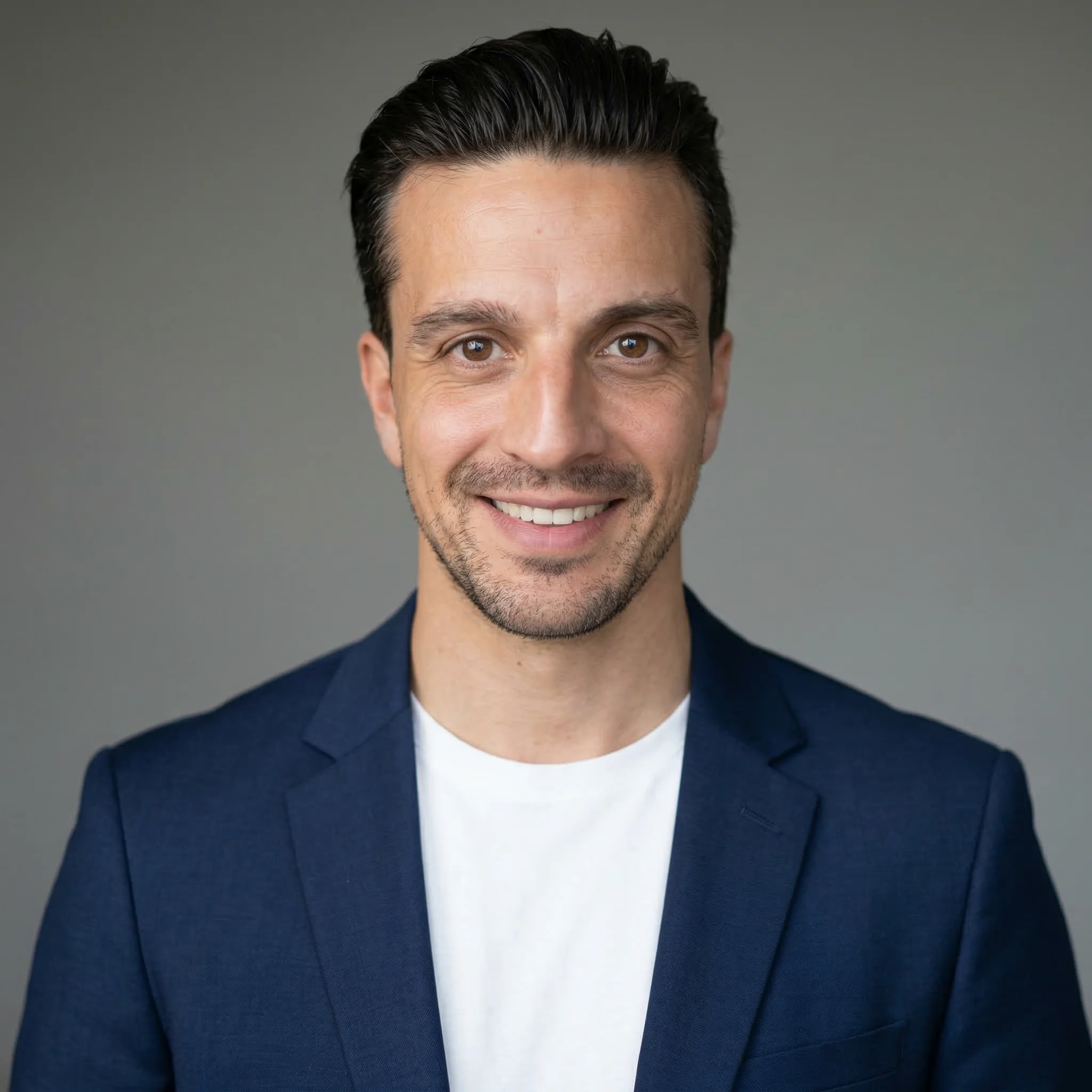
Written by
Nicolas GorroñoFounder & Editor
Founder of Patagonia Properties. Grew up in Coyhaique, lived in Australia, and is now back in Patagonia full-time. SEO and digital marketing specialist.
LinkedIn